Monthly Archives: June 2007

>How to Pick Peas, with Cosmo Verdi

>Our son, Cosmo has reached a certain level of expertise in the area of pea picking. At the age of 3 1/2 years old, he is a connoiseur of “the fat ones” and can shell and eat fresh peas for a minimum of two hours, while conducting a discourse on beneficial insects. He recently generously spared a moment of his time with me and allowed me to capture a glimpse of this young man, hard at work on his budding pea-eating career. Let’s go with him now—to the pea patch!

One of the most important things to remember when picking peas is that you want the fat pods. Not the skinny pods that don’t have plump and tender peas inside. Here Cosmo demonstrates the ideal specimen for harvest. You can almost see the outline of the peas inside. What you don’t want are the fat pods that are light-colored and wrinkly. Those are over-mature and the peas will be bitter, hard, and dry. Better wait until they’re completely dry and use them for soup.

The pea plants are very fragile, so it’s important to hold the plant with one hand and pluck off the pod with the other hand. Cosmo prefers to hold the plant with his left and pick with his right, but either hand will work for either job. Do what is comfortable for you.

Then, it’s important to eat the peas right away. Cosmo knows that as soon as the pods are detached from the plant all of the delicate sugars in the peas start converting to starches. Starches are not as sweet as sugars, so eat the peas as fresh as possible. Savor them while they are in season, because the season only lasts a few weeks!

And, don’t worry about bees in the peas. They’re too busy working at making more peas to worry about humans in the pea patch. As long as you don’t bother them, they won’t bother you. And the tiny dinosaur looking crawling things are baby ladybugs. They’re the ones that eat the aphids on the plants. There are adult ladybugs in great abundance as well, but they drink flower nectar. It’s the babies that do the real bug-eating work. Here’s a picture of ladybug eggs in the fava beans, as well as their future dinner of black aphids.

>Summer Week 2 (Chinese Cabbage, Lettuce)

>THIS WEEK’S SUBSCRIBER MENU:
• Lettuces
• Shelling Peas
• Green Garlic
• Beet Greens OR Spinach
• Napa Cabbage OR Bok Choi
• Mixed Herbs (Marjoram, Basils, Fennel) OR Shungiku

FRUIT SHARES:
Strawberries from our neighbor, T & M Berries
(If you want to u-pick there, call (253) 852-0718 for their hours. Strawberry season doesn’t last long!)

U-PICK THIS WEEK:
Flowers
Shelling Peas
(The best times for u-pick are on our farm pick-up days: Wednesdays between 2:00 and 7:00pm and Saturdays between noon and 5:00pm. Remember, subscribers can pick as much as they can find for free!)

COMING SOON:
• Sugar Snap Peas
• Green Onions
• Lettuce


A few people who were at the farm at the right moment last Wednesday were lucky to see our brand-new, just-born calf! Our sweet, Dexter milk cow, Beauty delivered her new little girl Wednesday afternoon. She’s since been named Juniper, and we are 99% sure she will stay here with our little herd. You can visit the herd in our new temporary pasture by the big greenhouse. They are busy doing their job of eating a cover crop of cereal rye and field peas, and at the same time they are adding much needed nutrients to the poorest piece of soil on our farm in the form of manure. That spot is very sandy, so nutrients leach through it like a sieve when the rain comes. The roots of the cover crop will add humus and organic matter, and the manure will add nutrients. Then we can plant crops for winter harvest there in August and they should thrive. I will be milking Beauty at about 8:00pm every day, just in case you are in the area and are interested. The black cow with the red halter is not the father, he’s a steer and is about 14 months old, soon to be beef for our freezer.

The peas have finally fattened up and are sweet and juicy, just in time to harvest for this week. The shell peas always dry up first, so we’re picking through them this week, and next week when the sugar snaps are fat and sassy we’ll start working on them. Don’t forget to u-pick! If you can’t make it during pick-up hours at the farm, we’ll have signs up to guide you to the pea patch. Please only pick the row(s) we’ve marked—we’ve chosen the rows for you that are most easily-accessible, and those that are easiest to see the pods.

Our kids love peas, but only raw, and specifically only if they have picked them themselves. And, no matter how I try, I can’t get them to eat sugar snap peas. They always insist on shelling them, and I’m not wasting sugar snaps on them if they won’t eat the pods. Cosmo especially is a great “helper” when I’m picking shelling peas. He scoots down the row in front of me. Usually he will pick his own “fat ones”, but sometimes he swipes them from my bucket. I should be proud that they know where the peas are on the farm, and that they know how to find food for themselves.

All of our transplanted herbs (various basils, marjoram, fennel, shungiku, etc.) needed to be pinched back this week so they will get bushy and productive. Weve chosen to put together a little bag of mixed herbs for you instead of tossing them. Use them to make a mixed-herb pesto, or lovely salad dressing, or throw them in with your cooking greens. If you’ve chosen Shungiku instead, you can saute it with greens, or put it in a salad—many years ago I had it floating in a bowl of clear soup in Japan.

SPECIAL NOTE FOR WEDNESDAY FOLKS:
Due to the holiday next week, we will be doing on-farm pickup on Thursday, July 5 instead of the 4th. Please make sure not to come Wednesday! Regular pickup hours: 2:00-dusk.

BOK CHOI or NAPA CABBAGE WITH GINGERY BUTTER
2 medium Choi, sliced into 1 inch strips
6 tbsp. Butter
2 tbsp. Soy Sauce or Tamari
1 tbsp. Fresh Ginger, grated
1 clove Garlic, minced
Salt & Pepper

1. Bring a large pot of water to a boil. Add the choi and cook until tender but still crisp, 2 to 3 minutes. Drain in a colander and immediately run under cold water. Drain well.

2. Melt the butter in a large skiller over medium heat. Add the soy sauce,ginger, garlic, and choi. Cook, stirring constantly, until the choi is well coted and heated through.

3. Remove the skillet from heat. Season with salt and pepper to taste. Serve immediately.

And, just in case you’re not a big salad fan:
BRAISED LETTUCES
3 to 4 small heads Lettuce, rinsed under running water, tough outer leaves removed
1/2 tsp. Salt
1-2 tbsp. Butter
Black Pepper

1. Tie a piece of string around each head of lettuce, just tightly enough to hold the leaves together and promote even cooking.

2. Brnig 2 quarts of water to a boil, add the salt and reduce the heat to a simmer. Add the lettuce heads and boil for 3 minutes.

3. Drain the lettuces in a colander and let cool. When cool enough to handle, gently squeeze them in your hands to remove any excess water. Remove the string.

4. Melt the butter in a large skillet over medium heat. Add the lettuce heads and cook until lightly browned, about 3 minutes. Continue to cook, turning them carefully, for another 3 minutes. Season with salt and pepper to taste. Serve immediately.

>Summer Week 1 (Beet Greens, Kale)

>THIS WEEK’S SUBSCRIBER MENU:
• Pea Shoots (see Winter Make-up Week 1 for recipes)
• Lacinato Kale
• Wild Greens (see Winter Make-up Week 4 for recipes)
• Beet Greens with Baby Beets
• Green Garlic or Salad Onions or Garlic Scapes (see Winter Make-up Week 3 for Scapes recipes, and Winter Make-up Week 2 for Green Garlic)
• Fresh Mint

FRUIT SHARES:
Fruit shares will start next week with Strawberries from our neighbor, T & M Berries

COMING SOON:
• Shelling Peas
• Sugar Snap Peas
• Spinach
• Green Onions
• Lettuce

U-PICK AT THE FARM:
We have some flowers now that overwintered and volunteered from last year. Bachelor buttons, larkspur, poppies, love-in-a-mist, and black-eyed susans.

Welcome new subscribers, and those returning from previous years and/or previous seasons!

The quantity of produce is low this week, as it typically is the first week of the summer season. But we are gearing up for a full summer. So many things are on the way! We find that our new subscribers use these early weeks to ease into the CSA/subscription eating style, getting used to eating seasonally and using what is given. Please feel free to ask any questions you might have. Email is the best way to reach me in the summer, as I’m not comfortable returning phone calls after dark.

At the moment, the summer solstice is upon us and we are incredibly overwhelmed with work. Not that I’m an extremely “new age” or spiritual, but it is the longest day of the year. Our life is chaotic and without structure. I reflect on our peaceful winter family time often. We get up at 5:30, do chores, get the kids off to their respective daytime activities. Then we are able to focus on work for a few hours until they come home exhausted. Then we go back to work until about 9:00pm, then do evening chores. We rarely cook and eat dinner now—instead we snack on vegetables, fruit from the market (it helps to set up next to organic fruit vendors), and dairy. With our own milk cow, we drink a lot of milk and eat a lot of yogurt, and some of my cheeses from last fall are ready to eat. However, Sunday night I have a farmers market dinner, with wild salmon from Loki Fish, ravioli from the pasta vendor there, and whatever fresh green thing I bring home as leftovers. Monday is usually my only other “cooking” day, and I try to make it something easy.

Every spring I wait anxiously for the beet greens to be ready to make this pasta dish. It’s from the Chez Panisse “Vegetables” book. I love the combination of flavors and the lovely rosy hue it turns the pasta. We use whole wheat bowties usually, and it still turns pink, which means Della will eat it.

Please look at previous blog posts as indicated for recipes for the unusual items. And, if you have any cooking ideas of your own, be sure and post them in “comments” on the blog.

BEET GREEN PASTA
1/4 cup Currants
1 to 2 bunches Beet Greens
1 small bunch Fresh Mint
1 medium Red Onion (or a few salad onions)
1 to 2 cloves Garlic
1 Bay Leaf
1/4 cup Olive Oil
1/2 pound Dried Pasta, such as rotini, penne, bowties
Salt and Pepper

1. Cover the currants with boiling water, let them soak for 15 minutes, and drain them. While they are soaking, wash the beet greens, strip the leaves from the stems, and cut the leaves into chiffonade. Chop the stems into 2-inch lengths. Stem the mint, wash the leaves and chop into a chiffonade (ribbons).
2. Put on a pot of salted water for the pasta. Peel the onions and the garlic and chop them both fine. Sauté them with the bay leaf over medium heat in 1/8 cup of olive oil for about 5 minutes or until they are translucent. Add the beet leaves and stems and the currants and cook 5 minutes more, covered. Meanwhile, when the water has come to a boil, add the pasta. Uncover the beet greens, season wtih salt and pepper, and add the mint leaves. When the pasta is cooked, drain it and toss well with the sauce, moistening it with a ladle of the pasta water and the rest of the olive oil. Serve immediately.

STIR-FRIED BEET GREENS WITH GINGER & GREEN CHILES
1-1/2 tbsp. Peanut or Canola Oil
1/2 fresh Hot Green Chile, cut into long, fine slivers
1-1/2 slices Fresh Ginger, cut into long, fine slivers
1/2 pound Beet Greens, cut crosswise into fine ribbons
Dash Salt, or to taste

1. Put the oil in a large pan and set over medium-high heat. When hot, put in the chile and ginger. Stir a few times and put in the beet greens. Stir a few times and then cover the pan.
2. Turn the heat down to low and cook until the leaves have wilted. Add the salt and stir a few times. Add 4 tbsp. water, bring to a simmer, and cover.
3. Cook on low heat for about 30 minutes, or until the greens are tender. Stir every now and then during this period. Serve with pasta or rice.

And another kale recipe from Angelic Organics, a CSA farm in Illinois:
KALE PESTO
1/4 cup Chopped Walnuts
1 tbsp. plus 1/2 tsp. Salt, divided
1/2 pound Kale, coarsely chopped
2 cloves Garlic, minced
1/2 cup Olive Oil
1/2 cup Freshly Grated Parmesan Cheese (about 1-1/2 ounces)
Fresh Ground Black Pepper

1. Toast the chopped walnuts in a dry, heavy skillet (preferably cast iron) over high heat, stirring constantly, until they start to brown in spots and become fragrant. Be careful not to overtoast them, as they will burn very quickly once they are toasted. Immediately transfer the walnuts to a dish to cool.
2. Bring two quarts of water to a boil. Add 1 tablespoon salt, then add the kale. Cook kale until tender, about 10 minutes. Drain.
3. Put the garlic, walnuts, and kale in a blender or food processor; pulse until well combined. With the blender or food processor running, pour in the olive oil in a steady, smooth, pencil-thin stream.
4. When the ingredients are thoroughly combined, transfer to a bowl. Stir in the Parmesan, remaining 1/2 tsp. salt, and pepper. Serve hot.

>Winter Make-up Week 4 (Quelites)

>THIS WEEK’S SUBSCRIBER MENU
• Salad Mix
• Spinach
• Pea Shoots
• Wild Greens
• Green Garlic

COMING SOON
• Beet Greens
• Green Onions
• Pea Shoots
• Peas

Here’s a link to Mariquita Farm’s photo essay on making GREEN GARLIC PESTO:
http://www.mariquita.com/recipes/greengarlicpesto.html

There are times when we are over-run with weeds, usually after it has rained substantially after being very warm for weeks. Kind of like now. Our future carrot patch is full of wild plants, mostly Amaranth (pigweed) and Chenopodium (also called lamb’s quarters, white goosefoot, or fat hen). The Latinos call these plants Quelites. This is a common weed that is one of those marvelous wild plants that’s completely edible, delicious and nutritious. Use it where you would spinach, raw or cooked. I have purjured these recipes from the Mariquita Farm website (they are a market farm in California, and they have an amazing website, farm, and newsletter.)

It can be eaten raw in salads, pasta salads on sandwiches or use in soups or stir-fry. Steam it like spinach and serve like a side dish or put in an omelet or lasagna. It is quite versatile as a garnish and the mild flavor blends well with other vegetables.

GREENS TACOS
courtesy Mariquita Farm

This recipe is one of my favorite breakfast recipes, but of course it would work at any time of day. Please note the amounts given are approximate, I don’t measure anything when I make these. You could use more or less of any one of these ingredients.

3/4 pounds greens, such as lambs quarters, cleaned well and sliced into approximate 1 inch pieces
2 teaspoons cooking oil
2 stalks green garlic, cleaned as a leek and chopped, or another alium family, whatever you have on hand (onion, green onion, garlic, leek…..)
Pinch red pepper flakes or cayenne
2 Tablespoons cream cheese
4-6 small corn tortillas or 2-3 larger flour ones

1. Heat the oil and add the garlic, having the greens ready to go, and cook garlic for about 30 seconds. Then add greens and cook until bright green and wilted, add red pepper (and salt and black pepper if you like). Take off heat and stir in cream cheese.

2. Heat tortillas, divide filling among them. Eat and enjoy.

QUELITES (Lamb’s Quarters) AND BEANS
courtesy Mariquita Farm (adapted from The Vegetarian Times, July 1997)

1 pound fresh lamb’s quarters or spinach — bigger stems removed
1 tablespoon olive oil
3 stems green garlic or 3 cloves ‘regular’ garlic — minced
3 leeks — finely chopped
1 cup canned pinto beans — rinsed and drained
1 teaspoon chili powder
salt and pepper — to taste

1. Rinse greens several times to make sure that all sand and grit are removed.

2. Steam greens in tightly covered pot until wilted. Drain greens and finely chop them. In large skillet, heat oil over medium heat. Add garlic/onions and cook, stirring frequently, until leeks are soft, 2 to 3 minutes.

3. Stir in greens, beans and chili powder. Cover and cook over low heat for 5 minutes or until heated through.

4. Season with salt and pepper and serve.

>Winter Make-up Week 3

>THIS WEEK’S SUBSCRIBER MENU
• Salad Mix
• Stir-Fry Mixed Greens
• Spinach
• Spring Onions
• Sorrel or Garlic Scapes
• Mint

COMING SOON
• Beet Greens
• Green Onions
• Pea Shoots
• Peas

After two weeks of record-breaking heat, we’re ready for this nice cool change in the weather. A brief chance to relax on the watering. Although we certainly didn’t get enough to irrigate crops, the water did get a better chance to work its magic without evaporating. The cool weather is also keeping the nasty flea beetles at bay. Flea beetles are our biggest pest problem, and they voraciously attack any plant in the mustard family, which includes arugula, broccoli, cabbage, bok choy, and a host of other spring crops. If you see tiny holes in your leaves, blame the flea beetles.

This week we have more salad greens, plus we harvested the overgrown rows of mustards that were meant for salad, but grew too quickly. Now they qualify as stir-fry greens. You can quickly sauté them, or braise them. Try them cooked with a little chopped onion or garlic scape.


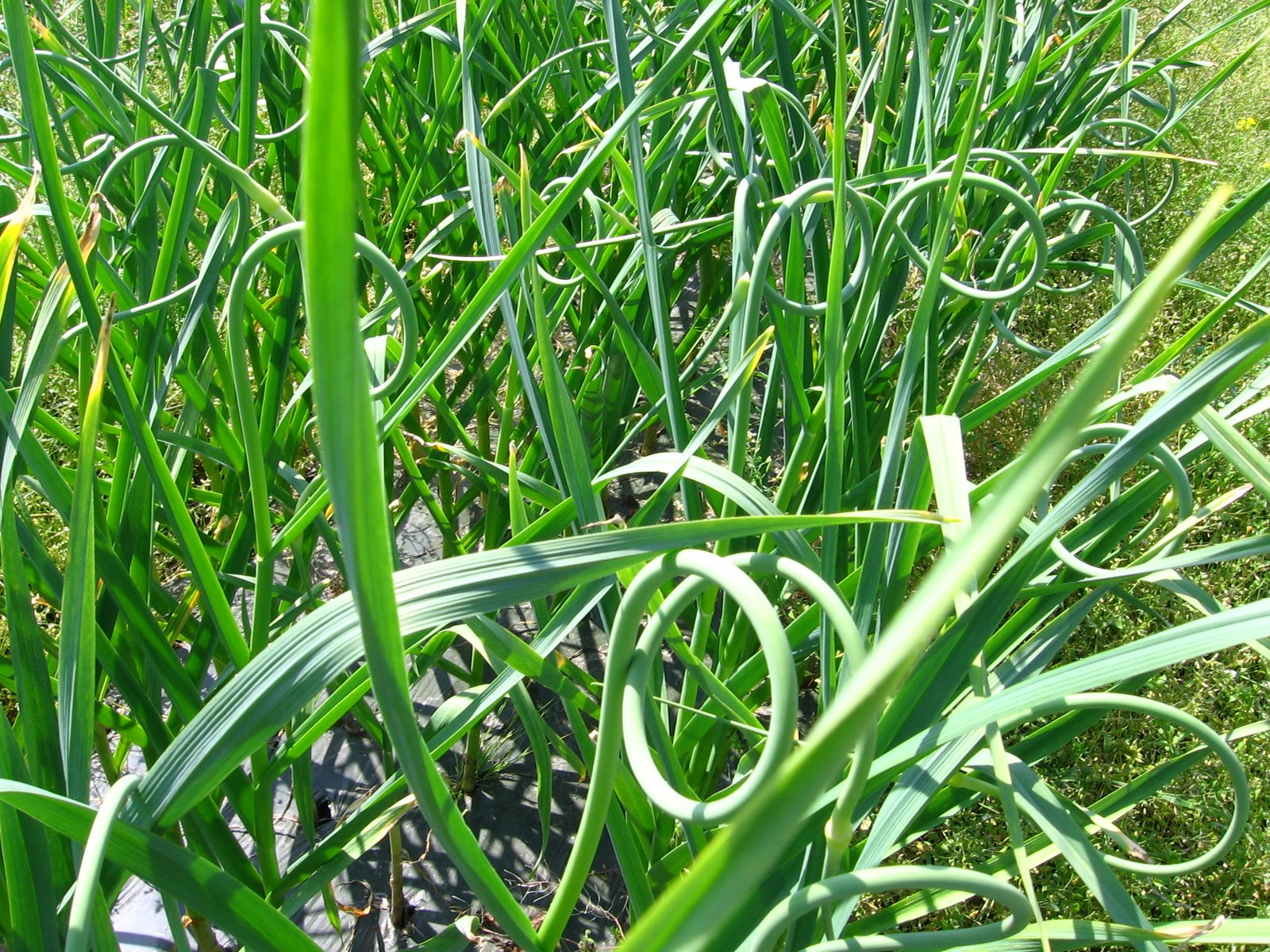
The garlic scapes can be cooked like asparagus—my favorite thing to do is brush them with a bit of olive oil and throw them on the barbecue—but they can also be roasted in the oven, or sautéed. Expect them to have the texture of asparagus, but with a mild garlic flavor.

You know, it’s hard not to compare ourselves to the larger, conventional farms around us. Carpinito Brothers, who is a pretty good neighbor to us and about 30 times our size, grows mainly greens—lettuce, spinach, radishes. We watch them get their ground ready, plant, pour on water, and harvest spinach in about 20 days. They must use the equivalent of plant steroids, they use so much fertlizer and water. By contrast we plant spinach and it takes nearly twice as long to grow to a harvestable size. We don’t have the luxury of all that free water, and we do everything by hand, without chemicals. Sometimes we feel like we’re doing something wrong—I mean, their stuff is ready TWICE AS FAST as ours. But then, if you look at a bunch of their spinach and compare it to a bunch of ours, you can see the difference. Theirs is pale, thin, and mushes into a bunch—grocery store spinach—that needs to be picked through. Ours is dense, dark, and clean. I have to believe that because ours takes twice as long to grow to harvestable size with it’s vibrant healthy color, it must also be more nutritious.

So, eat up and remember that speed and quantity aren’t everything, and bigger isn’t always better!