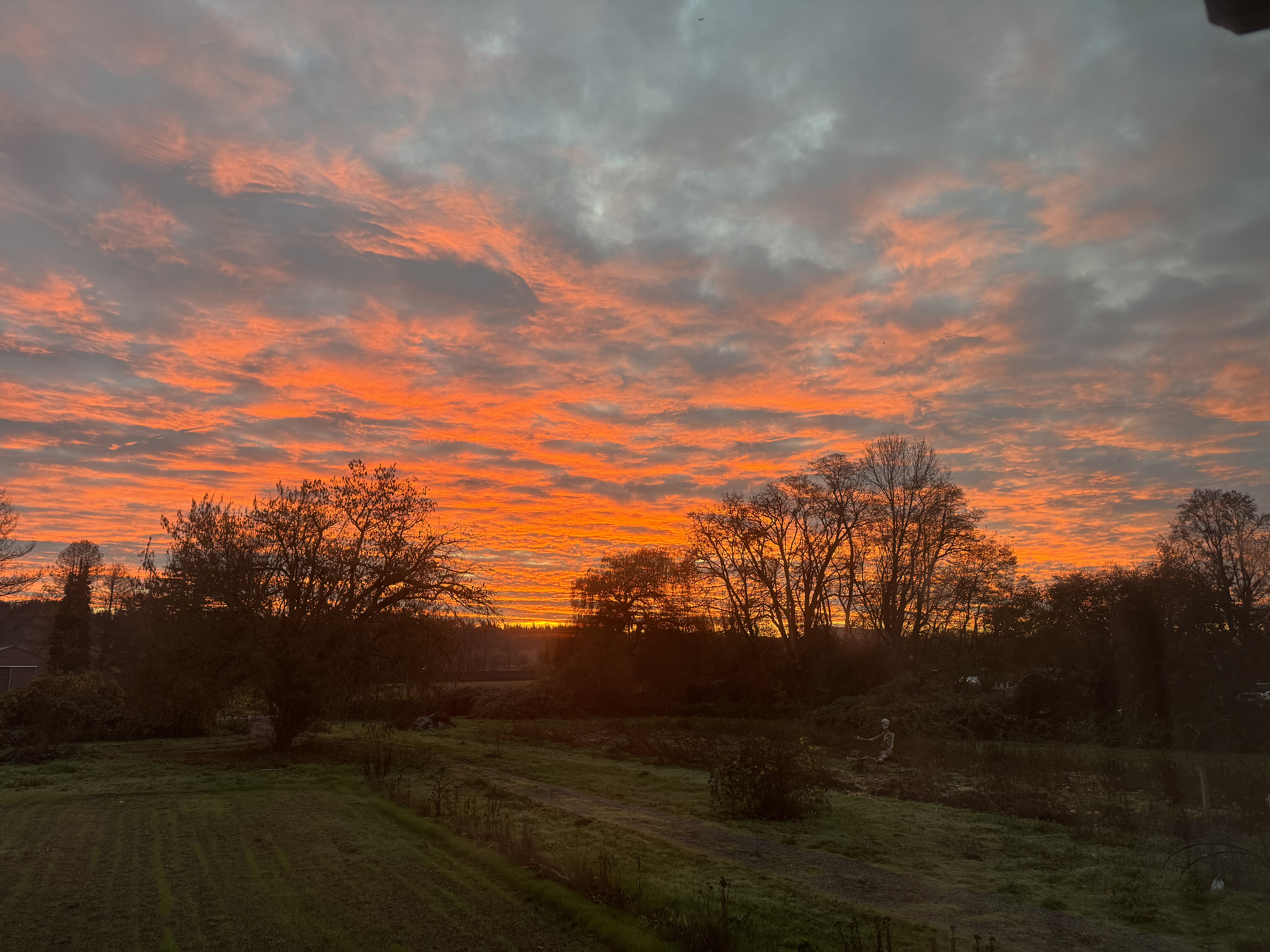
The Dark Season

Just like that, the golden leaves have fallen and November is nearly done. December approaches, and the days are dark and wet, as they should be. Yet, there is a glorious, fiery sunrise now and then to surprise us. The Coopers Hawks have returned to chase away the Red-winged Blackbirds and the Golden-crowned Sparrows sing their melancholy songs from the shelter of the greenhouses, where they feast on tomatoes, peppers, and cucumber seeds. Yet there is still an abundance of food in the field. Today I harvested the last of the sweet, savoy spinach. The cauliflower and broccoli are finally finished, although a few heads remain for me. I’ve started the earliest wildflowers for building habitat (and my experimental native cutflower garden) and in January, I’ll fire-up the greenhouse heat mats and get the earliest non-wildflowers and vegetables going… I’d like to get tomatoes and peppers even earlier next summer.

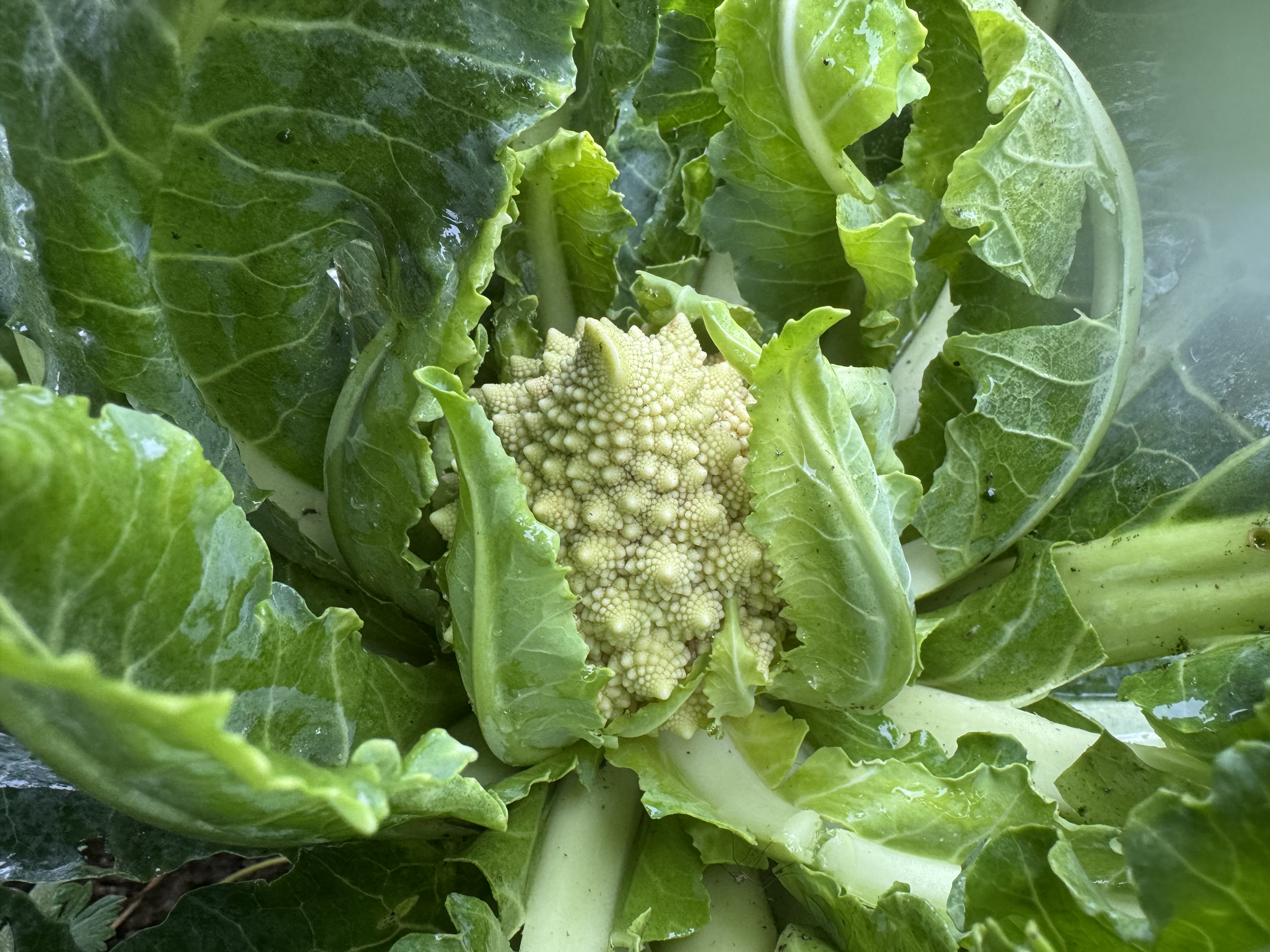
Next week is the last pickup for 2025 CSA, and it will be a big haul! I have a little vacation planned for the first weekend of December… a yurt awaits on the central Oregon coast, for the King Tide. So, I’ll be begin harvesting on Wednesday to prepare for a double-load of fall produce. Whether you pick up on Saturday the 29th or Tuesday the 2nd, you’ll find Brussels sprouts, watermelon radishes, Romanesco cauliflower, pink radicchio, and much more.

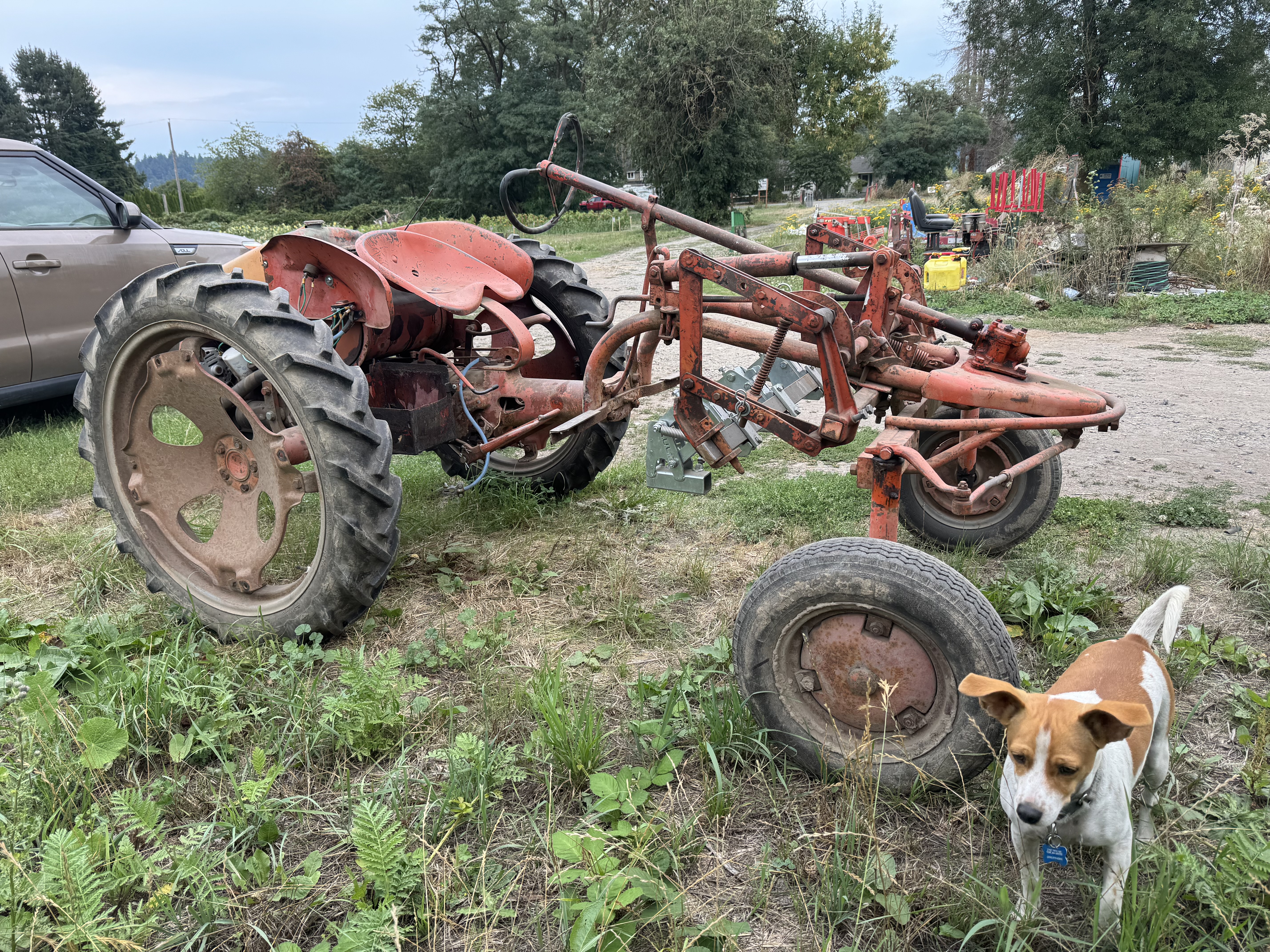
I’ve put together a GoFundMe for my Vintage Tractor Electrification Project, because it’s going to cost somewhere in the neighborhood of $7,000 for the electric motor conversion kit and batteries. I ended up doing all of the cultivation work by hand last summer, and if the improved tractor can do it for me, I’ll be freed-up to grow a lot more food. Plus it will be clean and green and I’ll be less tired! Rewards include printed canvas totes, native wildflower plants and seed bombs, and contributions of CSA shares for families-in-need. Read more at the link: Tractor Electrification Project. I’m hoping to purchase the kit in January, so we have time to get her up and running by planting time; if you are able to help with this project, I will be ever grateful.

I am extremely thankful for those who have already paid for 2026 and to those who have paid “tips” when they paid for their 2026 CSA shares. After covering card-processing costs, the balance of these funds will go toward funding no-cost CSA shares for families-in-need. To date, over $1,500 has gone into this pool, feeding 2+ families for the full 2026 season. All future “tips” paid at checkout will also be added to this pool, and I’ll round-up some before the season starts to connect even more folks with fresh, local produce. If you know of anyone who could use a CSA share next season, please let me know.
In addition to the 2026 CSA 28-week subscription, I’ve opened up a shorter, 2026 Just Summer CSA, for those who don’t enjoy the spring and fall shoulder seasons. I’ve also added a 10-week Flower Bouquet Subscription to the online store. And the 8-box Pantry-Builder Subscription is available too, if you’re not sure about committing to the whole season of pickups. Pickup options continue to be offered at the farm, in Columbia City and Skyway, and via the West Seattle, Burien, and North Seattle share-pools. Let me know if you have an idea for another share-pool! All subscribers will continue to have free access to the Cutflower Garden and subscriber-only Pumpkin Patch in season. 

Thank you for being a part of my farm’s community, and for helping to build a community around this farm. I wouldn’t be here without you! And PLEASE, if you know someone who would benefit from a no-cost 2026 CSA share, please reach out to me!

I wish you a warm Thanksgiving with all who you call Family.

Shelley

Summer is Here, and CSA is Underway; Prorated CSA Shares Available!

June 22 CSA contents
6/22-6/25 CSA contents:
Zucchini or Broccolini, Pea Shoots, Baby Bok Choy, Radishes, baby Butter Lettuce, and crunchy Little Gem Lettuce.

It’s nearly July and we’ve passed the celestial summer marker, the Solstice. Our days should be heating up now, even though we’re losing a smidge of daylength every day. I hate to jinx it, but we’ve actually had some very nice rains and cool spells this season, a change from the last few hot and dry summers that seem to start in May and keep us feeling like California until October. These rainy spells remind me of the weather patterns of a decade ago, and I welcome it! Free water is the best water.

There is a ton of cultivating and weeding to be done after being away, chasing fireflies for 12 days. A lot of people have asked about the trip, and it was FANTASTIC! I need to write a separate post about all the things we saw, in addition to the fireflies in Tennessee, Missouri, and Kansas. So many beautiful insects, incredible landscapes, and a whole lot of national history AND natural history. I’ll get to that in the next few days. I am so grateful to everyone for their encouragement. It was truly remarkable, and I am really happy to have finally experienced fireflies for the first time. Thank you for encouraging me to go!

Red leaf lettuce
Big heads of leafy, red lettuce, ready to pick.

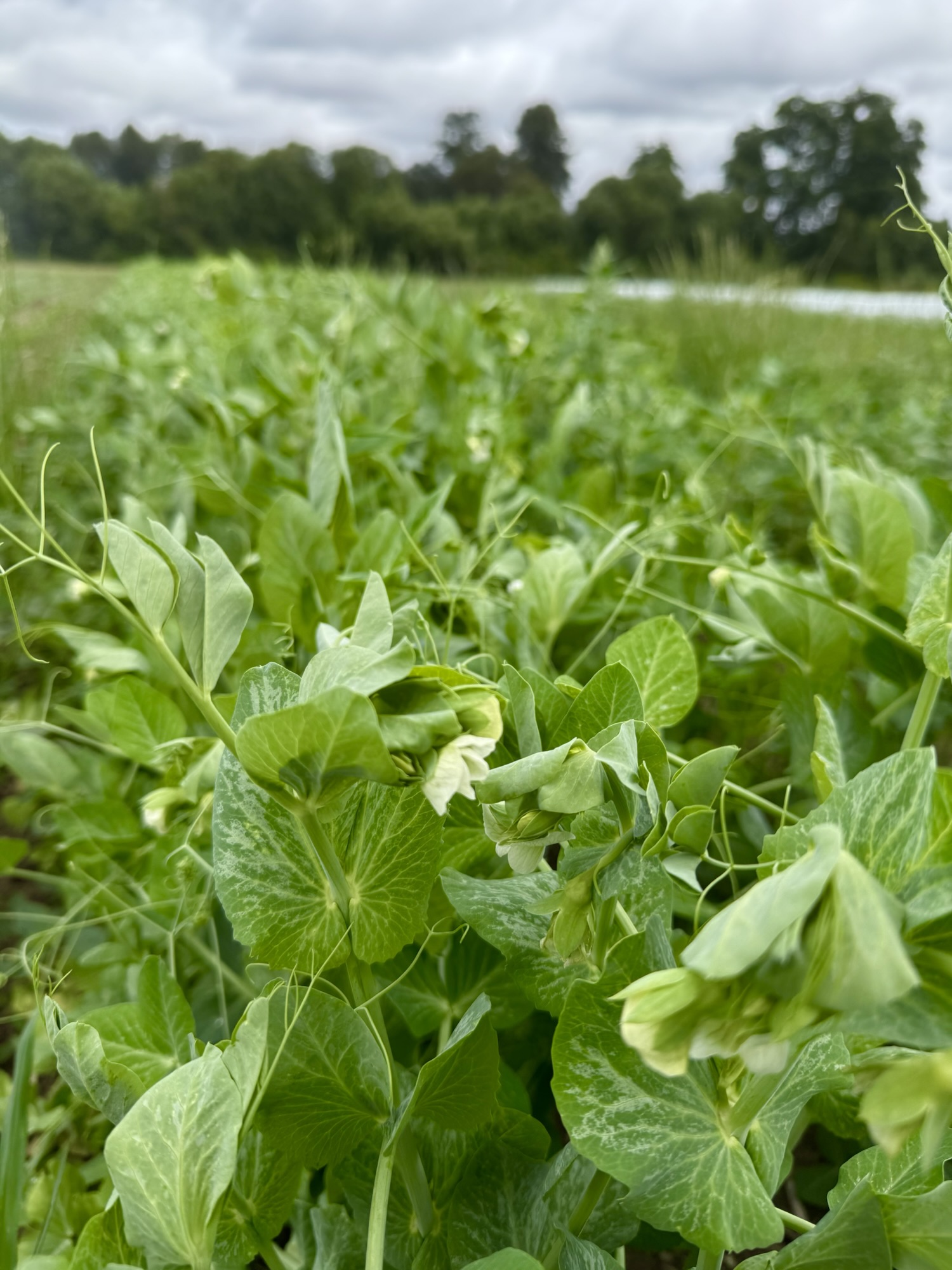
The greenhouses are filling up. Sadly the early greenhouse Sugarsnap Peas failed to thrive when it heated up a few weeks ago, but there is a very healthy stand of Sugarsnaps thriving out in the field and they’ll be ready before we know it. The Tomatoes, Peppers, and Eggplant are loving it indoors, however, and are starting to bloom. Cucumbers and Melons are going in this week. I’ve been filling up the prop house with trays that will become fall and winter food. The fields are full of growing rows, and the cut flowers are blooming.

I’m planning on spending the bulk of Saturday and Tuesday CSA pickup windows working in the cut flower garden, and it’s been such a pleasure to see everyone and chat! Please ask questions if you have them, and be sure to pick a bouquet. The blooms are really coming on now, with even more waiting in the wings.

Pea plants
These peas are just starting to bloom.

In the next week, I’ll be opening up the cut flower garden to the non-CSA public, and they will be able to cut bouquets for a fee. Don’t worry though, CSA members don’t have to pay for flowers! The only exception to this is if a large quantity or flowers is wanted, perhaps for a wedding or other event. (Please let me know ahead of time if that’s the case.)

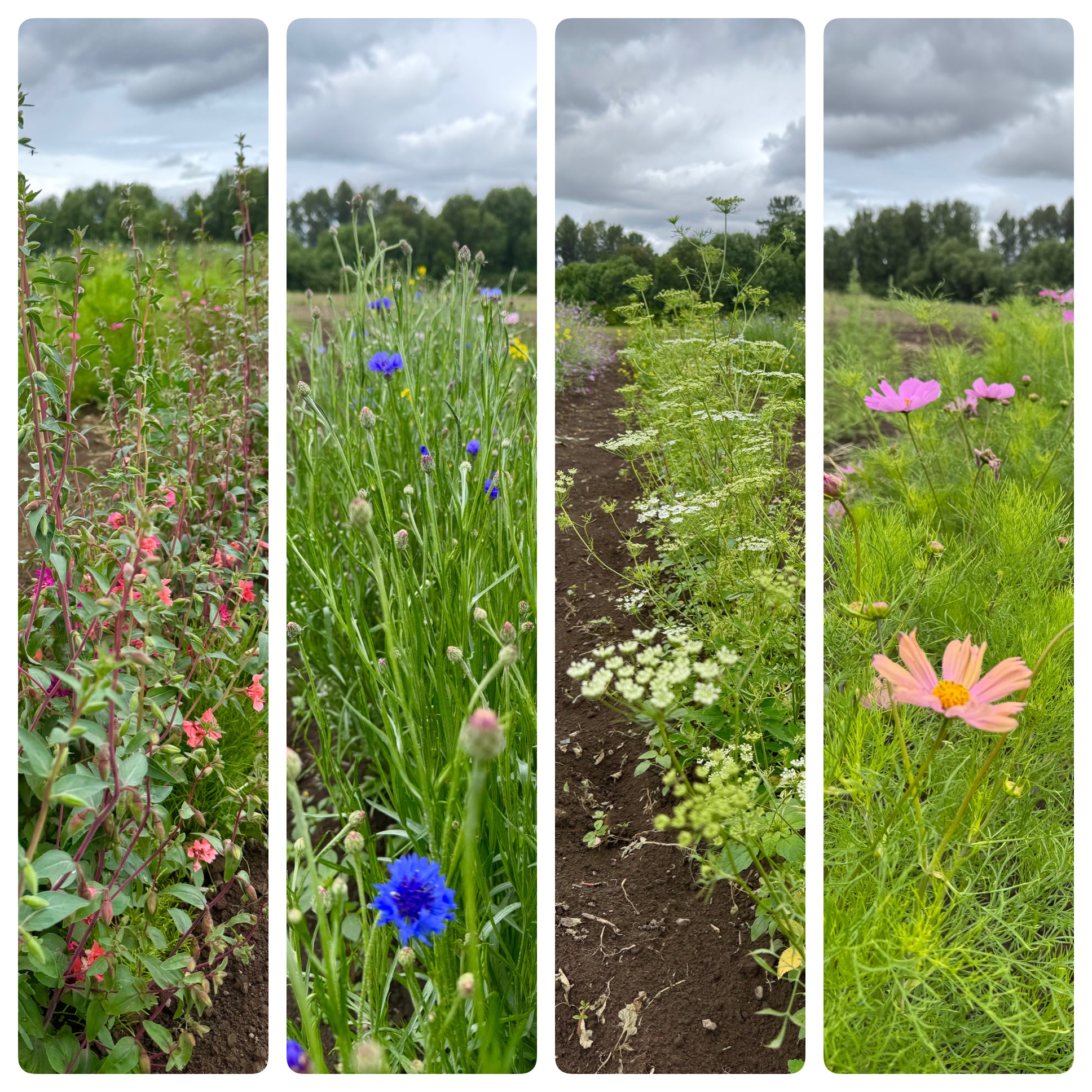
A glimpse of the cut flowers blooming now: Rocky Mountain Garland, Bachelors’ Buttons, Queen Anne’s Lace, and Cosmos.

And if the weekly CSA is too much food or too much commitment, I’ve opened up Pantry Builder subscription, for bulk pickups of green beans, tomatoes, pickling cucumbers, and more. Link to purchase 2025 Pantry Builder subscription

I wish health and wellness for you and your family in the coming season. And I look forward to seeing you soon.

Shelley

The Quickening of Spring and the State of Things

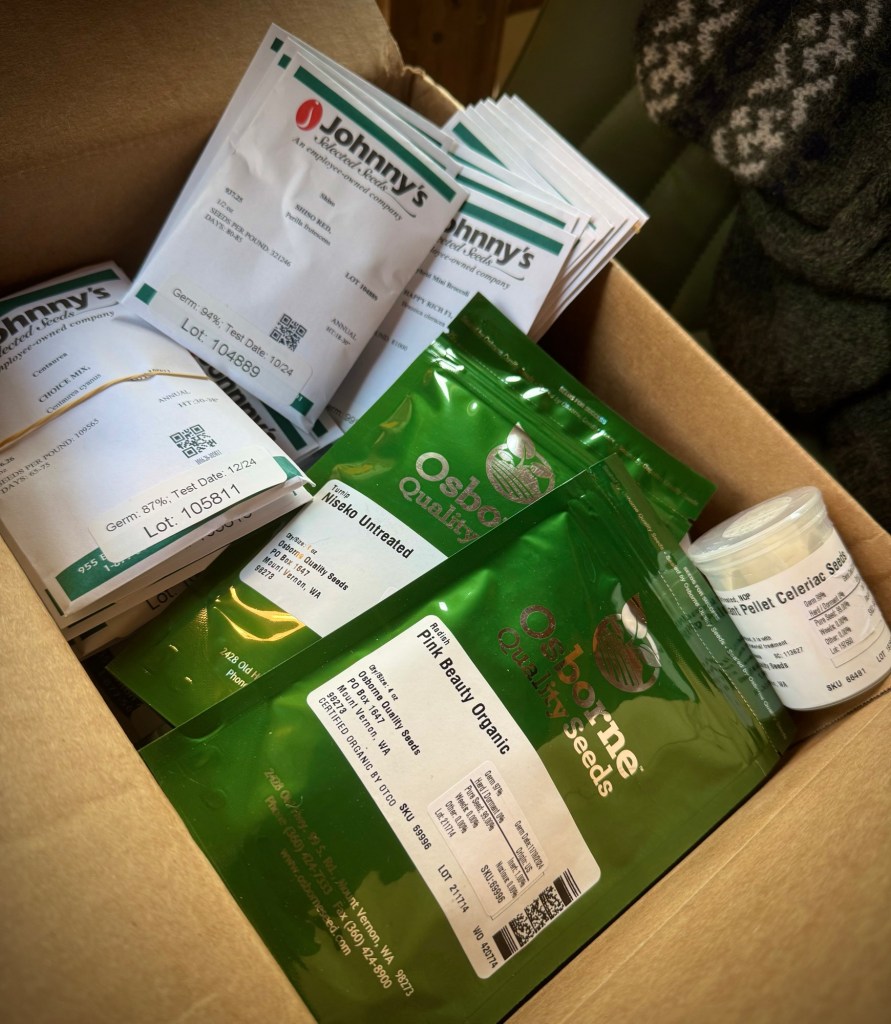
Fresh seeds and all the potential of a new growing season.

It’s very nearly March. The days are getting longer, and The Quickening is upon us. I remember when I was pregnant with Della and I felt that first flutter of a tiny being in my belly… it was magical, that first comprehension that there was a new life becoming. I learned later that this is called “The Quickening”, that first sense of new life. My farmer friend and mentor, Michaele, refers to the beginning of natural spring as The Quickening, and it completely makes sense to me. Every year I notice it, and maybe you do, too; the angle of light shifts and the sun rises earlier and sets later. The birds sing louder and sweeter, frogs start to call, and there’s a green tinge at the end of branches as the new buds start to swell. Welcome to The Quickening of Spring!

These are also the signals to get ready to start planting, so I’ve been getting the prop-house tidied up. New planting trays have arrived, I’m getting supplies in order, making changes to equipment inventory, and refining the planting schedule again, as I do every year. Now that the big freeze has passed, I’ll be getting the first seeds planted on heat mats, and by the end of March, I’ll be planting crops in hoophouses for May harvest.

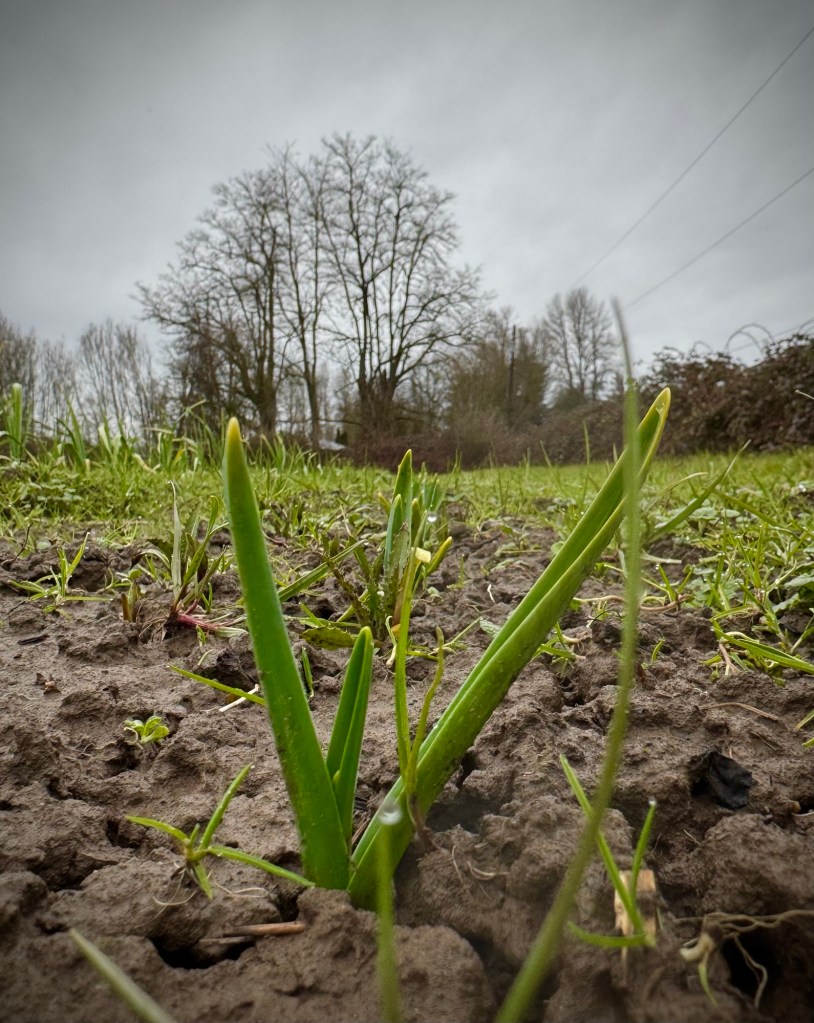
The new garlic crop are excited to grow up!

I don’t really like to talk about politics, but this new administration has made it impossible not to, because there will be implications that reach us all, if they haven’t already. Changes to how agriculture is researched, funded, and marketed, how farm labor is made available (or not), and how food is grown and distributed nationally and globally… The pandemic made clear that these kinds of changes will trickle down to each of us at some level. I am not fear-mongering, but I believe that these cuts and new priorities will likely bring changes to local food security for all of us.

Like most people I know and interact with daily, as we watch friends be cut from their jobs and program lifelines, I have been searching for what I can do to help. I want to do something meaningful. I believe that what we really need now is more community: there is strength in numbers. We need each other to support and be supported by. CSA is entirely about Community, as well as food. Even though my farm and CSA isn’t going to be able to feed the masses, it can bring together a group of people who value both food and togetherness, as well as clean air and water, and birdwatching, and getting outside, and connecting their kids to the source of their food.

I have decided to increase Whistling Train Farm’s CSA capacity, so that I can welcome more families into this fold of inclusivity. I have always welcomed all to the farm, and to the farmily, so to speak. (Not my term, but it’s warm and welcoming, I think.) I’m opening up 50 more CSA shares. I will likely be working the farm full-time this growing season, and we will have regular farm gatherings for anyone who can make it. My hope is that we will find strength and solidarity, and gather to support each other.

I hope that you will be joining us for a delicious and beautiful 2025 farm season. Link to purchase 2025 CSA share. 

I wish health and wellness for you and your family in the coming year. And I hope to see you soon.

Shelley

Purple Deadnettle is one of the first wild plants to bloom, and is an important source of pollen and nectar for the early pollinators.

Winter Solstice, and a New Year

Even though on the calendar it marks the end of fall and beginning of winter, the winter solstice is always the beginning of a new year to me. Plants and animals recognize it… the beginning of lengthening days. More sunlight means more energy to harness for growth, even if our coldest weather typically happens in January and February. 

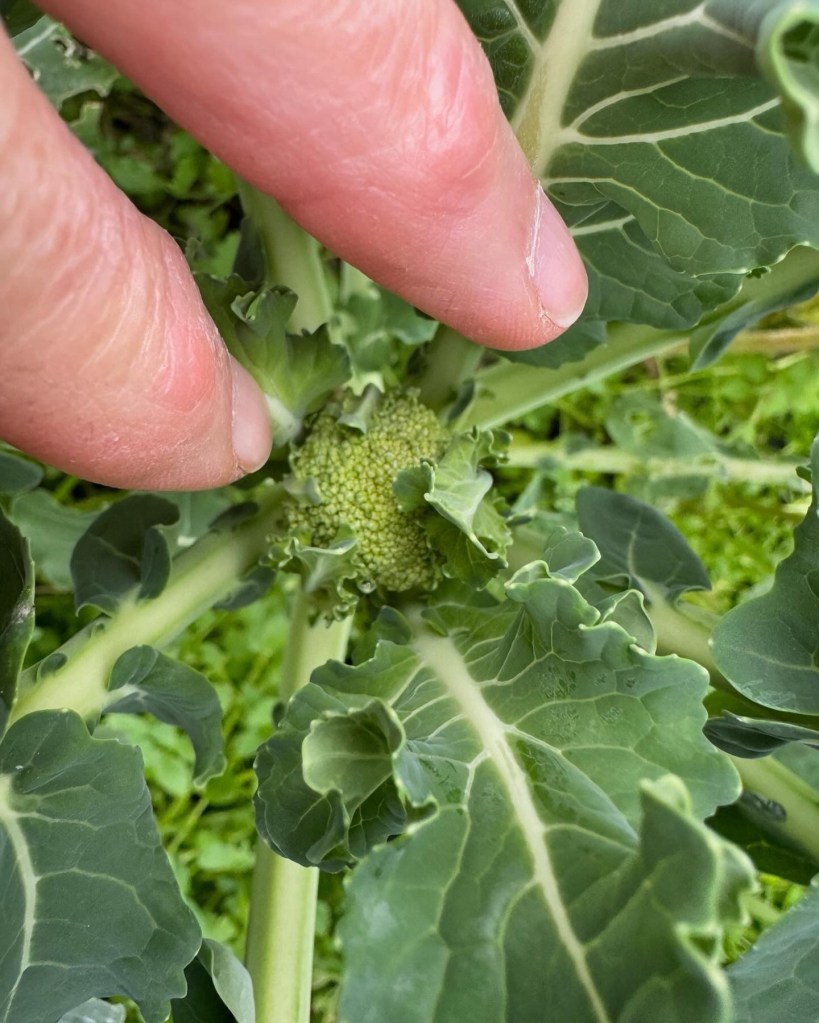
Broccoli crowns starting to form this week in the greenhouse… a taste of what’s to come in May.

But it means our days can’t get any shorter, and it’s time to start planting soon. In the woods, the hazelnut and alder catkins are hanging from branches like ornaments, waiting for that signal to pop open. Amphibians will be making their way to pools and streams soon to lay their eggs. AND, it’s time to start planting vegetables in the greenhouse. 

Indeed, in the coming weeks, I will be ordering the seeds of plants that will feed us for all of 2025. I’ll also be planting seedlings on heated tables. After all, the first crops are only a couple months away… broccoli, beets, zucchini, lettuce, and peas that will be planted under cover in the big greenhouses for the first weeks of CSA. But to have them ready to eat in May, they need to be started in February. 

Even though it’s cold and wet outside, it won’t be that way forever. Before we know it, the cutflower garden will be blooming, and our bellies will be full of the freshest, most local produce possible. 

There are just 17 spaces remaining in 2025 CSA, and I hope that you will be joining us for a delicious and beautiful season. I’ve included the link to the online store here. Your payment now will help me order seeds, as well as pay the mortgage and utilities through the winter. 

I wish only the best for you and your family in the coming year, whichever days you celebrate.

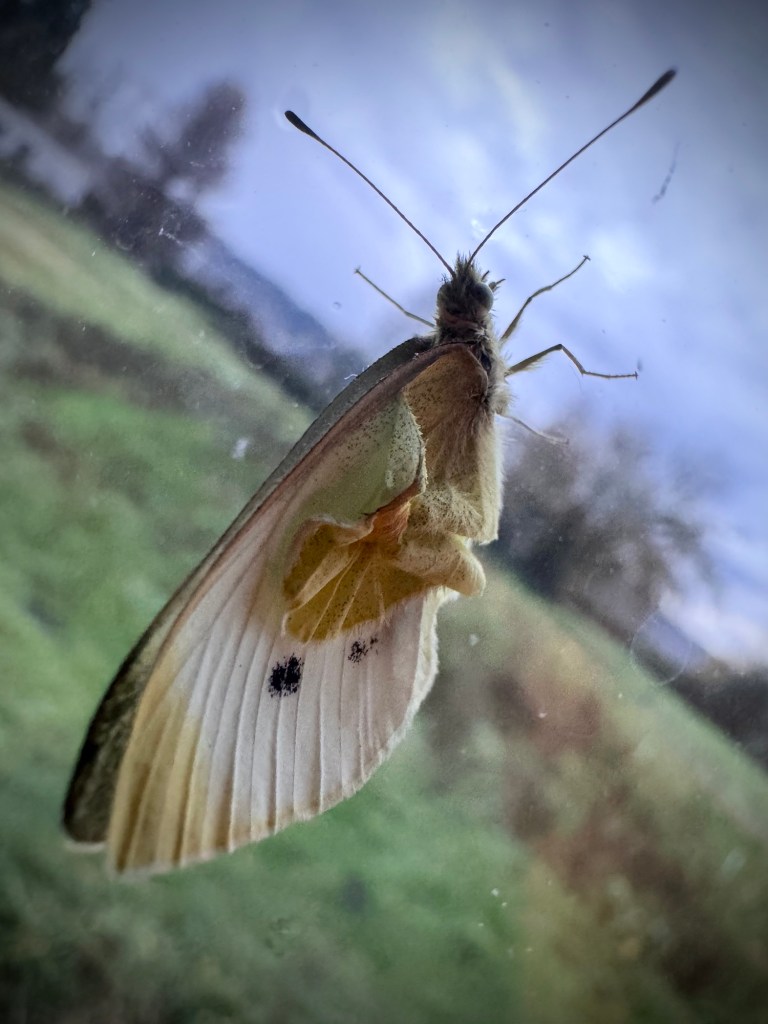
This confused butterfly emerged inside my house yesterday, a reminder that spring is on the way.

And now, about the Winter Solstice:

The New Year is upon us at last. I’m not talking about January 1, the modern new year. I mean the original new year—the new year of ancient times and farmers. The Winter Solstice. This day of the solar year with the longest night, and the shortest daylength has historically been very significant with all cultures in the northern hemisphere, especially farming cultures. All living things (aside from modern man with artificial light) base their life processes on the amount of natural light in each given day. For example: Chickens have a 21-hour egg-laying cycle. They create a new egg every 21 hours, and as long as the egg is completed during daylight hours, the hen will expel the egg. If the egg is formed in hours of darkness, she keeps it safe inside her until daylight returns. (During the summer when our days are about 19 hours long, a hen will lay an egg nearly every day, but in the winter when our days are only 8 hours long, that same hen will lay an egg only every three or four days. Commercial hens are kept with lights on 24 hours a day, to maximize production. Daylength also triggers the heat cycles of mammals, especially grazers like goats & cows. Their biological clocks time things just right, so that babies are born when mom’s food is abundant.

As far as plants are concerned, temperature is less of an issue than daylength. Plants are only able to perform photosynthesis with light. Since photosynthesis is what gives plants energy for growth, most plants stop growing when the daylength gets down to about 10 or so hours. Active plant growth doesn’t start up again until thelengthening days of spring arrive. Then, the plants wake from their winter dormancy and sprout new leaves to soak up all that sunlight and the chickens start pumping out eggs like crazy. In farming terms, the solstice is a much more meaningful day than January 1, Julius Caesar’s new year. But he wasn’t a farmer, he was a politician. The day after the solstice, we can look forward to more eggs, more greens, and it means that soon we won’t have to do our chores in the dark. It’s time to order seeds for next year, and in a few weeks it will be time to start transplants. Spring is just around the corner! If you haven’t seen them yet, be sure and drive by the Carpinito fields on West Valley Highway. There are Trumpeter Swans. Quite a few big, white goose-looking birds and a few greyish juveniles. There have also been some in his field at 277th St. and Central Ave. It pains me to think of all the chemicals they’re ingesting when they clean up the old corn and pumpkin patches, but hopefully it’s not doing them too much harm as they won’t be here very long before they move on.

The day after the solstice, we can look forward to more eggs, more greens, and it means that soon we won’t have to do our chores in the dark. It’s time to order seeds for next year, and in a few weeks it will be time to start transplants.

Spring is just around the corner!

Almost November

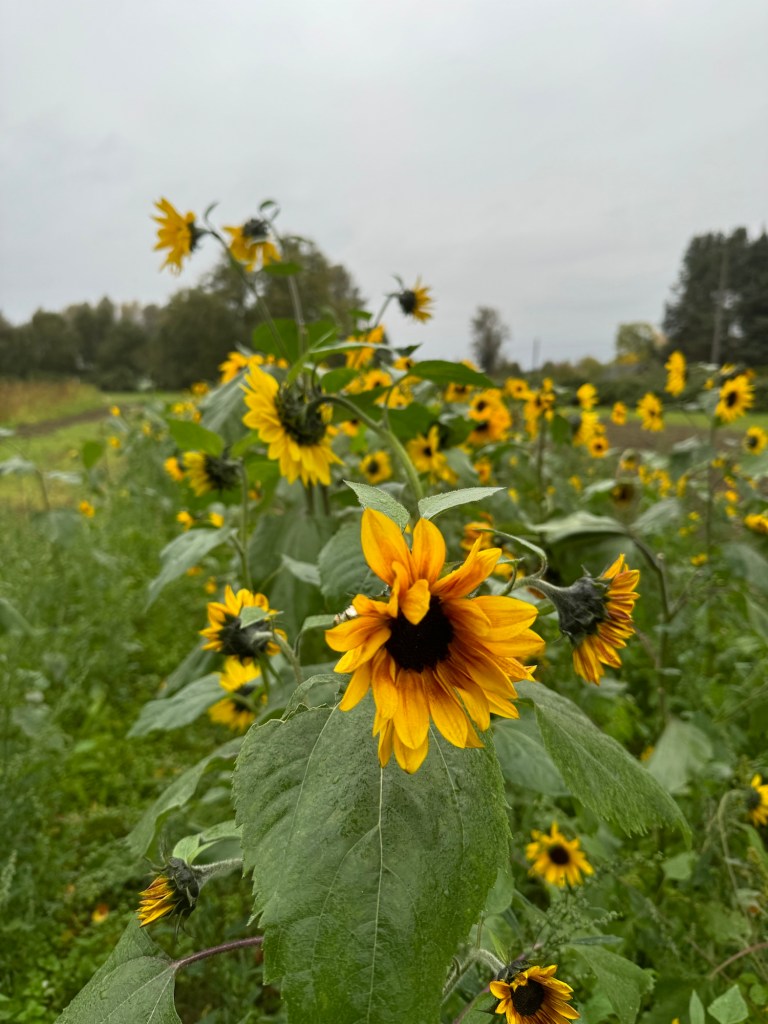
Sunflowers still blooming…

There was a time, about twenty years ago, when the first hard frost would arrive in early September and kill a lot of plants; the kind we like to eat, in particular. Gone would be the squashes, peppers, and lettuce. Roots and greens season started early then, and we didn’t dream of extending CSA season into November or December. 

But to date this year, we have had only one light frost. Early in October. Only the basil was killed. I have a monstrous crop of broccoli just about ready. The peppers and tomatoes are giving up mostly due to lack of light, which is the real end to vegetable growing season in the PNW. It’s not the temperature. 

Last week, we got next year’s garlic planted and all the potatoes harvested and stored away. This weekend I’ll finish pulling all the squashes out of the field. And there are just a few weeks to go until Thanksgiving. This year’s CSA will end the week of November 16th-19th. So many people are away the week of Thanksgiving, I decided to end it early and give myself some breathing space before the winter holidays begin. There is always some produce left at the end, though, so if any CSA members want a thanksgiving box of odds and ends, just let me know and I’ll make you a box. 

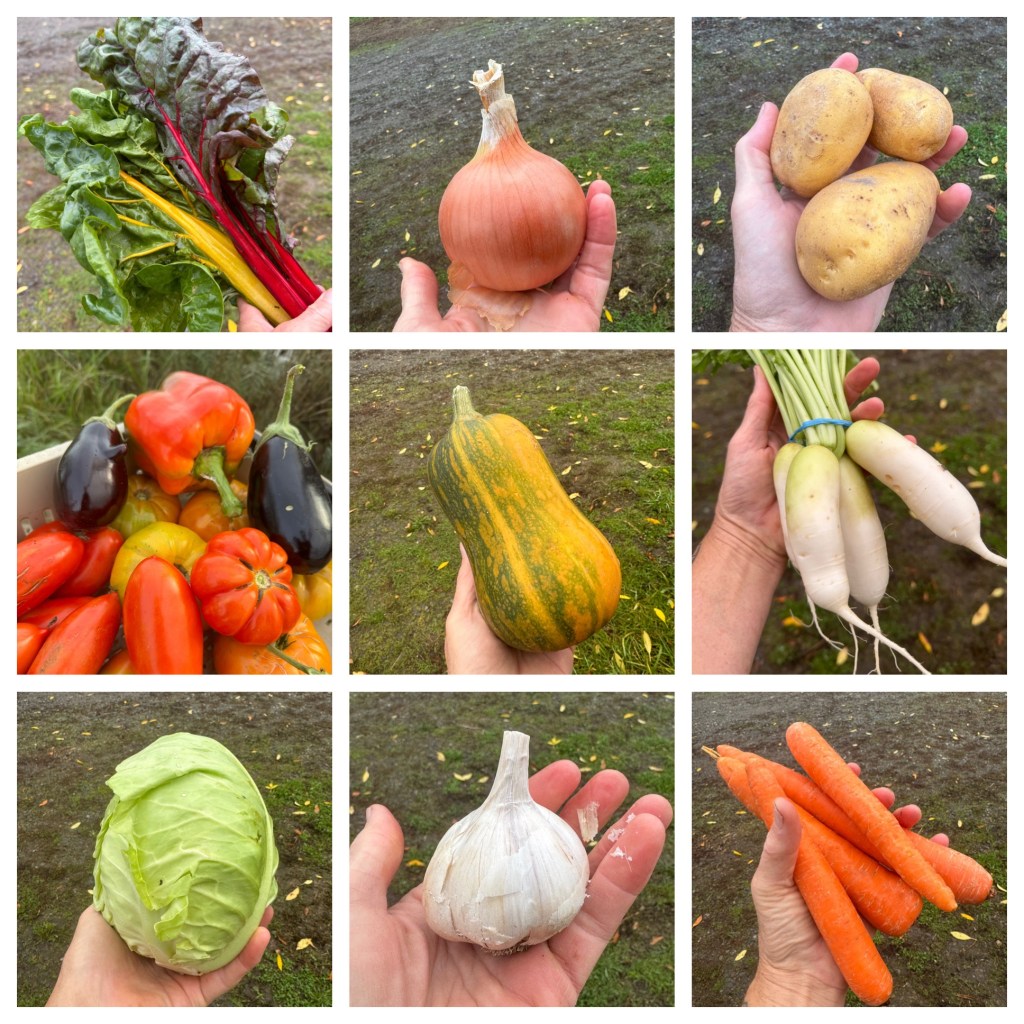
Late October CSA Bounty

As this season winds down and I prepare to pack away all the challenges of the summer, I’m also planning for next year. I’m hoping to get all the seed ordered in December, and pick up the year’s fertilizer in January. Machinery is being repaired already. 

A couple weeks ago, we plowed under what was supposed to be the pumpkin patch… I could tell in September that they were never going to be ready in time. But the up-side is that it’s now ready to start a big u-pick cutflower garden… super early, which is usually a challenge in spring. I may even sow some early blooms this fall, like Larkspur, Poppies, and Bachelor Buttons. I already have a blank canvas, and that is exciting. I’m hoping to give u-pick flowers a solid boost for a little side income towards the mortgage.

I have so much gratitude for all of this year’s CSA families. You were with me through a cold, wet spring and a slow start to the season. You propped me up through one of the toughest summers of my existence, and I’m giving you as much as I can in return.

I’m so grateful for those 40 of you who have paid for 2025 already: you have paid the farm mortgage and for thousands of dollars in engine repairs to the farm van. And now it’s time for property taxes, seeds, fertilizer, and always the mortgage.

There are 30 shares left for the 2025 CSA season. If you’d like to eat and bloom with us next year, the link is below. I will do everything in my power to make it a great season.

Whistling Train FarmStore Click this link to purchase 2025 CSA Shares. Pick up at the farm on Tuesdays or Saturdays, or in Skyway or Columbia City on Sundays.

Contact for North Seattle/Greenwood CSA SharePool: Jonathan Betz-Zall at jbetzzall@yahoo.com

Contact for West Seattle CSA SharePool: Rose Ragan at rose.ragan@protonmail.com

If you would like the contact for the Burien SharePool, please email me.

With much gratitude,

Shelley

SPRINGGGGG!

Rapini is ready!

Firstly, 2024 CSA is starting next weekend, March 23-26. Saturday-Tuesday. If you are signed up, you will get an email soon, so check your inboxes and if you don’t see anything from me by Tuesday night, let me know.

There are 3 spaces left, so if spring snuck up on you and you forgot to sign up, the link is down below. ⬇️ (There are still Pantry Builder subscriptions and garden start kits available for preorder too!)

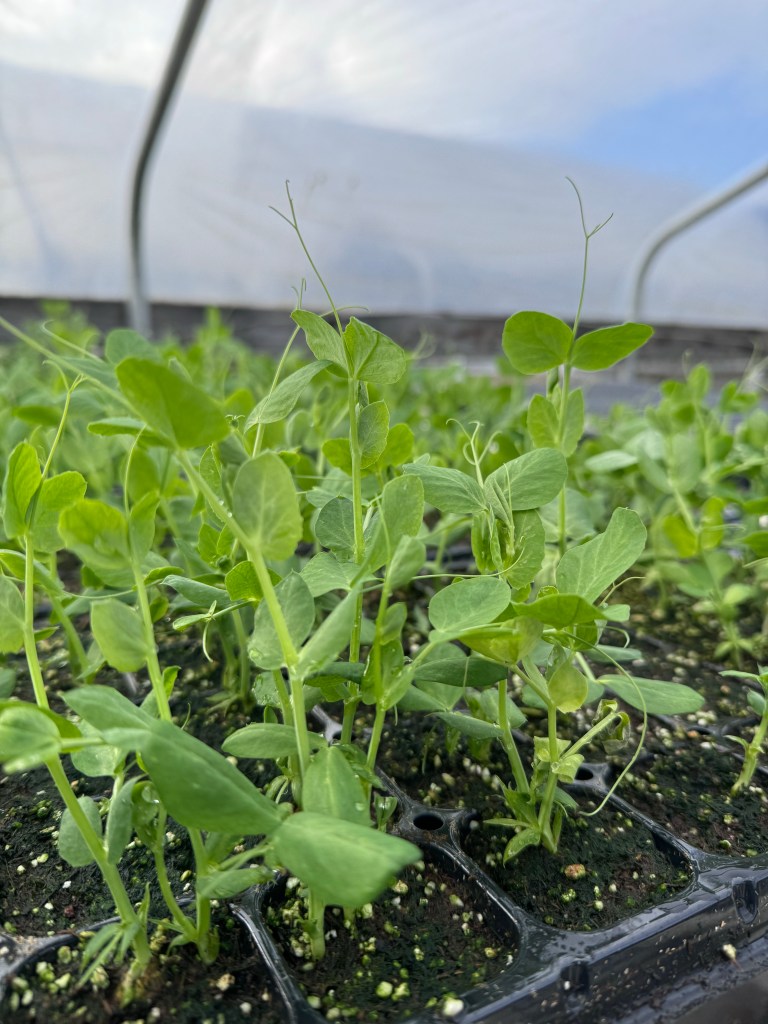
Bebé Sugarsnaps

After last week’s frosty/briefly snowy spell, the weather has been truly gorgeous. Plant growth is exploding as fast as the increasing day length.

I truly can’t wait for the cut flower garden to start blooming (perennials will be flowering in May) and for the first sugarsnaps and juicy salad turnips and that gorgeous purple sprouting broccoli. And fresh herbs and lettuces! What are you most excited to eat?

Here we go! It’s going to be a great season!

Here is the link to the new online farm store, where you can register for 2024 CSA, the 8-installment Pantry Builder subscription, and last chance to order plant starts/garden kits.

And the contacts for the share-pools are below.

Whistling Train FarmStore Click this link to purchase 2024 CSA Shares and/or Pantry Builder Subscriptions

Contact for North Seattle/Greenwood CSA SharePool: Jonathan Betz-Zall at jbetzzall@yahoo.com

Contact for West Seattle CSA SharePool: Rose Ragan at rose.ragan@protonmail.com

If you would like the contact for the Burien SharePool, please email me.

With much gratitude,

Shelley

Wintertime and Dreaming of Next Year

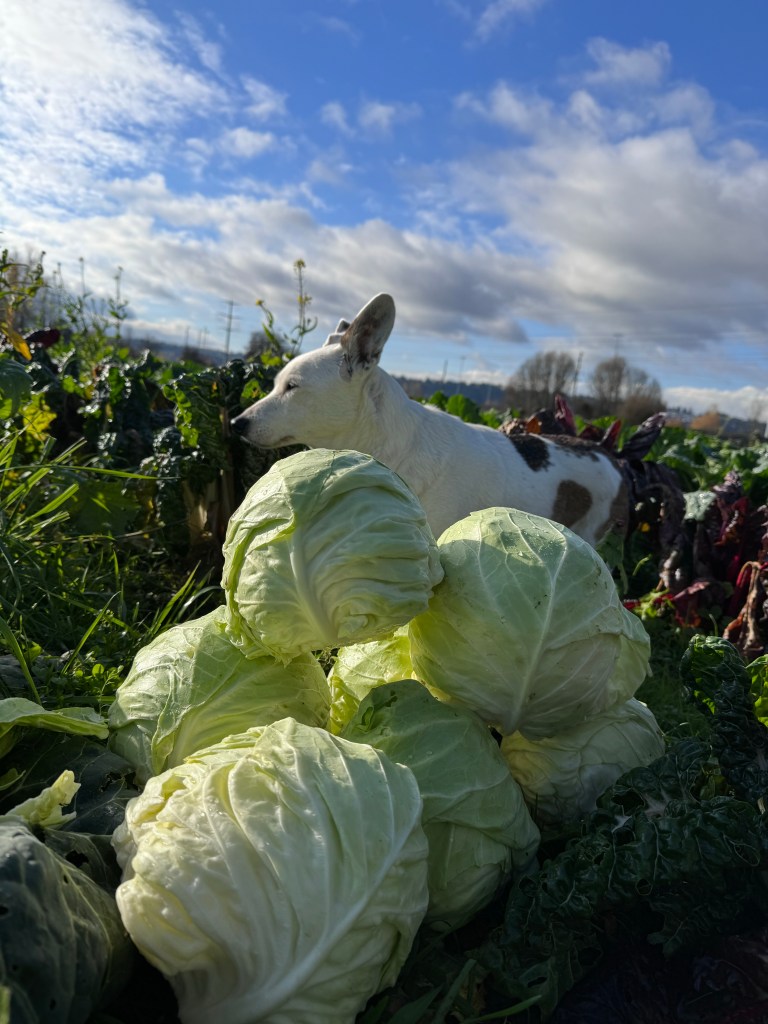
A bright, frosty day for harvesting sweet, juicy cabbages with Luigi.

The 2023 farming season is winding down, the skies are getting darker and the days are getting colder. It’s a relief to be entering the season of rest. It is the time of roots and greens, and the cold makes them taste even better, even if it makes them more difficult to harvest. It’s my favorite time to eat vegetables, honestly. Not only are flavors more concentrated and the greens sweeter and less bitter, but I actually have the time to make FOOD, instead of the grazing days of summer.

It’s been a frosty, frozen week, and while the greens that can tolerate it are still alive and well, they can’t be harvested while frozen. You see, there is a constant ebb and flow of water and sap throughout the tissues of plants. When it is warm, sap and water flow upwards from the roots to the leaves, and when the air starts to freeze, the plants do their best to push much of that water down to the roots where it can’t cause as much damage. When the air freezes, the water inside cells turns into tiny icicles which can puncture the cell membranes, causing cell death. That’s why non-hardy plants look black and wilted, as if they are cooked (looking at you, Dahlias). But the more durable plants turn some of their starches into sugar that acts as antifreeze, so the cells don’t get punctured as easily by ice. However, if they are harvested while all their water is in the roots, they won’t recover and perk up, so it’s best to wait until the air temperature warms, and the plants are circulating liquids again.

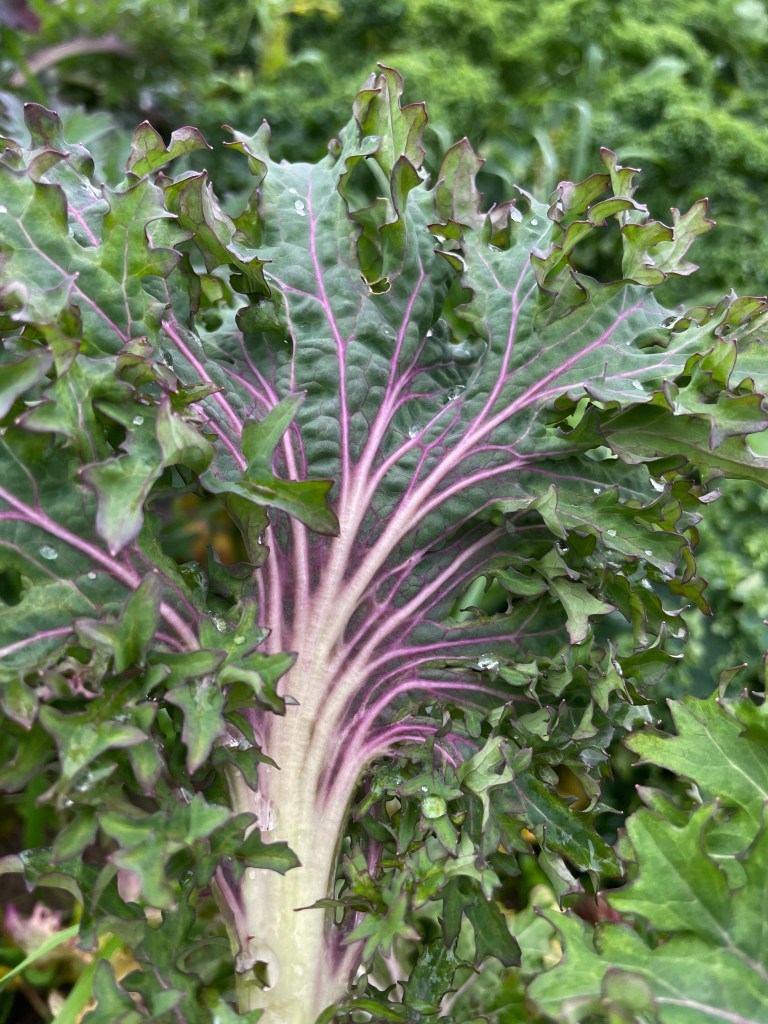
Beautiful winter kale.

That’s why, when we have a freezing stretch, there aren’t as many greens in the CSA harvest. More roots and storage crops make their way into boxes. But we’re warming up a bit in the next week, so greens will return. At least for the next few weeks; the final week of the CSA season is just before Christmas. And then I’ll begin strategizing for 2024.

On another note, the Trumpeter Swans have returned from the Arctic summer! We don’t get many in this valley, but it’s reassuring to have them back. I hear them tooting overhead while picking greens, their long, white bodies glide through the silvery fog, and all is well. At one time, prior to the invasion of agriculture and development, the Green/Duwamish River Valley was a major stop on the Pacific Flyway, one of the north-south bird migration corridors. A wildlife biologist who birds here somewhat regularly told me that this entire valley used to be a complex of braided streams and wetlands, and that huge flocks of ducks, geese, cranes, and swans, as well as songbirds passed through. Imagine the sounds! So when the clumps of swans and geese fly over, that’s what I try to imagine. Tens of thousands of birds in a raucous flock, gathering, circling, landing, talking, and eating.

I’m excited about the small and simple CSA of 2024. A smaller growing space will be much easier to manage, and hopefully I’ll be able to keep on top of the weeds in the cut flower garden. A more intimate CSA project awaits, and I am here for it. With fewer families to serve, I can plan for more u-pick opportunities for those who want that. Also, several people have asked about the Pantry-Builder Subscription, and I am considering offering it again in 2024. It’s not a lot more care or harvest time to plant more pickling cucumbers, green beans, and sauce tomatoes. And I’m already planning how I’ll reinforce the Sugarsnap Pea greenhouse to battle the bunnies.

While I was picking kale and baby boy choi on this beautiful, sunny morning, I looked out into the field, filled with singing sparrows. Next year, most of the fields will be cover-cropped with species loved and needed by pollinators. I’m excited to see what changes come to my property if I don’t work it so hard. It’s already an Audubon birding hotspot… maybe even more species will visit. I’m looking forward to doing more in-depth surveys of insects here, expanding on what I’ve done in the last two years. Last year alone, I logged 156 species of moths. And my pollinator survey was haphazard, but will be more focused in 2024. Insect diversity is the key to a healthy ecosystem. If I can create a rich, diverse habitat on my 15 acres, how might that change, and possibly inspire, managers of other farms and open spaces.

Baby Bok Choi harvested after a week of temps in the 20’s.

This is my vision for 2024. 15 acres of healthy, healing ecosystem surrounding 1-2 acres of vegetables production. Let’s see what happens!

My 2024 Little CSA is filling up, but there are still a few spots available. Share pickup is on-farm only, but two Seattle groups have organized a “share-pool”, where members take turns picking up for everyone at a drop-site. Right now, these share-pools are happening in Greenwood/North Seattle and West Seattle, in addition to our long-time Burien share-pool. Pickup is still at the farm, Saturdays and Tuesdays, and everyone is welcome to cut flowers while in season and visit the pumpkin patch and sunflower field.

It’s been an interesting farm season, but it’s finishing up strong. I’d love to have you join me in 2024.

Here is the link to the new online farm store, where you can register for 2024 CSA. And the contacts for the share-pools are below.

Whistling Train FarmStore Click this link to purchase 2024 CSA Shares and/or Pantry Builder Subscriptions

Contact for North Seattle/Greenwood CSA SharePool: Jonathan Betz-Zall at jbetzzall@yahoo.com

Contact for West Seattle CSA SharePool: Rose Ragan at rose.ragan@protonmail.com

If you would like the contact for the Burien SharePool, please email me.

With much gratitude,

Shelley

Swans return from the Arctic every November. Our valley doesn’t get as many as other places, but it’s still a reassuring thrill when they arrive.

Ch-ch-ch-changes

I’ve been working on this email in my head for months, knowing that in the near future I would need to break this news, and I have dreaded it. As many of you know, just after COVID, when my kids were both studying college course catalogs, I made the decision to go back to school myself. It’s taking me almost four years to complete my AAS in Natural Resources, but I will graduate in Spring of 2024 with multiple degrees in Water Quality, Park Management, and GIS Applications. A few of you know that I did six months of internship last winter at Shadow Lake Nature Preserve in Renton/Maple Valley. I am now the part-time Land Management Specialist, and I love working to preserve such a special place and light a spark of appreciation for the people who visit. And they have offered me a full time position as soon as I am available. 

Since I was 10 years old, I have wanted to farm, and through a lot of hard work and determination, I feel like I have been relatively successful; more successful than most who attempt farming. I started growing food here with Mike 25 years ago, and thanks to you, our incredible community of CSA families, we were always able to have what we needed, but there was never much extra. Many of those years I needed to work an off-farm job in the winter to cover the bills. Thanks to you we were able to move a house to this property, and eventually, finally, acquire the mortgage. However, there has never been enough to build a savings account, or to plan for retirement. As much as I have wanted to start one, I actually have no retirement funds or a plan of any kind. As the kids began to fledge, and I slipped over that magical 50-year mark and recovered from my stroke/artery dissection, I really started to think about what my future might look like. 

There is a saying in farming, half-way to being a joke, yet quite real, that farmers never retire, they just die farming. As arthritis started to stiffen and pain my fingers in winter, and my tendons started to complain as I hobbled about in the mornings, I really began to think about what my life might look like at age 65. Or 75. What about all the places I want to see, and what about the grandchildren? They are likely coming in the near future, and I want to be there for them. Will I need to keep farming 14 hours a day when I’m 70? What about when I’m 80? My dad just turned 92; will I need to farm when I’m 90 or risk losing my home?

Farming is one of the more stressful occupations I think, even more so in these times of extreme climate. This has been one of the driest years in my 25 year career. It is scary not to be able to water everything enough, and it is expensive pouring water on the soil and have the plants still be fighting for life. It is incredibly difficult to find workers, and when they suddenly give notice that they are quitting the morning that CSA harvest needs to be done, the only thing to do is for me to suck it up and get it done myself. That’s what happened this week, even though temps were in the 90’s. I am 56, but will I be able to do that when I’m 65 or 70? Will I want to do that? I have done everything in my power to find a successor, and over the last ten years, I have mentored several young farmers. But none have wanted to take the reins of this farm and feed our CSA community. It disappoints me greatly, but I know that I have done my best. 

In the growing season, farming is a 24/7 project, psychologically and emotionally. Everything is a reminder that there is more to get done. Dinner happens after the sun sets, and irrigation needs changing before bed, and before breakfast. When I was younger, it wasn’t so difficult. But I have found that I need work that allows me time to relax and enjoy some time off in the summer. It’s not too late for me to start building up a small pension either, I don’t need much. I dream of having a garden again; so much different than operating a farm. So much more manageable, with time to sit and admire the plants, and pore over them for hours looking for insects and identifying pollinators. Some time to relax and eat dinner before dark.
 
However, much like relearning how to cook for one when your kids move out, learning how to “garden” again will be interesting. I will likely grow far too much, as I often cook far too much for just myself now. (The dogs don’t mind!) So I’m going to step down gradually and grow a one-acre garden next year. That may seem like a lot to a home gardener, but it seems so small compared to managing 10 or 15 acres! I’m anticipating that it will still feed 30 or so families, in addition to myself. But I really don’t know how to grow just three broccoli plants anymore, and the greenhouse trays have 200 cells. I do know that it will be considerably less work to plant and grow one tray of each crop than ten though!

So this is my concession: I am offering 30-40 CSA true shares for 2024, a full season. The pickups will be weekly from early June through October, with bi-weekly or monthly pickups in April and May for Rapini and other early spring treats. It will go back to bi-weekly or monthly pickups in November and December. The disappointing down-side to this is that I will no longer be able to offer delivery to Seattle; pickup will be at the farm only. Packing boxes and delivery takes me a full day each week. While it will lighten my workload considerably, it breaks my heart to let that go. The hardest part of this metamorphosis is setting free some of my strongest and earliest farm supporters, some of whom have been CSA members, farmers market shoppers, and Seattle drop-site hosts since 1998.

This week I will be canceling my contract with Barn2Door. You will be notified by Barn2Door that this is happening. On the plus side, there will be no more confusing notifications! Moving forward, all notifications will come from me directly. Also, I have put together a new, simple online storefront through Square. 

The address is www.whistlingtrainfarmstore.com. 

On this storefront, I will put bulk-order items that you can add on to your regular CSA delivery/pickup this season (like pickling cucumbers or canning tomatoes), but I have also added the 2024 CSA shares. There is only one share size, equivalent to the current Small Share. If you are a Large Share family, you may choose to purchase two Shares. This will make it simpler for me to coordinate. I am still planning on growing a cut flower garden, because growing flowers makes me incredibly happy. Not just because the flowers are pretty, but because they attract all manner of insects to study. And insects attract birds. I’m nerdy that way. You will be able to cut the flowers, too!
 
I cannot put into words how grateful I am for your ongoing support of Whistling Train Farm. You have made it possible for me to grow nutrient-dense food and connect hundreds of families to the source of that food. You have given me the opportunity to give my kids a lifestyle envied by their peers. We may not have had the money to buy everything they wanted, but they were able to play and run outside at will, explore and find their passions, and they have come to appreciate and understand the living world around them, including what it means to have the support of community. You have also given me the honor of offering your families a window into the food that they eat.  

I will not be selling the farm, and I likely will not rent to anyone either. I plan on staying and living here on the property, and fallowing the acreage I don’t use next year to reduce the weed seed bank. And then I will cover crop it to continue to build the soil, or I may rewild it. The future holds many possibilities. You will always be welcome to wander and explore here. And fear not, we will complete this 2023 CSA season well-fed; I am not dropping the ball on 2023!

With ongoing gratitude and humility, and much love,
Shelley
 
This email was sent to << Test Email Address >> 
why did I get this?    unsubscribe from this list    update subscription preferences
Whistling Train Farm · 27127 78th Ave S · Kent, WA 98032 · USA 

August…

It’s been an interesting summer, hasn’t it? We entered the season with record low soil moisture. That’s not something reported in mainstream weather reports, but it’s one of the most important considerations in agriculture. Irrigation is only successful if roots have access to the water being laid-down, and roots will only grow if the soil is wet where they are headed. That means that the soil below the roots must be moist enough to encourage active root growth. This summer, we started in May with active soil moisture down several feet. That means that several feet of irrigation have to happen before roots will penetrate to any meaningful depth. And that has been incredibly difficult this year.

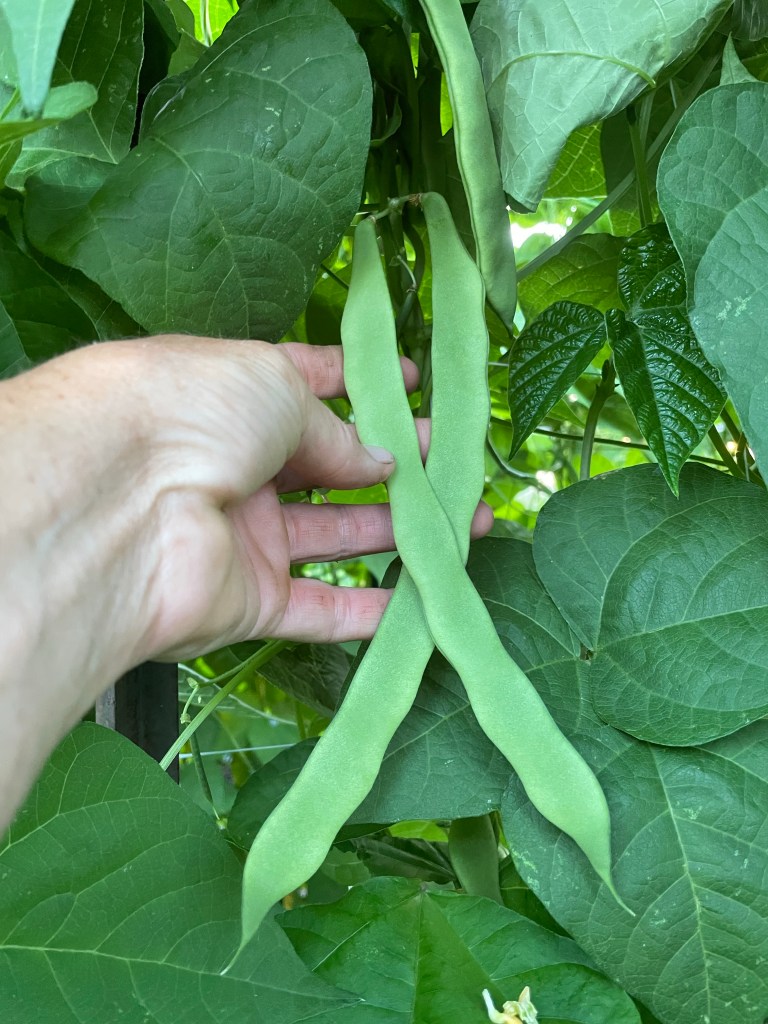
Romano Beans coming along soon…

Even though the air temperature has been cooler than in the last few years (haven’t hit 100° yet, knock on wood and fingers crossed!) but we also had much less precipitation in the winter. So, yay, no flooding, but boo, no residual soil moisture. Now, in August, we are finally starting to reach that soil moisture equilibrium in some parts of the farm, which is great for all the fall and winter planting happening in the next two weeks. But it also means that my July water bill is $2,000, something I don’t generally expect until September. So that was a shock, and my bank account is nearly empty. (Some farmers have mentioned water surcharges to help cover that unexpected expense…)

These concepts are important to understand, because that lack of root growth is why we haven’t had many greens, but the cucumbers and squash and (finally) the potatoes are happy. Leafy greens and herbs need a lot of water. But the beans are coming on, and I’ve managed to nurse along a late crop of sugarsnaps (to make up for the destruction by evil bunnies in the spring). Peppers and tomatoes are loaded with fruits and ripening. And hopefully the next big patch of lettuce and spinach will do better.

All of this wouldn’t be possible without a large underground plumbing project we installed in June to deliver more water to the fields (you may remember the trenches and backhoe). We might not have had anything to harvest if not for that $5,000 investment.

The fall and winter Brassicas are growing strong, lots of Broccoli and Cauliflower coming starting in October. Fall greens and roots are getting seeded today, as well as winter greenhouse greens. The days are getting shorter (thankfully!) which means the clock is ticking: we have just 2-3 weeks to get all of the seeding done for the rest of the year. Due to shorter days, plants don’t make significant growth after the end of September/early October, so we need to get everything as large as possible by that time.

August burnout is upon us, but we just have to push through and hope the new crew stick around to the end of it! The rest and calm of winter is coming.

Sugarsnaps! In August! 🤞🏼

And a heads-up: Della has been living here, doing an internship for summer, but is moving to Southern California to be with her new husband in early September. I’ll be going with her in my van, so will be away September 7-13. I don’t have anyone to do deliveries for me, so I need to figure out how we’ll handle that. I will likely split the missed week between the week before and after, but we’ll see how things look at the end of August. Just make a note that there will likely be no delivery/pick up that week.

And one more thing: I am not renewing my contract with Barn2Door, so you will be getting one last notification from them about that this week. I have all of your contact information saved , so in the future you’ll just get notifications from me directly. No more confusing crossed emails.

Cutflowers

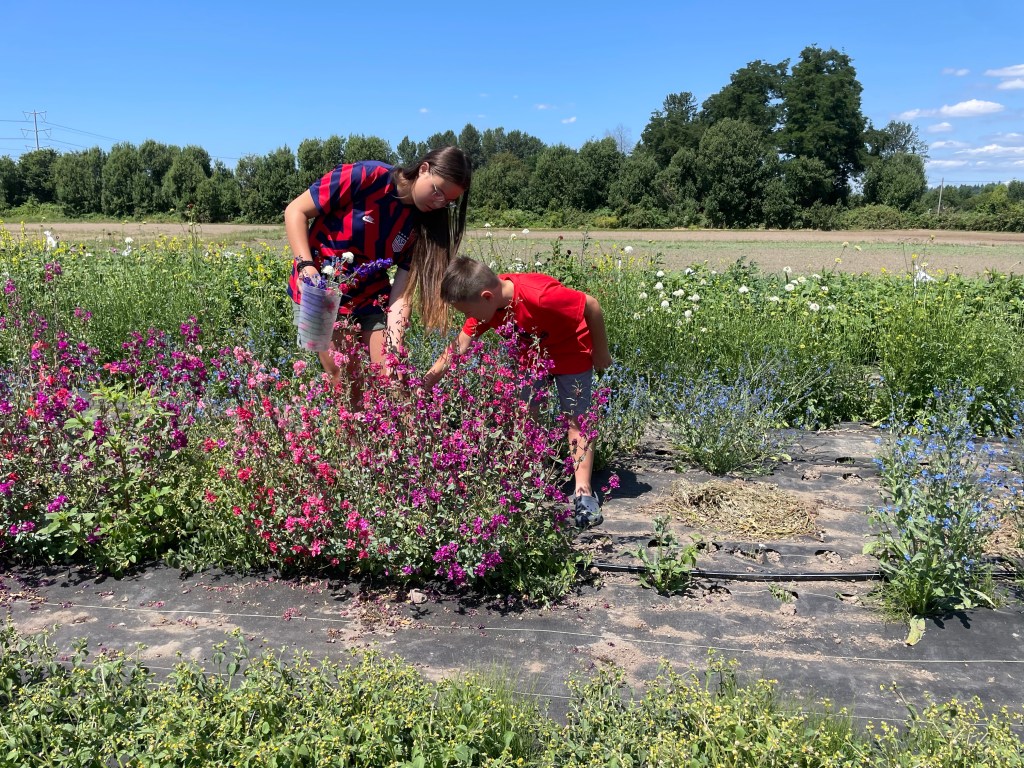
The U-Pick Cutflower Garden is open to everyone on Tuesdays 2-7 and Saturdays all day. If you need to visit on another day, please let me know. Those are the CSA pickup days, and I’m already expecting lots of people wandering about. I need the other days for growing and working. There are pitchers and snips for you to use in the CSA shed. Just return them when you’re done!

With much gratitude,

Shelley

May…

As we head into a week of hot weather, I find myself wondering if there is a “normal” spring anymore. 20 years ago, or even 10 years ago, there was usually a predictable pattern. Freezing and sunny February, followed by wet and cool March, occasional frosty nights, and that magical break in April when we could hustle some seed into the ground. Then we could count on gently warming up into summer. But in the last five years, spring has been the absence of any pattern. Either it stops raining mid-April and we dry up, or it doesn’t stop raining until mid-June and we can’t get anything planted, or there is a week in late March when we have to pull tricks to keep the transplants from freezing when temps drop into the teens.

It looks like we may have one of those sudden summers, as the daytime temps climb into the 80’s this weekend, after an abnormally dry winter (according to my soil explorations). The ground is going to dry up quick, and then it will be irrigation season already.

But, we’re going to do our best, as always, to roll with the punches. After some tractor futzing, we’re ready to get the potatoes planted this weekend. And a spot is ready for seeding greens and herbs. And setting out the early zucchini transplants. The sugarsnaps in the greenhouse are blooming, and the spring greens are doing well inside, but it may get just too hot in there. We may have another spring gap if everything bolts early, since until last week it was too wet to plant outside. Hopefully not!

So it goes. This is why I keep the Spring CSA small, because it is the most fickle of all seasons. But the good news is that it’s much easier to ride the wave of Summer, and there is plenty of room in the Summer CSA, and the Flower Bouquet and Pantry-Builder add-on subscriptions. And the truth is, we are in need of more subscribers to cover payroll for the next several weeks.

I could use your help! If you have friends or neighbors who might enjoy being a part of our farm community, please invite them to enroll! All the links are below!

Honeybee taking advantage of sun in February.

Cutflowers: U-Pick and Pre-made Bouquets

The U-Pick Cutflower Garden is planted with the earliest varieties, and we’ll be putting more plants in this week. It’s looking like CSA members will have access to the garden the week after Della’s wedding, so I’ll open it up on the Summer Solstice… pretty perfect, I think! The Bouquet Subscriptions will start that week as well, since I want to make sure we have enough flowers for the wedding. Flower Bouquet Subscriptions: 16 bountiful, seasonal bouquets. Here’s the Flower Bouquet link

Bulk Pantry-Builder Boxes

Pantry-Builder will start with a hefty allotment of plump Sugarsnap Peas, then provide produce and herbs for making Pickles, Pesto, and Tomato Sauce for winter, and help you to stash a supply of Garlic, Onions, and Squashes for the dark months. These are available as a subscription now (at a discount), but I also hope to offer them individually during their seasonal windows. Pantry-Builder subscription: Bulk boxes of Sugarsnap Peas, Basil, Pickling Cucumbers, Garlic Braids, and more. Here’s the Pantry Builder link

The Sugarsnaps are coming! We seem to have finally thwarted the bunnies!

A Reminder about Farm Finances…

The nature of the CSA model is that I depend on CSA enrollments in order to purchase farm supplies in the winter, as well as to pay the farm mortgage and utilities, and to buy groceries. If you haven’t yet enrolled for 2023, and are able to, please don’t wait. Please share widely, it will take 200 CSA families to cover myself, expenses, and two staff. (That’s about 40 more families than last year.) Thank you so much!

Summer CSA will start June 17… that’s just 5 weeks away!

2023 CSA Enrollment is open to everyone, and there are plenty of Summer and Winter Shares available. Here’s the store link

2023 is going to be a great season!

With much gratitude,

Shelley

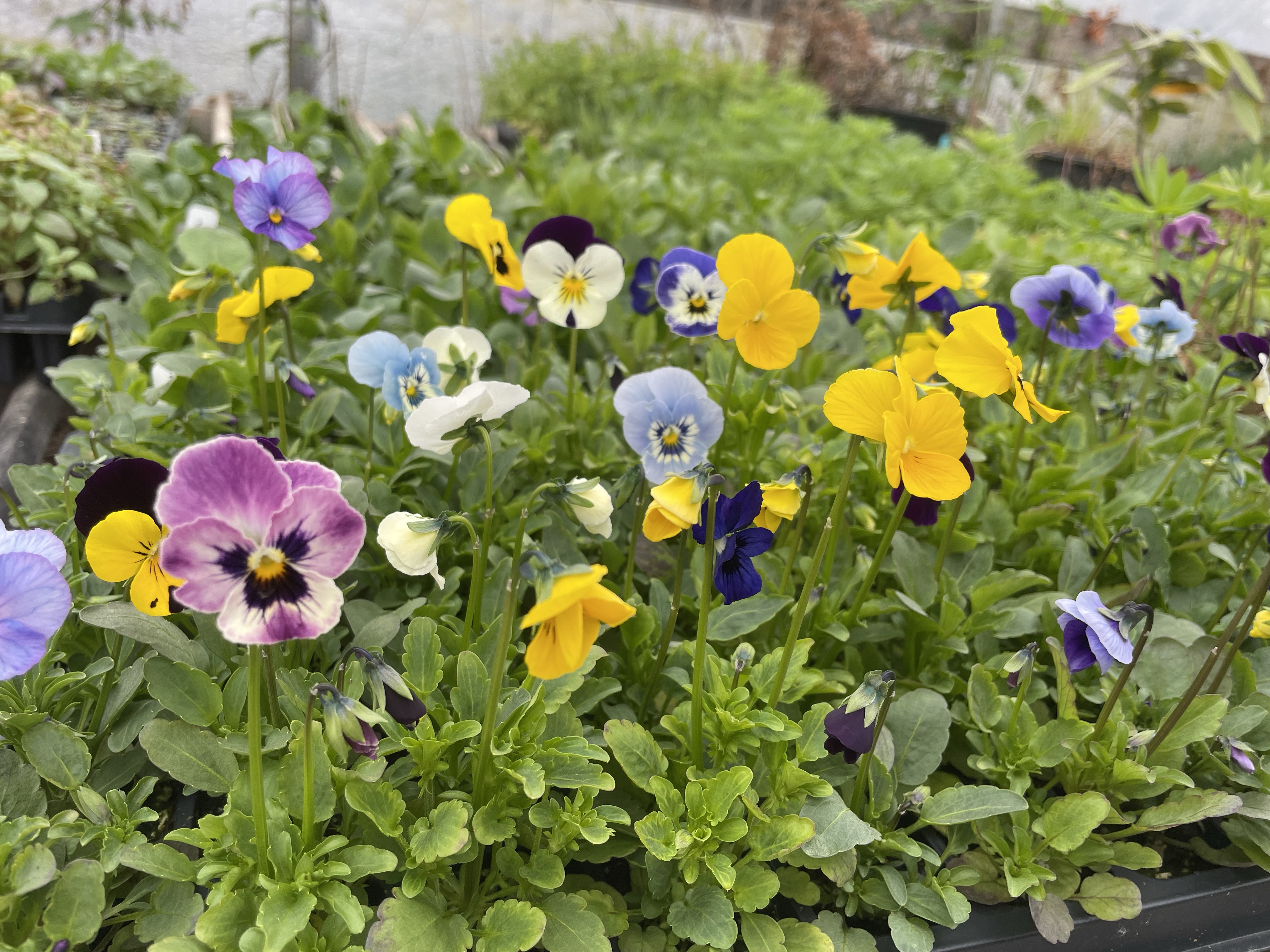
Some flowers just can’t wait!