Tag Archives: king-county-farms

Enter Fall.

What a summer this has turned out to be. We got a late start waiting for floodwater to recede, and then for the soil to dry enough to work. But here we are, on the cusp of September, and we’re picking the first of the tomatoes. It is a happy week!
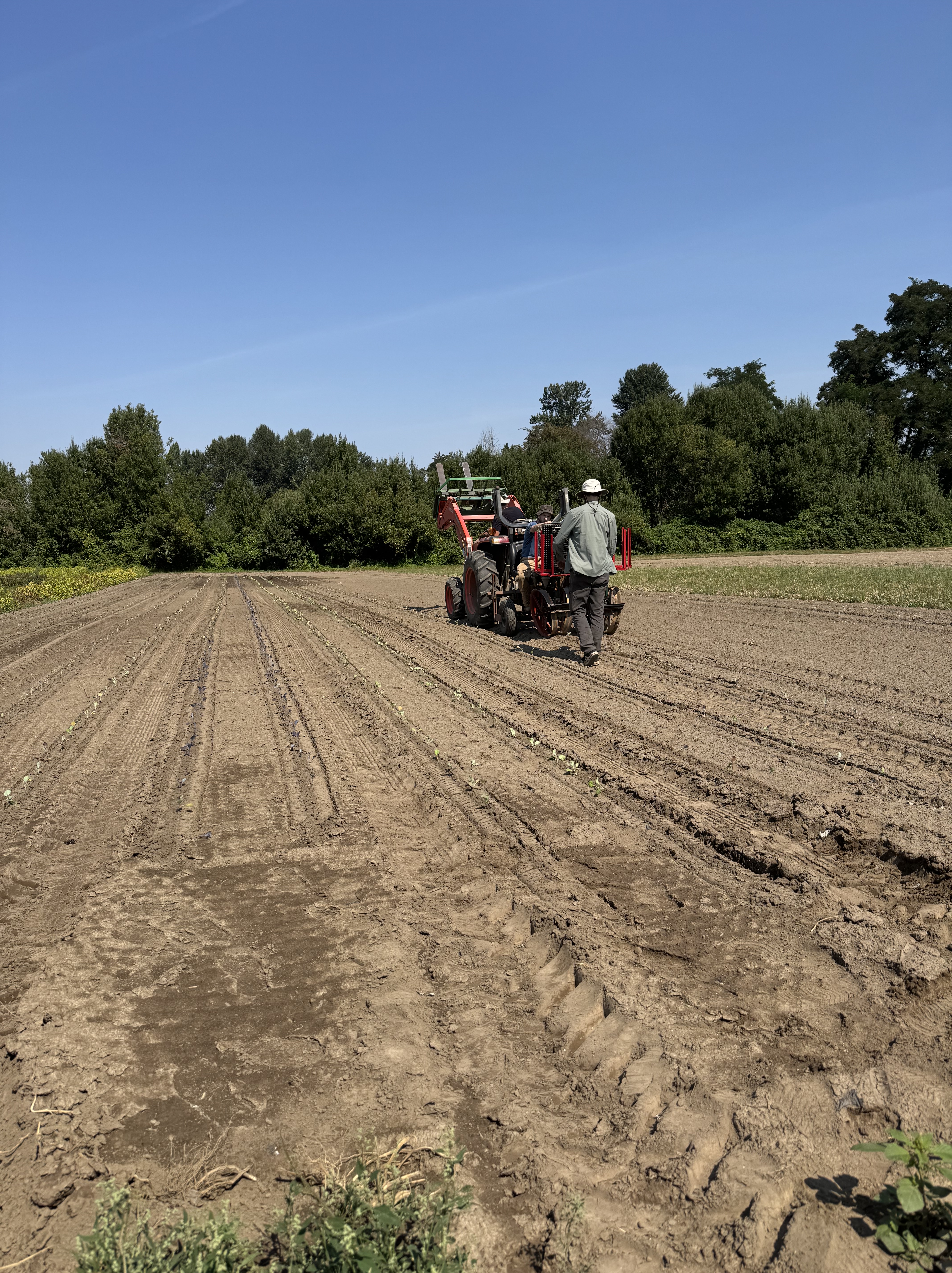
Putting in the last of the transplants for 2026. These are baby broccoli, cauliflower, and cabbages that we’ll all be eating in October, November, and beyond.

We’ve put the last of the fall transplants in the ground and seeded the last greens in warm, fertile soil. These are the foods that will feed us all to Thanksgiving, and maybe even beyond. Because the timeline of everything has been protracted this summer, I had to skip the planting of some crops that take too long to mature. Brussels sprouts are in because I love them and got them in the ground on time. But Romanesco cauliflower takes too many days to mature and I couldn’t risk taking up space with something that had a good chance of not finishing up before the dark dark days of October. Instead I chose purple cauliflower that matures 30 days sooner, and a new broccoli variety. Extra lettuce, to carry us into fall rainy season and spinach and radicchio for Thanksgiving salad when lettuce is too fragile to hold up to our rainiest season.

I’ve been thinking a lot about the subject of food safety. Current events have borne the burden of bad news in our greater food supply. I’ve had some interesting conversations with current CSA customers, and some folks who are not CSA members, looking for lettuce that won’t make them sick. I talked with a woman who stopped by the farm last week. She wanted to know why I was no longer operating a farm stand. The truth is that during the last food emergency, the COVID epidemic, when farmers markets closed down and grocery stores had empty shelves and required masks, I pivoted my farm business and opened a farm stand. People came from as far as Seattle and Renton, Maple Valley, and Tacoma to get the vegetables and food connections that they were missing. These folks were happy to be able to take advantage of locally-produced food to feed their families, and find community connections in a time when people were told to isolate themselves.

But as the pandemic trickled back to normalcy, shoppers returned to the grocery stores and farmers markets. They stopped coming to my farm stand, and I started to throw product back into the field for composting. I couldn’t make it work if people weren’t going to shop.

Small-scale, local agriculture can’t be just an emergency source of food when everyone is afraid to get their food from the current farm distribution system. We planted crops weeks, or even months ago, and we don’t have warehouses to pull cases of lettuce from.

When this farm visitor asked me if I could sell her “some lettuce that wouldn’t make her sick” I had to tell her that I only had enough for my CSA members, because they are who I planned me entire farm season for. I don’t sell anything wholesale, or go to farmers markets any more. I grow a finite amount of vegetables for the people who support me, my farm, and my helpers year-round.

Now we are faced with not only parasites in lettuce, but salmonella and listeria in other vegetables and meats, and the specter of possibly adulterated beef entering our food system. How do we choose what is safe to feed our families?

It is fairly simple, actually.

Know who produces your food.
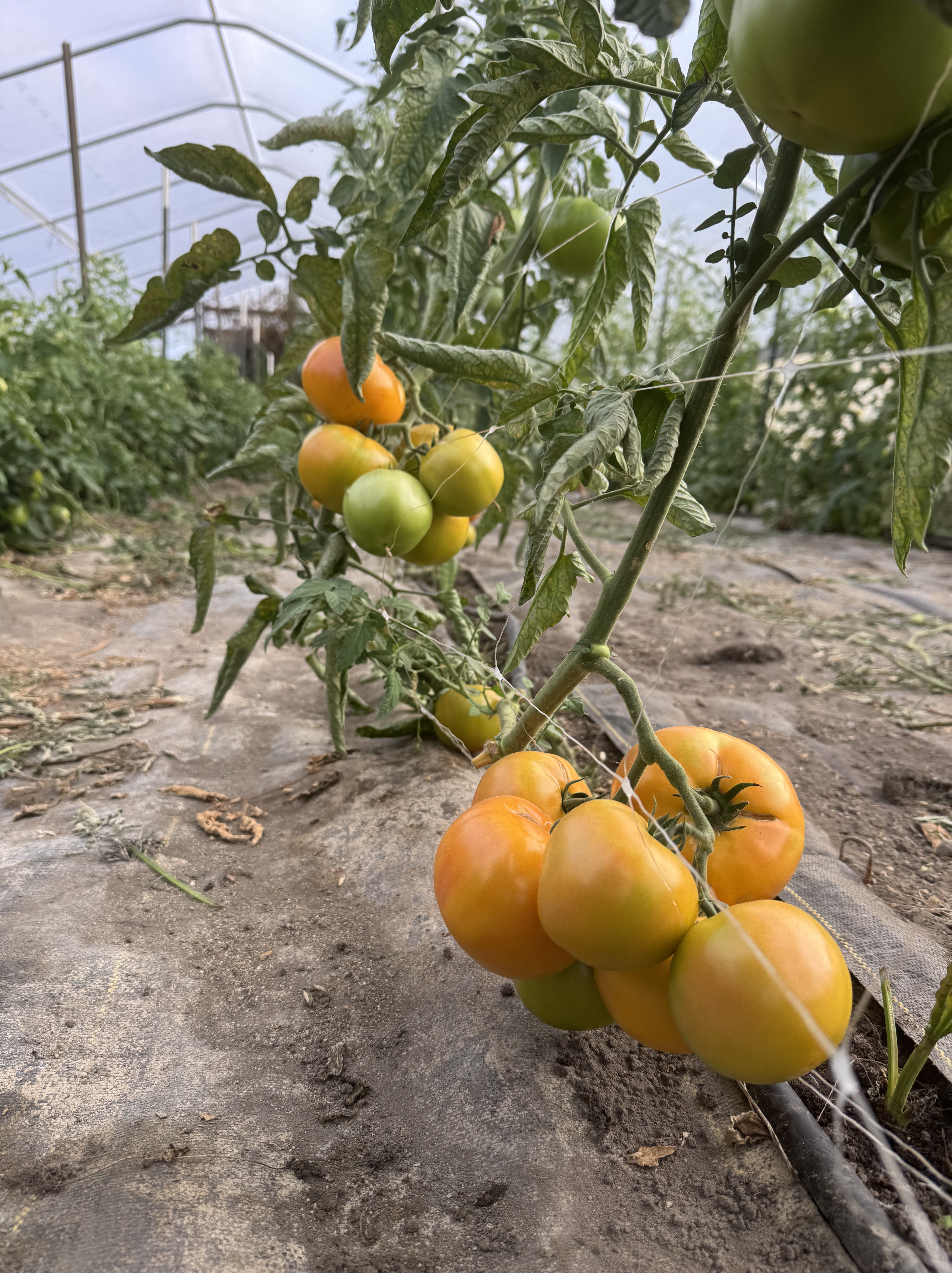
Tomatoes ripening in one of the greenhouses.

From vegetables, to fruits, to meat and eggs, if you know who produced it you know who to question when there is a problem. Your farmers know who touched your food, and how it was handled. You can ask them. You can probably see for yourself. You don’t need to worry how many times it has been handled, how old it is, or how many warehouses it has entered and departed from.

And if you’re wondering where to find local farm products? My first suggestion is www.eatlocalfirst.org. You can search for a product and a location and find some options. Not everyone is able to get to a farmers market regularly. But you can join a CSA for vegetables or fruit, and there are also several meat and/or dairy CSAs in the Puget Sound area. You can buy in bulk from a local food hub, like Puget Sound Food Hub or Southwest Washington Food Hub or Farmstand Local Foods There are a number of Puget Sound area farms raising meat animals, and since I no longer raise livestock, I buy from other local producers and stock my freezer. Greenbow Farm, Olsen Farms, Skagit River Ranch, Bright Ide Acres are all farmers I know and recommend. I also get fruit through Collins Orchards’ CSA, and they have a dropsite at my farm. I freeze half of the fruit I receive for winter.

There has never been a better time to support local farms.

Our 2027 CSA is also live beginning September 1, with two options: Full Season (June-Thanksgiving) and Summer Only (July-September), as well as Pantry Builder subscriptions for bulk produce items. Follow this link to the Online Shop. Here is the link to to the shop: https://www.whistlingtrainfarmstore.com/s/shop

Pickup options continue to be offered at the farm, in Columbia City and Skyway, and via the West Seattle, Burien, and North Seattle share-pools. Let me know if you have an idea for another share-pool! All subscribers will continue to have free access to the Cutflower Garden and subscriber-only Pumpkin Patch in season. 
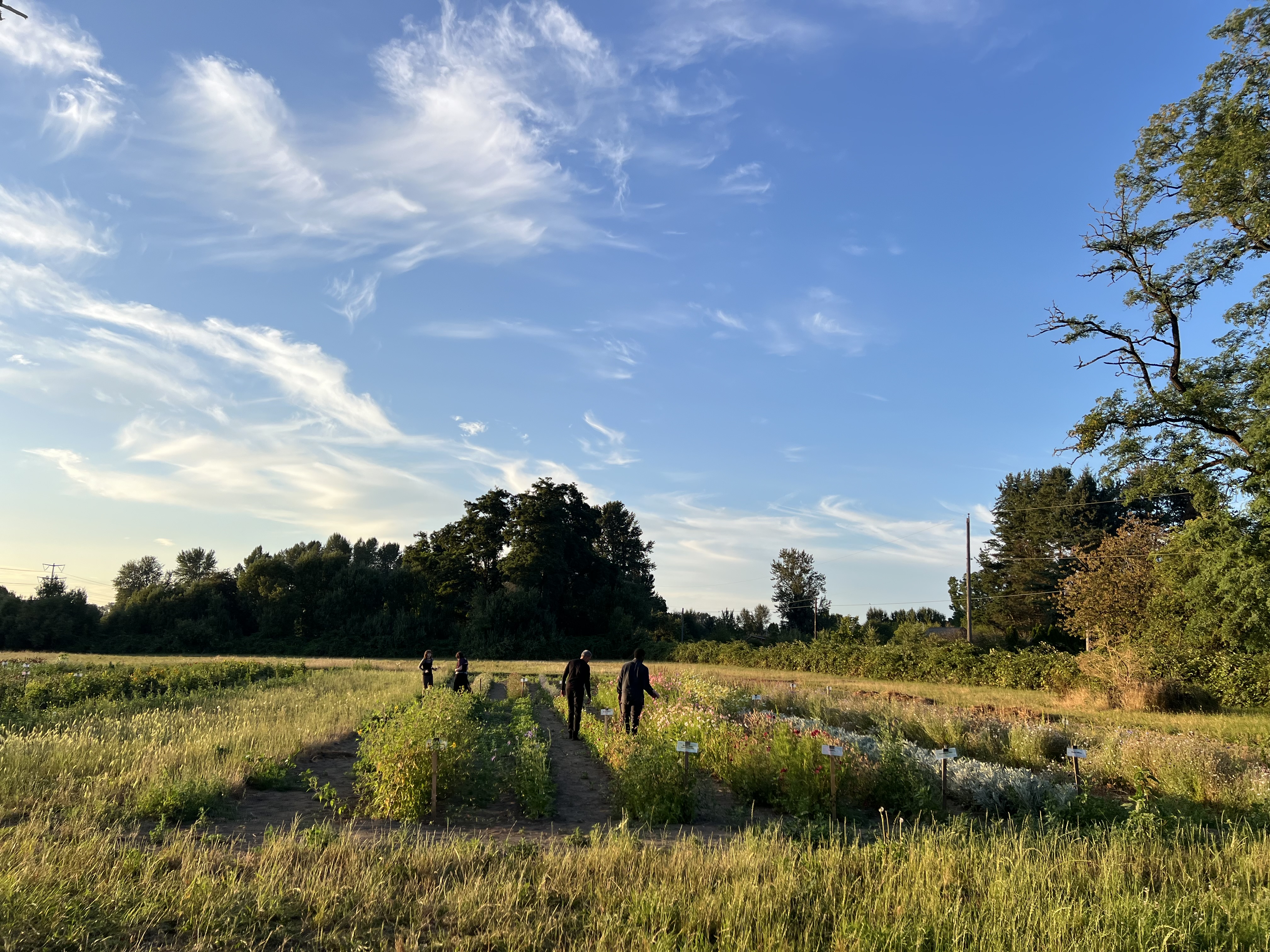
The U-pick Cutflower Garden at sunset.

Thank you for being a part of my farm’s community, and for helping to build a community around this farm. I wouldn’t be here without you! It is an honor and a pleasure to continue feeding you all!

Shelley


Life After the Flood

Many of you know that I am in mid-way through my BAS degree at Green River… now I just have a few classes left to complete. And I was so looking forward to a calm winter break, after the CSA season wrapped up. But the day after my last final exam in December, the Green River started flooding our area. It was the first time since 1959 and nobody was prepared.

December’s flood inundated the entire farm by 3’, and nearly 7’ at the back by the railroad.

It’s been three months now since we had to evacuate, and watching my home and work… my life… be slowly inundated by water is something that I don’t want to be surprised by again. Between working on rebuilding my house, homework, and working 30 hours a week at an off-farm job, I apologize for late responses to emails. But now it’s nearly April, and we’ve made it to the Spring Equinox, when life begins anew!

I want to thank Greg and Jeannie, April, Ray, Sarah, Lily and June, Mary, Catherine, Cliff, Feney, Erin, Wendy, Marcia for coming to help with both cleanup work parties, and the other Erin for bringing a delicious lunch. With everyone’s help, we were able to clean up the CSA shed, the walk-in cooler, and pack shed, and clean up all the flotsam and jetsam around the property. We also got two greenhouses ready for planting preparation. We couldn’t have gutted my house, disposed of all my flooded belongings, and all of the field trash without the generous loan of Shelley and Dean’s big dump trailer and the truck they hauled it with.

The red paint line on all the structures shows the high-water mark during the flood.

I am immensely grateful for all who helped, and for all who gave so generously to my flood recovery fundraiser. When my friend and mentor, Michaele, who farms in the Snoqualmie valley, suggested that I set $30,000 as a goal, I thought it was a such a huge number. But it turned out that I actually needed that much to replace the buried electric cable that powers the farm, to replace my entire seed inventory and stock of fertilizer and cover crop seed, to rebuild the walk-in cooler and pack shed, and to rebuild my little house. And so, I repeat, I am incredibly grateful for everyone in our little farm community.

My environmental-science cousin Taryn collected soil samples in mid-February (we had to wait for the water to recede to the point that we could collect samples). Then I was on pins and needles, waiting for two weeks for news. Thankfully, the lab returned the results that I had hoped for: there is no chemical contamination in my fields! I am also hugely grateful for King Conservation District for footing the bill for that testing! Floods are natural events, and I am learning that the soil takes care of itself, and the soil biology survives. I’ll be posting an essay about the whole experience during spring break (next week).

Pepper seeding

At this point, the greenhouse is filling up with seedlings, my house is nearly ready to move back into, and I am gearing up for a bright farm season. As soon as the very saturated soil dries enough, we will start working the ground in preparation for planting. I’m really curious to see how the soil fertility looks after testing in another few weeks, and how I will respond with amendments. But for now, I’m just happy I get to continue growing clean food and flowers.

Baby SugarSnaps!

Thanks to the GoFundMe for my Vintage Tractor Electrification Project, I have ordered all of the parts needed for the electric conversion, minus the batteries. I’ve been watching prices closely and the battery market is pretty volatile lately. Last year I ended up doing all of the cultivation work by hand last summer, and if the improved tractor can do it for me, I’ll be freed-up to grow a lot more food. Plus it will be clean and green and I’ll be less tired! Soon we’ll be getting to work on that project so she’s ready to go when we need her.

I am extremely thankful for those who have already paid for 2026 and to those who have paid “tips” when they paid for their 2026 CSA shares. After covering card-processing costs, the balance of these funds will continue to go toward funding no-cost CSA shares for families-in-need. To date, nearly $2,000 has gone into this pool, feeding 3+ families for the full 2026 season. All future “tips” paid at checkout will also be added to this pool, and I’ll round-up some before the season starts to connect even more folks with fresh, local produce. If you know of anyone who could use a CSA share next season, please let me know.

Electric conversion parts!

In addition to the 2026 CSA 28-week subscription, I’ve opened up a shorter, 2026 Just Summer CSA, for those who don’t enjoy the spring and fall shoulder seasons. I’ve also added a 10-week Flower Bouquet Subscription to the online store. And the 8-box Pantry-Builder Subscription is available too, if you’re not sure about committing to the whole season of pickups. Pickup options continue to be offered at the farm, in Columbia City and Skyway, and via the West Seattle, Burien, and North Seattle share-pools. Let me know if you have an idea for another share-pool! All subscribers will continue to have free access to the Cutflower Garden and subscriber-only Pumpkin Patch in season. 

Thank you for being a part of my farm’s community, and for helping to build a community around this farm. I wouldn’t be here without you! It is an honor and a pleasure to continue feeding you all!

Shelley

Almond tree blooms.

The Dark Season

Just like that, the golden leaves have fallen and November is nearly done. December approaches, and the days are dark and wet, as they should be. Yet, there is a glorious, fiery sunrise now and then to surprise us. The Coopers Hawks have returned to chase away the Red-winged Blackbirds and the Golden-crowned Sparrows sing their melancholy songs from the shelter of the greenhouses, where they feast on tomatoes, peppers, and cucumber seeds. Yet there is still an abundance of food in the field. Today I harvested the last of the sweet, savoy spinach. The cauliflower and broccoli are finally finished, although a few heads remain for me. I’ve started the earliest wildflowers for building habitat (and my experimental native cutflower garden) and in January, I’ll fire-up the greenhouse heat mats and get the earliest non-wildflowers and vegetables going… I’d like to get tomatoes and peppers even earlier next summer.

Next week is the last pickup for 2025 CSA, and it will be a big haul! I have a little vacation planned for the first weekend of December… a yurt awaits on the central Oregon coast, for the King Tide. So, I’ll be begin harvesting on Wednesday to prepare for a double-load of fall produce. Whether you pick up on Saturday the 29th or Tuesday the 2nd, you’ll find Brussels sprouts, watermelon radishes, Romanesco cauliflower, pink radicchio, and much more.

I’ve put together a GoFundMe for my Vintage Tractor Electrification Project, because it’s going to cost somewhere in the neighborhood of $7,000 for the electric motor conversion kit and batteries. I ended up doing all of the cultivation work by hand last summer, and if the improved tractor can do it for me, I’ll be freed-up to grow a lot more food. Plus it will be clean and green and I’ll be less tired! Rewards include printed canvas totes, native wildflower plants and seed bombs, and contributions of CSA shares for families-in-need. Read more at the link: Tractor Electrification Project. I’m hoping to purchase the kit in January, so we have time to get her up and running by planting time; if you are able to help with this project, I will be ever grateful.

I am extremely thankful for those who have already paid for 2026 and to those who have paid “tips” when they paid for their 2026 CSA shares. After covering card-processing costs, the balance of these funds will go toward funding no-cost CSA shares for families-in-need. To date, over $1,500 has gone into this pool, feeding 2+ families for the full 2026 season. All future “tips” paid at checkout will also be added to this pool, and I’ll round-up some before the season starts to connect even more folks with fresh, local produce. If you know of anyone who could use a CSA share next season, please let me know.

In addition to the 2026 CSA 28-week subscription, I’ve opened up a shorter, 2026 Just Summer CSA, for those who don’t enjoy the spring and fall shoulder seasons. I’ve also added a 10-week Flower Bouquet Subscription to the online store. And the 8-box Pantry-Builder Subscription is available too, if you’re not sure about committing to the whole season of pickups. Pickup options continue to be offered at the farm, in Columbia City and Skyway, and via the West Seattle, Burien, and North Seattle share-pools. Let me know if you have an idea for another share-pool! All subscribers will continue to have free access to the Cutflower Garden and subscriber-only Pumpkin Patch in season. 

Thank you for being a part of my farm’s community, and for helping to build a community around this farm. I wouldn’t be here without you! And PLEASE, if you know someone who would benefit from a no-cost 2026 CSA share, please reach out to me!

I wish you a warm Thanksgiving with all who you call Family.

Shelley

Summer is Here, and CSA is Underway; Prorated CSA Shares Available!

June 22 CSA contents
6/22-6/25 CSA contents:
Zucchini or Broccolini, Pea Shoots, Baby Bok Choy, Radishes, baby Butter Lettuce, and crunchy Little Gem Lettuce.

It’s nearly July and we’ve passed the celestial summer marker, the Solstice. Our days should be heating up now, even though we’re losing a smidge of daylength every day. I hate to jinx it, but we’ve actually had some very nice rains and cool spells this season, a change from the last few hot and dry summers that seem to start in May and keep us feeling like California until October. These rainy spells remind me of the weather patterns of a decade ago, and I welcome it! Free water is the best water.

There is a ton of cultivating and weeding to be done after being away, chasing fireflies for 12 days. A lot of people have asked about the trip, and it was FANTASTIC! I need to write a separate post about all the things we saw, in addition to the fireflies in Tennessee, Missouri, and Kansas. So many beautiful insects, incredible landscapes, and a whole lot of national history AND natural history. I’ll get to that in the next few days. I am so grateful to everyone for their encouragement. It was truly remarkable, and I am really happy to have finally experienced fireflies for the first time. Thank you for encouraging me to go!

Red leaf lettuce
Big heads of leafy, red lettuce, ready to pick.

The greenhouses are filling up. Sadly the early greenhouse Sugarsnap Peas failed to thrive when it heated up a few weeks ago, but there is a very healthy stand of Sugarsnaps thriving out in the field and they’ll be ready before we know it. The Tomatoes, Peppers, and Eggplant are loving it indoors, however, and are starting to bloom. Cucumbers and Melons are going in this week. I’ve been filling up the prop house with trays that will become fall and winter food. The fields are full of growing rows, and the cut flowers are blooming.

I’m planning on spending the bulk of Saturday and Tuesday CSA pickup windows working in the cut flower garden, and it’s been such a pleasure to see everyone and chat! Please ask questions if you have them, and be sure to pick a bouquet. The blooms are really coming on now, with even more waiting in the wings.

Pea plants
These peas are just starting to bloom.

In the next week, I’ll be opening up the cut flower garden to the non-CSA public, and they will be able to cut bouquets for a fee. Don’t worry though, CSA members don’t have to pay for flowers! The only exception to this is if a large quantity or flowers is wanted, perhaps for a wedding or other event. (Please let me know ahead of time if that’s the case.)

A glimpse of the cut flowers blooming now: Rocky Mountain Garland, Bachelors’ Buttons, Queen Anne’s Lace, and Cosmos.

And if the weekly CSA is too much food or too much commitment, I’ve opened up Pantry Builder subscription, for bulk pickups of green beans, tomatoes, pickling cucumbers, and more. Link to purchase 2025 Pantry Builder subscription

I wish health and wellness for you and your family in the coming season. And I look forward to seeing you soon.

Shelley