
What a summer this has turned out to be. We got a late start waiting for floodwater to recede, and then for the soil to dry enough to work. But here we are, on the cusp of September, and we’re picking the first of the tomatoes. It is a happy week!
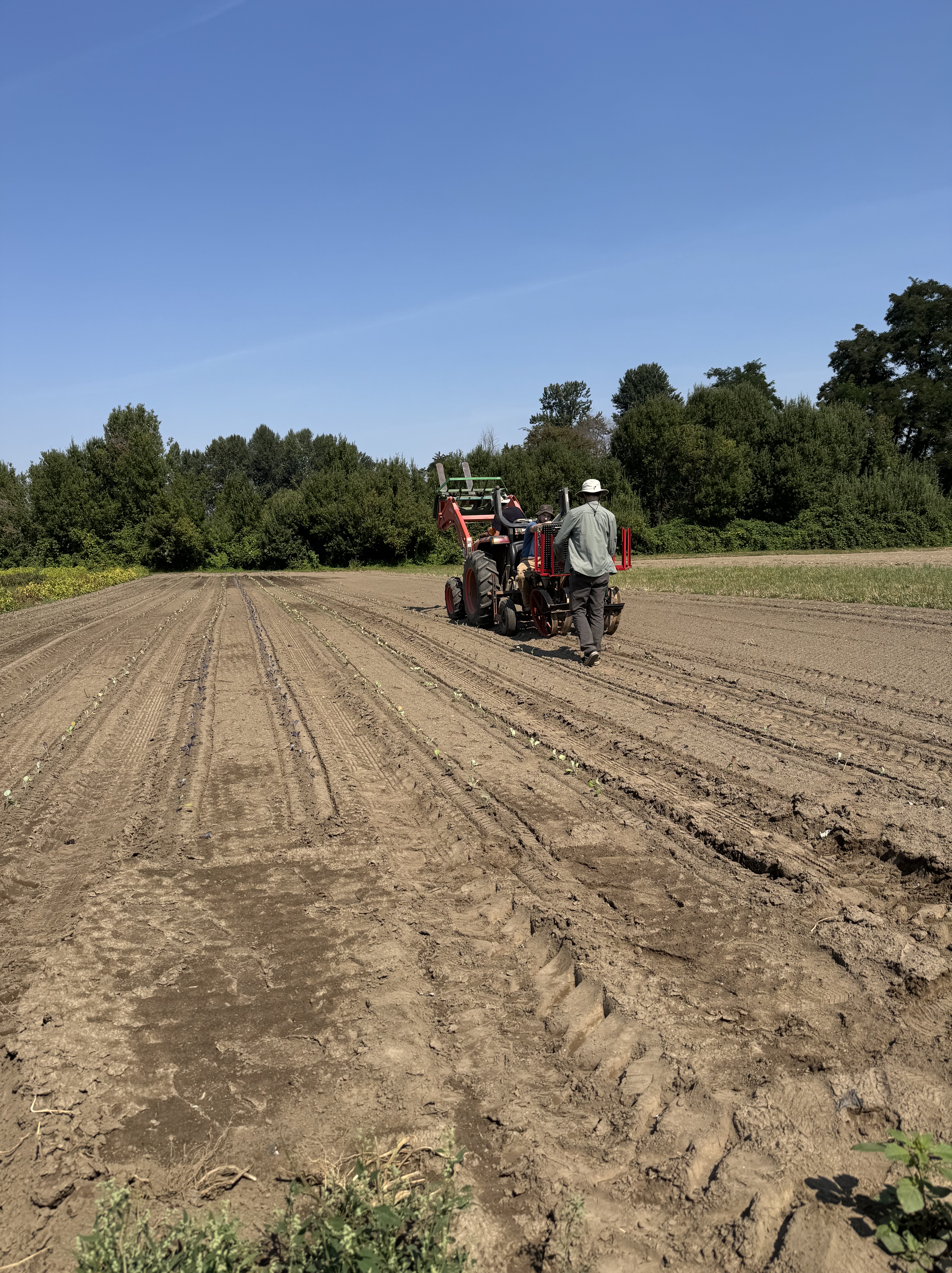
Putting in the last of the transplants for 2026. These are baby broccoli, cauliflower, and cabbages that we’ll all be eating in October, November, and beyond.
We’ve put the last of the fall transplants in the ground and seeded the last greens in warm, fertile soil. These are the foods that will feed us all to Thanksgiving, and maybe even beyond. Because the timeline of everything has been protracted this summer, I had to skip the planting of some crops that take too long to mature. Brussels sprouts are in because I love them and got them in the ground on time. But Romanesco cauliflower takes too many days to mature and I couldn’t risk taking up space with something that had a good chance of not finishing up before the dark dark days of October. Instead I chose purple cauliflower that matures 30 days sooner, and a new broccoli variety. Extra lettuce, to carry us into fall rainy season and spinach and radicchio for Thanksgiving salad when lettuce is too fragile to hold up to our rainiest season.
I’ve been thinking a lot about the subject of food safety. Current events have borne the burden of bad news in our greater food supply. I’ve had some interesting conversations with current CSA customers, and some folks who are not CSA members, looking for lettuce that won’t make them sick. I talked with a woman who stopped by the farm last week. She wanted to know why I was no longer operating a farm stand. The truth is that during the last food emergency, the COVID epidemic, when farmers markets closed down and grocery stores had empty shelves and required masks, I pivoted my farm business and opened a farm stand. People came from as far as Seattle and Renton, Maple Valley, and Tacoma to get the vegetables and food connections that they were missing. These folks were happy to be able to take advantage of locally-produced food to feed their families, and find community connections in a time when people were told to isolate themselves.
But as the pandemic trickled back to normalcy, shoppers returned to the grocery stores and farmers markets. They stopped coming to my farm stand, and I started to throw product back into the field for composting. I couldn’t make it work if people weren’t going to shop.
Small-scale, local agriculture can’t be just an emergency source of food when everyone is afraid to get their food from the current farm distribution system. We planted crops weeks, or even months ago, and we don’t have warehouses to pull cases of lettuce from.
When this farm visitor asked me if I could sell her “some lettuce that wouldn’t make her sick” I had to tell her that I only had enough for my CSA members, because they are who I planned me entire farm season for. I don’t sell anything wholesale, or go to farmers markets any more. I grow a finite amount of vegetables for the people who support me, my farm, and my helpers year-round.
Now we are faced with not only parasites in lettuce, but salmonella and listeria in other vegetables and meats, and the specter of possibly adulterated beef entering our food system. How do we choose what is safe to feed our families?
It is fairly simple, actually.
Know who produces your food.
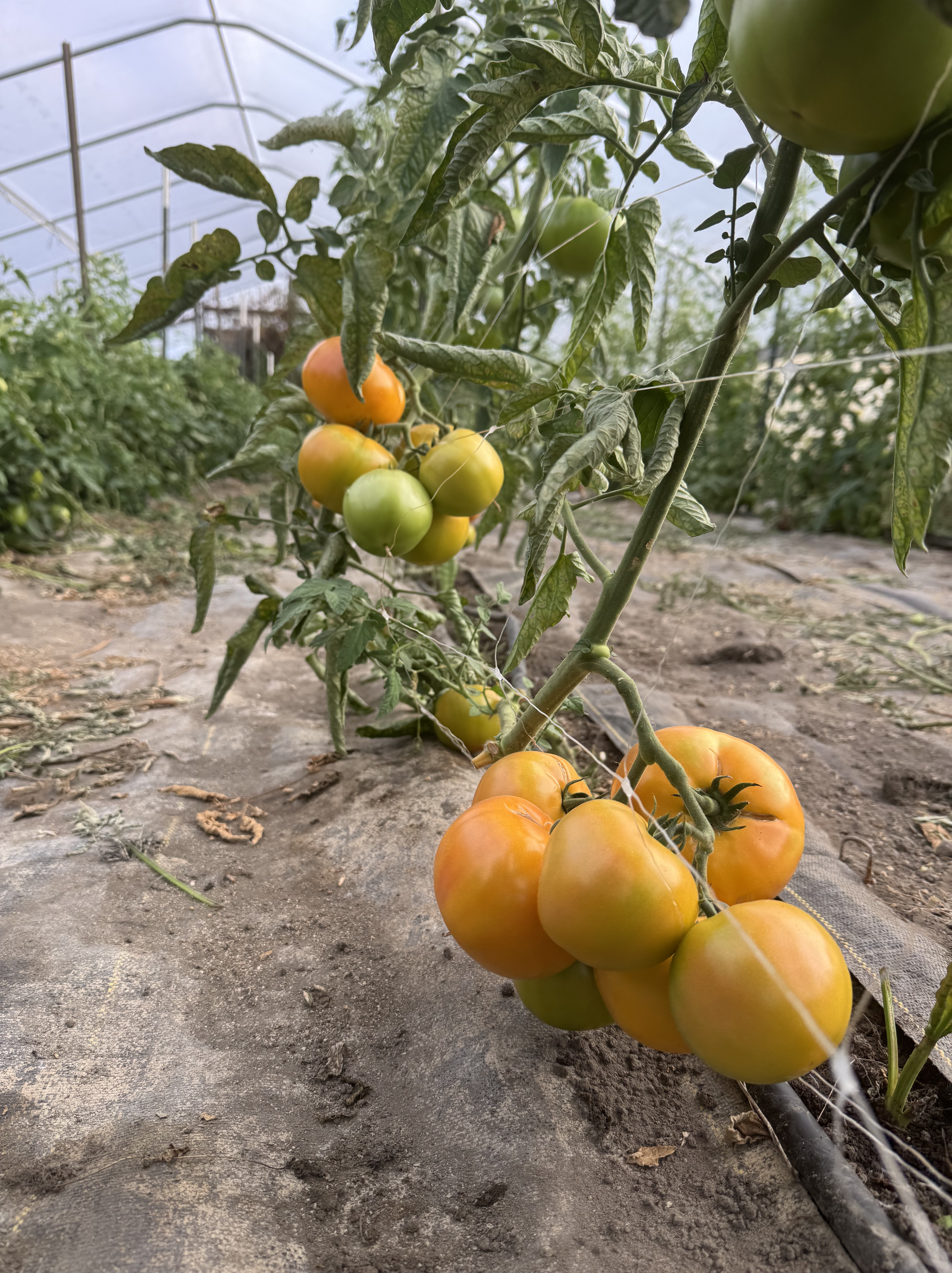
Tomatoes ripening in one of the greenhouses.
From vegetables, to fruits, to meat and eggs, if you know who produced it you know who to question when there is a problem. Your farmers know who touched your food, and how it was handled. You can ask them. You can probably see for yourself. You don’t need to worry how many times it has been handled, how old it is, or how many warehouses it has entered and departed from.
And if you’re wondering where to find local farm products? My first suggestion is www.eatlocalfirst.org. You can search for a product and a location and find some options. Not everyone is able to get to a farmers market regularly. But you can join a CSA for vegetables or fruit, and there are also several meat and/or dairy CSAs in the Puget Sound area. You can buy in bulk from a local food hub, like Puget Sound Food Hub or Southwest Washington Food Hub or Farmstand Local Foods There are a number of Puget Sound area farms raising meat animals, and since I no longer raise livestock, I buy from other local producers and stock my freezer. Greenbow Farm, Olsen Farms, Skagit River Ranch, Bright Ide Acres are all farmers I know and recommend. I also get fruit through Collins Orchards’ CSA, and they have a dropsite at my farm. I freeze half of the fruit I receive for winter.
There has never been a better time to support local farms.
Our 2027 CSA is also live beginning September 1, with two options: Full Season (June-Thanksgiving) and Summer Only (July-September), as well as Pantry Builder subscriptions for bulk produce items. Follow this link to the Online Shop. Here is the link to to the shop: https://www.whistlingtrainfarmstore.com/s/shop
Pickup options continue to be offered at the farm, in Columbia City and Skyway, and via the West Seattle, Burien, and North Seattle share-pools. Let me know if you have an idea for another share-pool! All subscribers will continue to have free access to the Cutflower Garden and subscriber-only Pumpkin Patch in season.
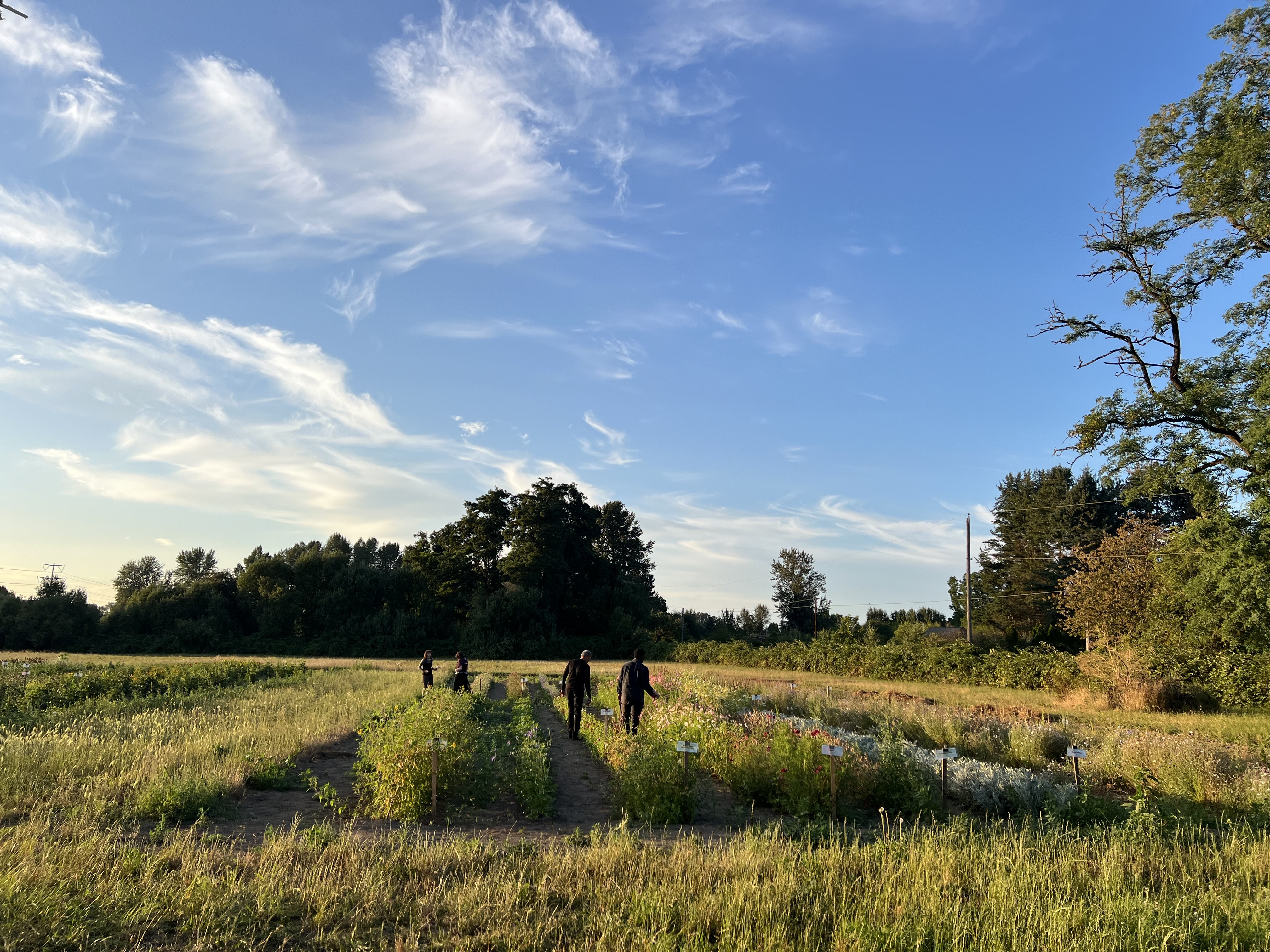
The U-pick Cutflower Garden at sunset.
Thank you for being a part of my farm’s community, and for helping to build a community around this farm. I wouldn’t be here without you! It is an honor and a pleasure to continue feeding you all!
Shelley
