Monthly Archives: November 2013

In Defense of the Turkey

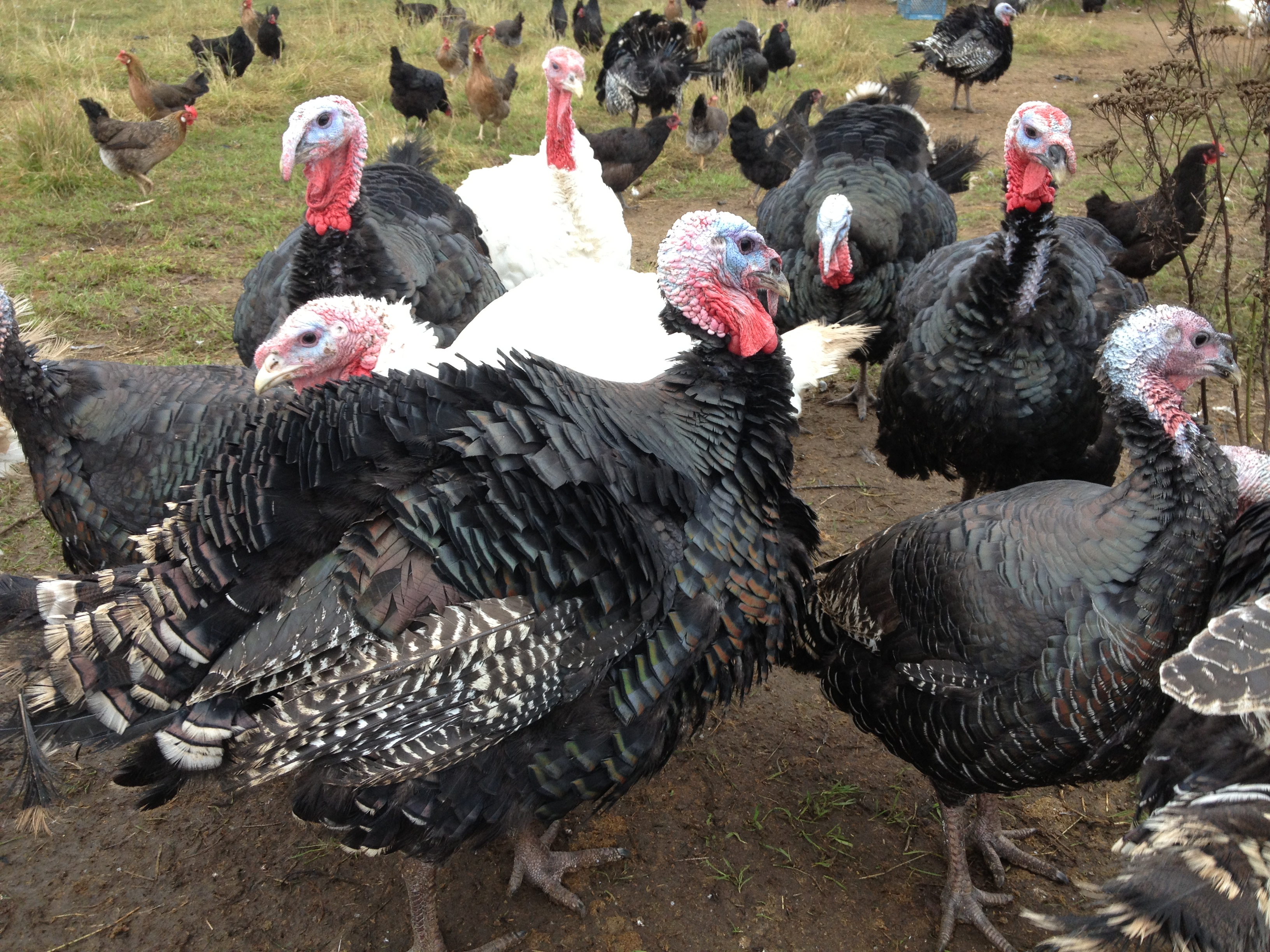
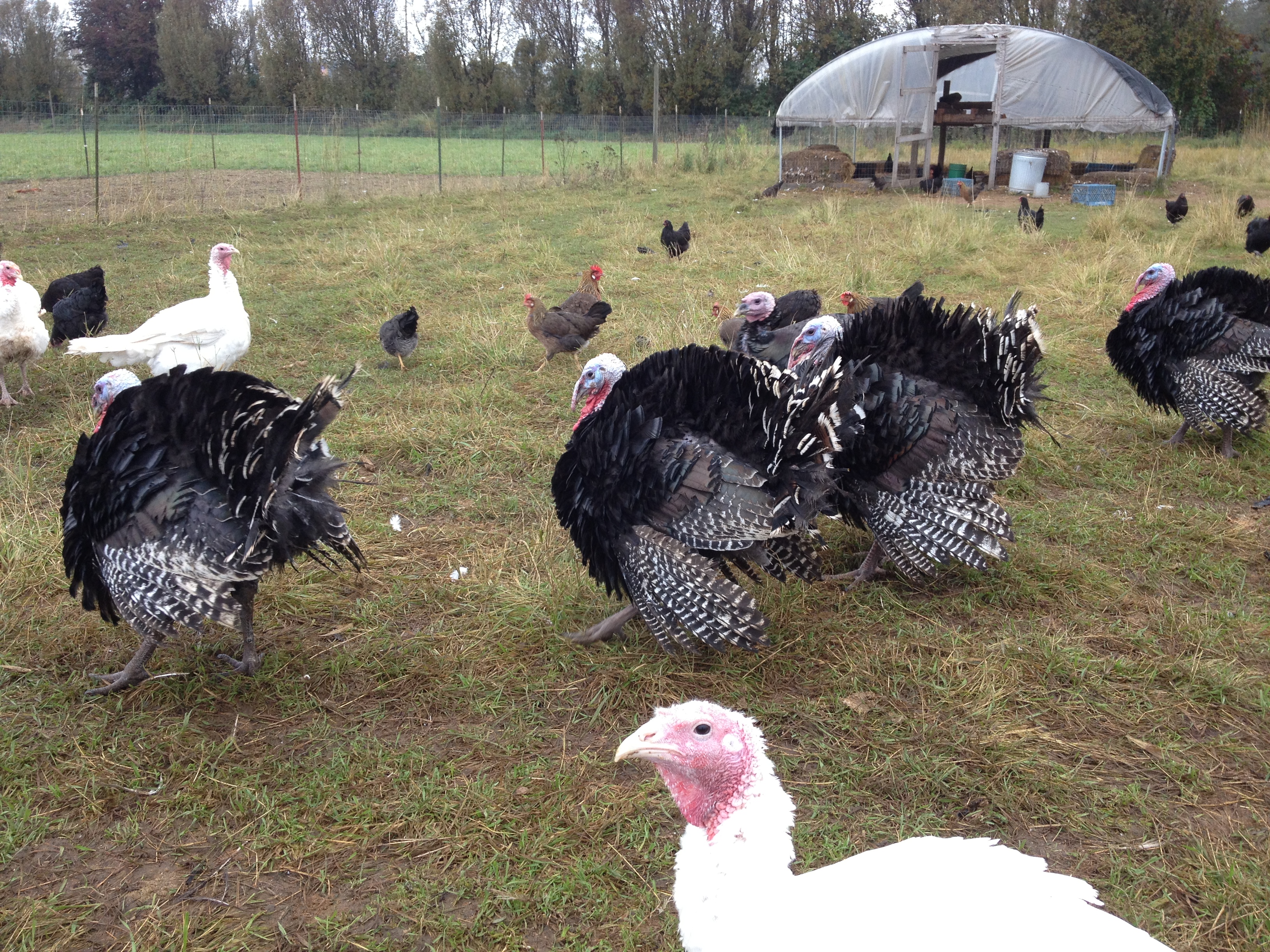
Three Toms vying for the Monarchy. The hens just go about their business, while they sort it out amongst themselves. They can puff up their feathers and fan their tails to make themselves look twice as big as normal, and they puff up their snood (the noodle thing on their beak) and wattles (the things on their chin) with extra blood to look more distinctive. The red, fleshy parts on their necks are called caruncles.

Three Toms vying for the Monarchy. The hens just go about their business, while they sort it out amongst themselves. They can puff up their feathers and fan their tails to make themselves look twice as big as normal, and they puff up their snood (the noodle thing on their beak) and wattles (the things on their chin) with extra blood to look more distinctive. The red, fleshy parts on their necks are called caruncles.

I never really understood turkeys and turkey culture until we started to raise them. We all know the stereotype—stupid, slow, and unable to fend for themselves. Well, after another year of husbanding turkeys, I want to set the record straight.

Turkeys are careful, thoughtful, and gentle. Yet, they are courageous and fearless when necessary. They are excellent mothers—more so than other poultry we have raised. Let’s start with their arrival in a box as day-old poults. They resemble baby chickens, just a bit longer in neck and a bit slower in manner. When we have losses, it is during the first few weeks after they arrive. The first year we raised them, I believed the stupid turkey myth. They would just starve. “Why aren’t they eating?” “What’s wrong with them? They really are stupid!” I was comparing them to baby chickens, which are much more self-sufficient. Baby chickens practically hop out of the box and are eating machines, compared to baby turkeys. Does that make turkeys stupid? No, it makes them more like wallflowers. Turkeys and chickens are apples and oranges, and can’t be compared.
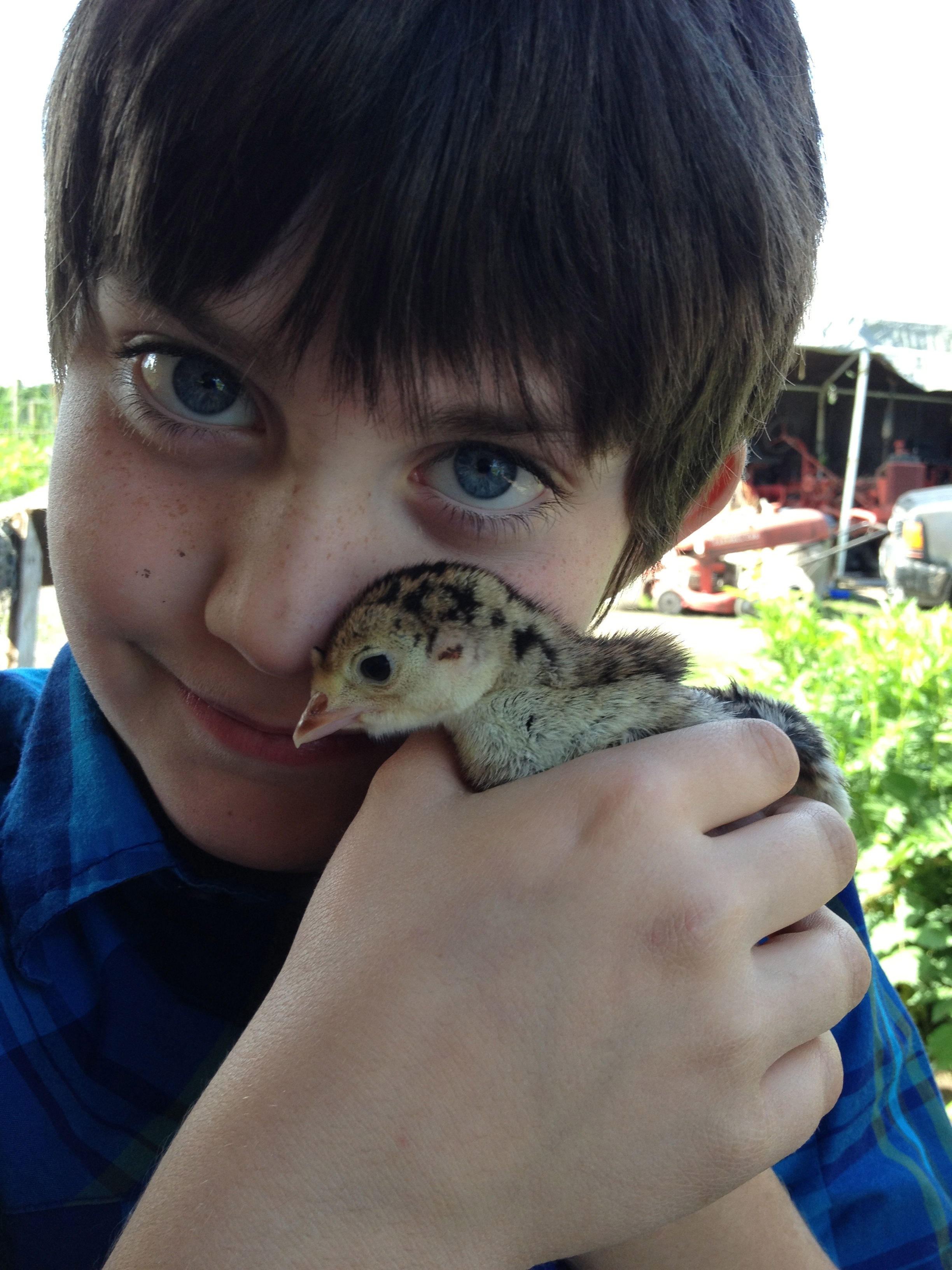
Baby Turkeys are precious.

Baby Turkeys are precious.

We overcame this obstacle by realizing that baby turkeys just need more mothering. Like most large animals, they need a mom. A mom shows them what to eat, nurtures them, encourages them. Picture a classroom full of kids, and the one or two kids that are more shy and hang out at the back of the class. That’s turkeys.

Would you really expect newborn babies to be totally self-sufficient? Me either.

Would you really expect newborn babies to be totally self-sufficient? Me either.

Turns out, if you imitate a mother turkey by pretending that your hand is a turkey head, dipping your fingers in water so the food sticks, the turkeys will figure out that that “beak” finger bears food, and after a few tries, even their tiny beaks can pick up food on their own. It also helps to give them food that is a contrasting color—like a bowl of yogurt. Then sprinkle dark food into it. They can see that. Sometimes it seems like they don’t have very good spacial recognition at that tender age. Duh, who does? And, if we don’t have time for that, it helps to put a broody hen with the baby turkeys to help them learn. If she’s in the right mood, she can mother a big flock of turklets. Putting a few baby chickens in with the baby turkeys can also get them past that initial learning curve, since they’re more self-sufficient.

Once the turkeys move outside, they explore in a thoughtful, considerate way. Chickens are go-getters, running hither-thither, helter-skelter, and grabbing at anything and everything. Turkeys like to ponder, wonder, and consider. I imagine that they philosophize their days away. As they  mature, the dominant males will begin to show themselves, and compete, putting on the classic turkey display: circle of tail feathers, puffed up snood and wattles. Yet rarely have I seen a real turkey knock-down, drag-out fight. They seem to be able to talk it out and walk away. More humility, more thoughtful. Roosters, on the other hand, are ruthless, stupid fighters. They are also rapists. I’ve never seen a tom turkey gang-rape the hens, but it happens all the time in a flock of chickens if the rooster/hen ratio is off-balance.

I never realized how courageous they are until it came time to butcher the giant birds. Keep in mind that at 5 months old, toms weigh about 40-50 pounds, and their wingspan is close to 6 feet. That’s a HUGE bird. When we catch them, we have to embrace them; wrap our arms around the powerful wings and try to avoid being pummeled by those wings. Last week, I learned my lesson and got hit in the face by one wing hard enough to see stars. They are powerful. And they can fly. Even our big, muscled turkeys were able to fly. So, keep them happy and they won’t leave. You know how a flock of geese or swans looks flying above you? Imagine the same thing, but twice as big, and you have a flock of turkeys. And if you haven’t witnessed a flying turkey, you haven’t seen magic. That something that large and seemingly bulky can gracefully glide through the air, overhead, is akin to seeing Santa’s sleigh and reindeer. Awesome.

Gentle giants. They are intrigued and inquisitive in a group.

Gentle giants. They are intrigued and inquisitive in a group.

Walking through a flock of chattering turkeys at feeding time, waist-high, yet gently nibbling at your clothes. A herd of pigs rips you apart, but turkeys easily part for the bearer of food, they stand back so feed can be poured into feeders. They are civilized, folks. Chickens, on the other hand, are NOT CIVILIZED. They are frantic, frenzied feeders!

That brings me to butchering. Turkeys in the wild (unless they are shot by hunters) can live 4-5 years, but up to 15 years. In captivity, unless being used for breeding, turkeys only make it to 4 or 5 months old, which is not fully mature. We catch them up, gently, and then as gently as possible the next day, we butcher them. They don’t understand at first, but after about 20 birds, they figure out that those first ones aren’t coming back, and as the flock gets smaller, they do get upset. They worry and they are scared. So you can’t tell me that they are without feelings. And that makes it hard to kill them. They resign themselves to it though. We try to be as quick as possible to spare them excess fear.

So, if you ask me, I absolutely think that the Wild Turkey should have been the national bird. What bird better represents the ideals of our country in the formative years of its youth. Certainly, the cowardly, lazy actions of the Bald Eagle are not what I feel represents me (although, in the grand scheme of our politics, I suppose the Bald Eagle is spot-on.) The Eagle is all looks, but it relies on the work of other predators, stealing from bears, osprey, and others, and feasting on rotting leftovers. Bald Eagles are cowards, running from the threat of a crow or anything else that threatens it. I would choose the unwavering, thoughtful, humble, courageous Wild Turkey any day.

Winter Week 3 and 4—Things to Be Thankful For

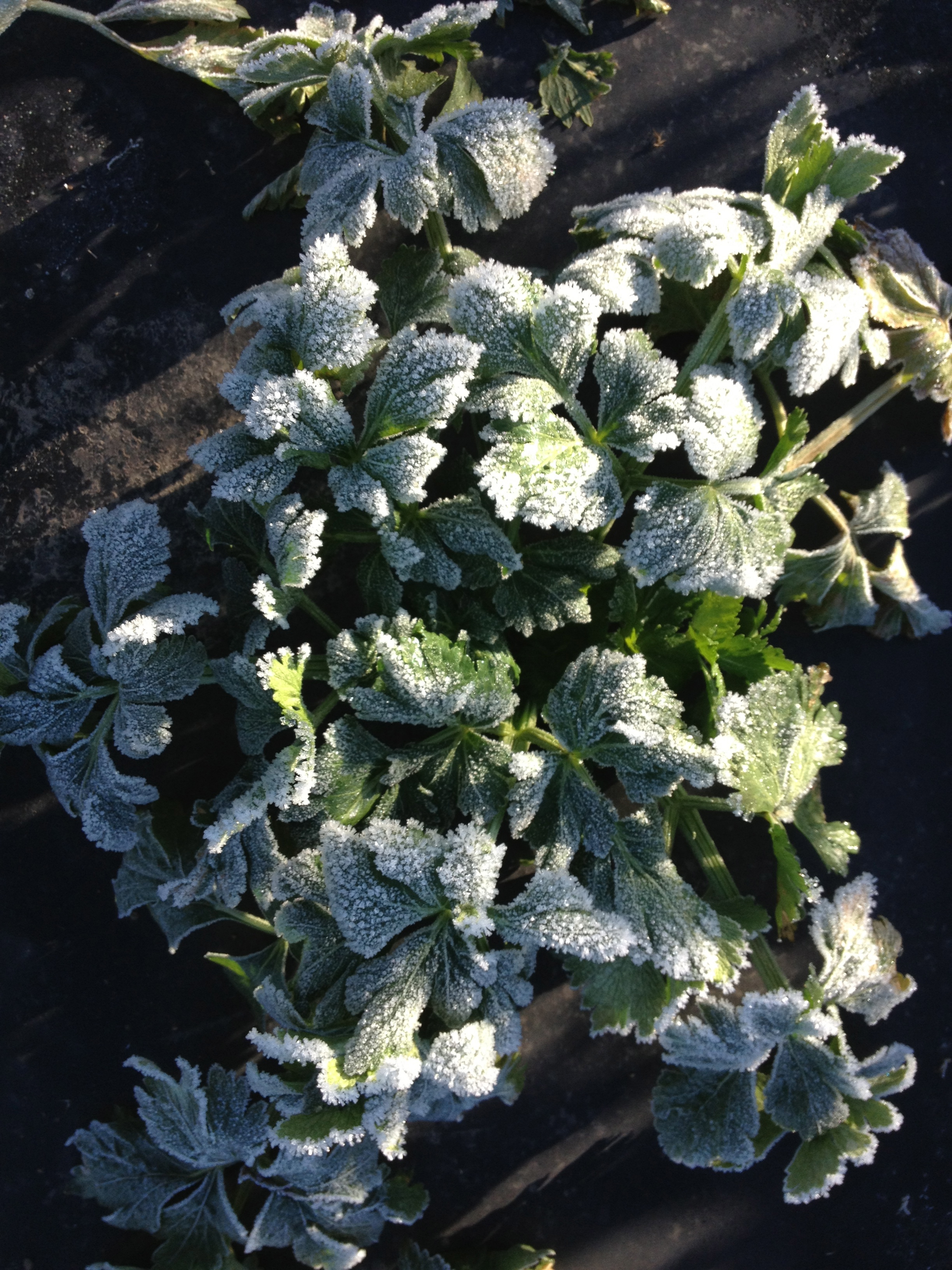
First hard frost of the season. This makes me really excited, because at long last the kale that people have thought tasted so good is now going to taste amazing! Frost converts the starches in the leaves to sugars—nature's antifreeze.

First hard frost of the season. This makes me really excited, because at long last the kale that people have thought tasted so good is now going to taste amazing! Frost converts the starches in the leaves to sugars—nature’s antifreeze.

THIS WEEK’S SUBSCRIBER MENU:
• “Keuka Gold” Potatoes
• Candy Carrots
• Variety Beets
• “Winter Luxury” Pie Pumpkin
• “Italian Late” Garlic
• Celery
• Fresh Thyme
• Salad of Baby Lettuces

NEXT WEEK’S SUBSCRIBER MENU:
• “Keuka Gold” Potatoes
• Candy Carrots
• Parsnips
• Mixed Squashes or Fennel
• Green Onions
• Savoy Cabbage
• Fresh Parsley
• “D’Anjou” Pears from Cliffside Orchards

Click on the links above for information and recipes about these crops.

COMING SOON: Baby Bok Choy, Kale, Shallots

Celery, like Radicchio, is actually somewhat frost-tolerant. It looks sad for a bit, because the cold sucks water out of the stems, but soon they will return to normal. They just can't handle prolonged freezing.

Celery, like Radicchio, is actually somewhat frost-tolerant. It looks sad for a bit, because the cold sucks water out of the stems, but soon they will return to normal. They just can’t handle prolonged freezing.

This is a confusing week for CSA subscribers. Because Thanksgiving falls on a Thursday, which is the first picking day for our weekend markets and weekend CSA pickup. We don’t want to harvest on Thanksgiving, and we don’t want Teo to do that either. Thanksgiving is a day to be with friends and family, not slogging through cold mud, bent-over picking vegetables.

Therefore, we pick two weeks worth of produce for the weekend before. Weekend subscribers will pick up two weeks worth this weekend, and there will be NO PICKUP after Thanksgiving, November 29 and 30. Tuesday and Wednesday subscribers will get the standard allotment both weeks. If that does not make sense, please let me know right away.

That said, we hope everyone has a wonderful holiday weekend, full of friends and family. We have much to be thankful for, especially a community of 150-ish families who support our farming efforts and allow us the privilege of feeding them. Nothing brings us all together like production and consumption of healthful food.

Matilda is 3 months old, and she is only just starting to eat plants. Here she nestles in the hay while her mom, Beauty eats breakfast.

Matilda is 3 months old, and she is only just starting to eat plants. Here she nestles in the hay while her mom, Beauty eats breakfast.

In our new world of homeschool (no pun intended), the kids and I have been studying Colonial times, in an effort to better grasp a sense of the history of Thanksgiving and our past. I think that it really helps to understand “thankfulness”, especially children, to learn about just how difficult it was to start a new life in a new world. Landing on a foreign place at the most difficult time of year (November) after being on a tiny boat with 100 other people for a miserable journey lasting many months, and then needing to live on that boat through the winter until housing could be built and land cultivated in the spring. Meagre food stores and no fresh food available, damp and cold surroundings, and new germs making everyone sick, and then losing half of your population in the process. There really is no other word to describe it except MISERY.

And yet, those people had to persevere. They had to forge the new landscape, start from scratch, and not only survive, but get ahead so they would have food for the NEXT winter as well. Surviving in the face of a culture who found them foreign, stupid, helpless, and not wanted, was truly something to be thankful for.

Personally, we have farmed through loss of family, through illness, and through bad weather. But we are living in modern times and we at least have the luxury of shelter, heat, and grocery stores, and backup jobs in case it’s a bad year. I can’t imagine persevering with a lack of medicine when your children are sick and dying. Or rats eating all of your stored grain in the middle of winter and facing three more months of winter without any food. How did people find the strength to keep going? What about the next wave of people, who had been fed lies about how successful those first colonies were, only to arrive at the doorstep of desolation? I can’t imagine.

We are extremely lucky.

And that is something to teach our children, and to remember every day.

Winter Week 2—Treviso and Tender Turnips

Japanese Turnips, also called "Tokyo Market" or "Hakurei", are tender, sweet, and delicious. They're even better when the weather turns chilly!

Japanese Turnips, also called “Tokyo Market” or “Hakurei”, are tender, sweet, and delicious. They’re even better when the weather turns chilly!

THIS WEEK’S SUBSCRIBER MENU:
• “Purple Viking” Potatoes
• Candy Carrots
• Red Beets
• “Delicata” Winter Squash
“Treviso” Radicchio
• Baby Turnips with Greens (use raw, or steam or sauté lightly, and use the greens in salad)
• Arugula

Click on the links above for information and recipes about these crops.

COMING SOON: Pie Pumpkins, Baby Bok Choy, Celery, Parsnips

I think it’s very difficult to be happy about everything in a growing season. There are always mistakes made, and variables that cause mishaps. But this year I am very happy about a few things:

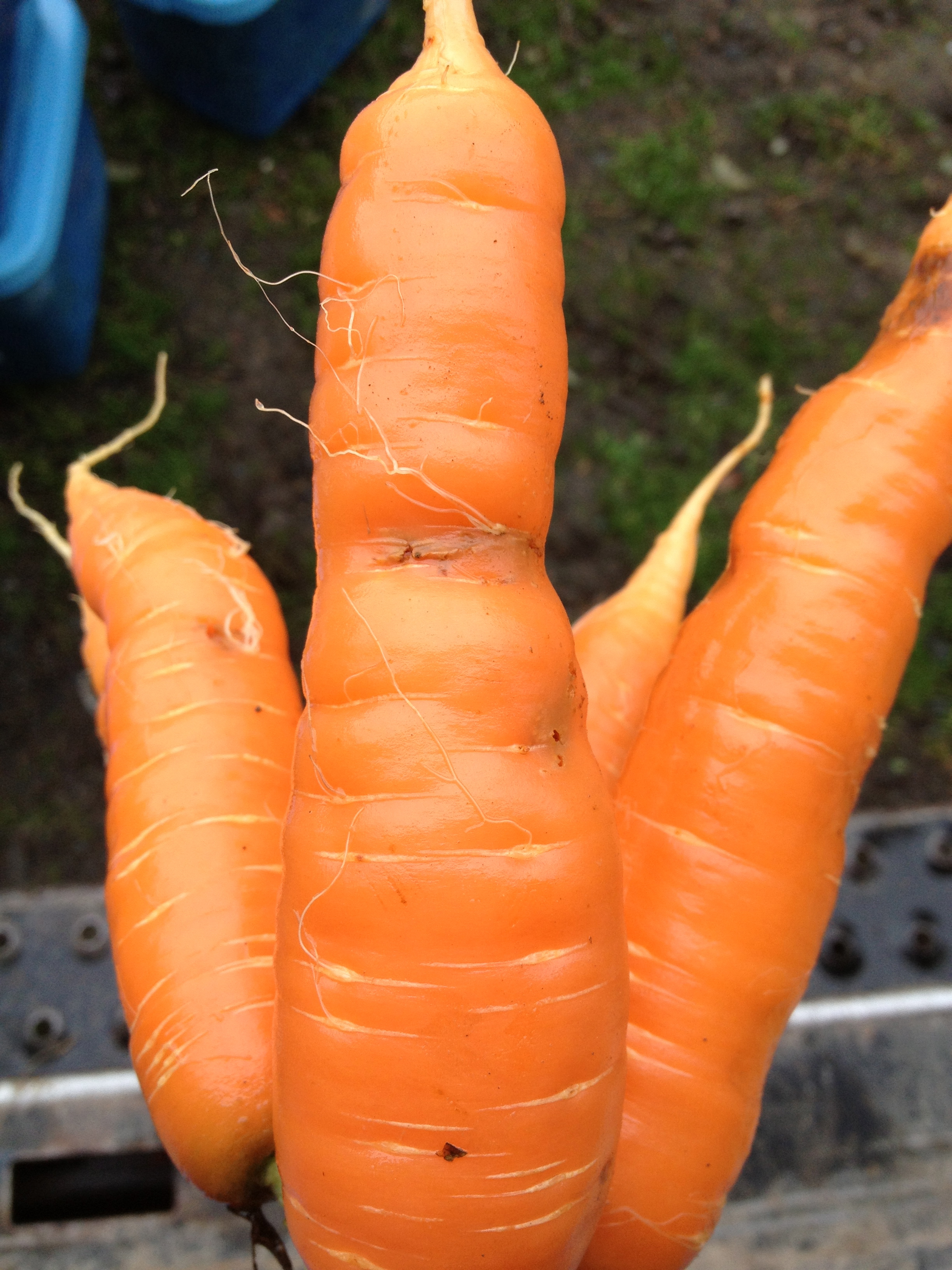
Our only carrot pest, the Carrot Rust Fly, lays eggs in the soil when the carrot plants are young, and the larvae dig into the ground and tunnel into the sweet, tasty carrots. This is what they look like. It's a shame to throw away all the carrots with tunnels, so we just cut around them. They don't affect the carrots' flavor, but they are unsightly. We make our bunches just a bit bigger to make up for the damage.

Our only carrot pest, the Carrot Rust Fly, lays eggs in the soil when the carrot plants are young, and the larvae dig into the ground and tunnel into the sweet, tasty carrots. This is what they look like. It’s a shame to throw away all the carrots with tunnels, so we just cut around them. They don’t affect the carrots’ flavor, but they are unsightly. We make our bunches just a bit bigger to make up for the damage.

1. We have a beautiful, big patch of carrots. In fact, we have so many carrots that we believe we can include them in the CSA shares every week this winter! We know how good they are, and how much everyone loves them. Therefore, we hope all of YOU will be happy as well!

2. We finally timed our radicchio planting so that we have beautiful firm heads in time for winter. It’s been trial and error for several years, but we’ve done it this time. Check out the chicory page for information on how to use this bitter green.

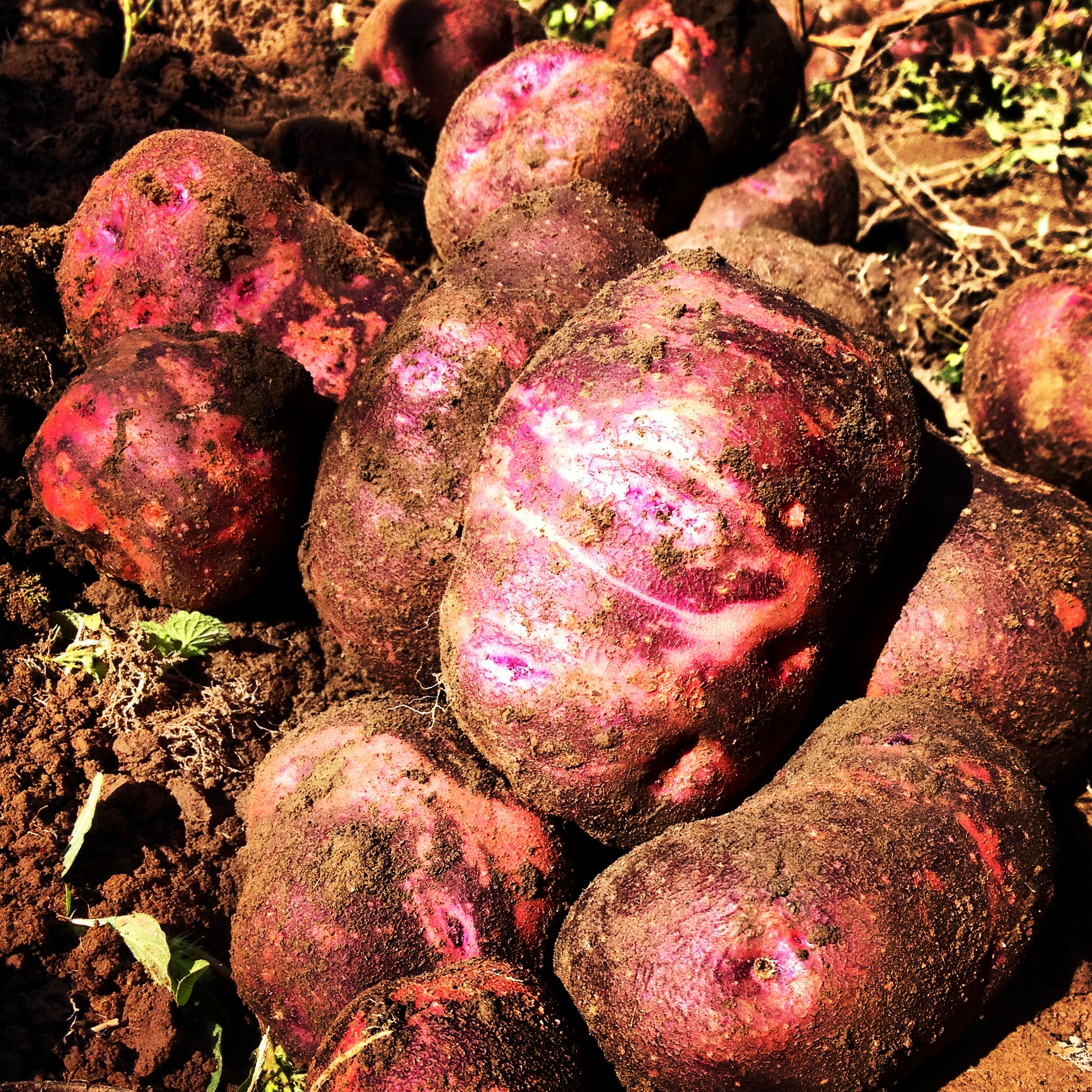
"Purple Viking" are a delicious heirloom potato. The skin is swirled in purple and pink, and the flesh is snow white. I find they're great for anything except mashing, and I love turning them into a bubbly gratin.

“Purple Viking” are a delicious heirloom potato. The skin is swirled in purple and pink, and the flesh is snow white. I find they’re great for anything except mashing, and I love turning them into a bubbly gratin.

3. “Purple Vikings”. My favorite potato, not only for its beauty, but for it’s flavor.

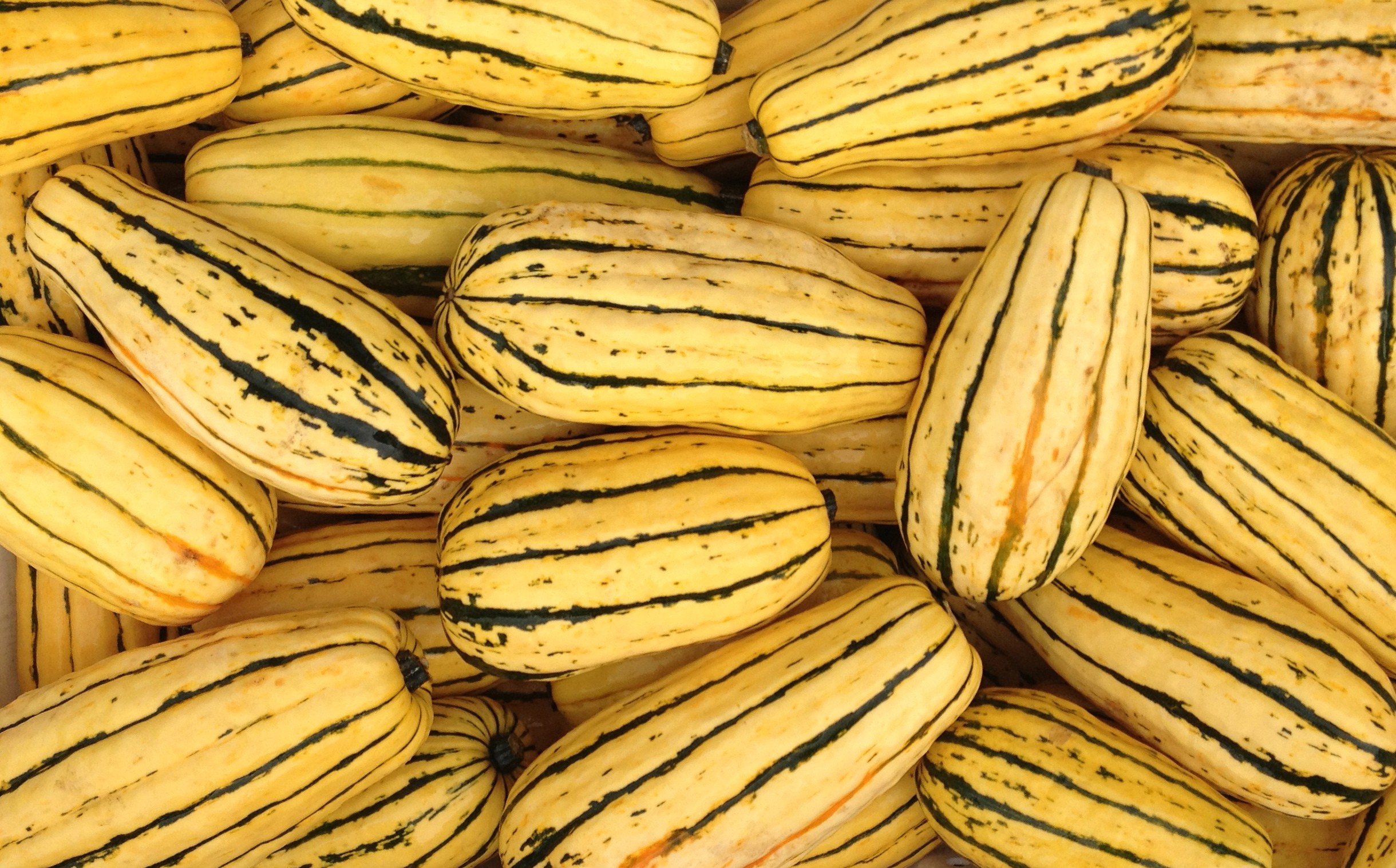
Tasty, golden "Delicata" Squash, also known as "Sweet Potato" or "Peanut" Squash. Mmmm.

Tasty, golden “Delicata” Squash, also known as “Sweet Potato” or “Peanut” Squash. Mmmm.

We have abundant squashes, beets (more recipes coming all the time!), and the tender greens are just about ready to harvest.

Thanksgiving week is coming, and there is always confusion about the “double pick-up option”. Here’s how it works: If you have weekday pickup (Tuesday or Wednesday) you will pick up each week, just as usual. If you pick up on Saturday or Sunday, at the farm or at a market, you will only pick up the weekend before Thanksgiving.

This accommodates people who either aren’t cooking because they’re out of town, as well as people who are cooking for a crowd. It also allows for all of US to enjoy our holiday without having to be out in the field harvesting on Thursday for the weekend.

If you want to switch your pick up day, one way or another, PLEASE let us know ahead of time so we have the right amount of everything on each day.

Oh, one more:

4. I’m really happy we decided to start homeschooling both kids this year. It’s an adventure I look forward to writing about more in the coming weeks.

Winter Week 1—Season of Roots and Leaves

Three of the big boys, being machos.

Three of the big boys, being machos.

THIS WEEK’S SUBSCRIBER MENU:
• “Sangre” Potatoes
• Candy Carrots
“Three-Root Grex” Beets
“Buttercup” Winter Squash
Kohlrabi
Collard Greens
• Italian Parsley

Click on the links above for information and recipes about these crops.

COMING SOON: Arugula, Pie Pumpkins, Baby Turnips

Kohlrabi are the alien spaceships of the vegetable world.

Kohlrabi are the alien spaceships of the vegetable world.

Summer is clearly past. We’ve had our first, albeit very late, frost. Day after day of thick fog that burns off just in time for darkness to fall. And lots of roots and leaves to eat. It’s been a mild fall so far, and I was surprised to see the bees busy and about as October came to an end—not even 50° outside and they are still hard at work.

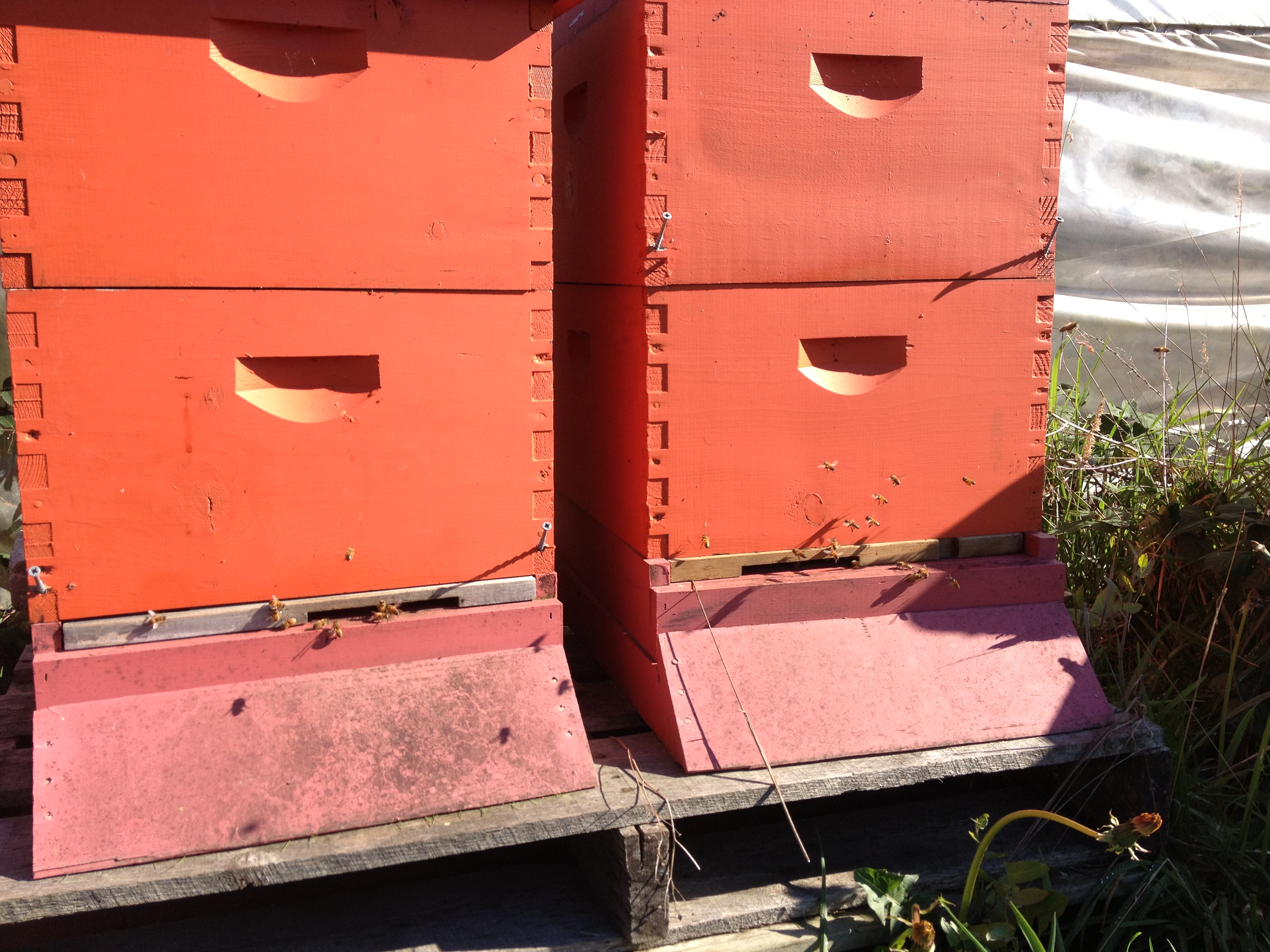
These bees are amazing. Late October, and the girls are all out bringing in groceries from somewhere. Is anything even blooming?

These bees are amazing. Late October, and the girls are all out bringing in groceries from somewhere. Is anything even blooming?

Welcome to the first harvest of our Winter season. Really, we should call it the Fall season, and we’re working on that for next year. But this year we’re still calling it winter. Things are a bit hearty this week, but there are tender greens and baby turnips on the quickening horizon.

You should be able to find clues to all the vegetables you don’t usually eat by following the links in the menu list above. Kohlrabi is a strange one for most people, but beets, collard greens, and squash are easy enough to use with a little hint or two. If you have any suggestions please post them in the comments or email me and I’ll include them on their respective pages. “Buttercup” squash is one of my favorites—they’re terrific for soups, pies, pancakes, and they make a tasty purée. Sweet, but not sugary sweet, and richly-flavored and dense. They can also be peeled with a vegetable peeler and cut into cubes, then roasted with garlic and olive oil.

I apologize for the late notice regarding Wednesday farm pickup. We just realized this weekend that we have an very large delivery roster. It became clear that we couldn’t possibly do all the harvest for the delivery and farm pick up in one day, especially if we have a frosty or very rainy Monday.

Most of the vegetables are outside, where they are the most delicious, and frost makes them even more so. However, if it’s frozen, we can’t pick anything until everything thaws out. Heavy rainfall makes for a lot of mud, which makes picking very slow, which takes more time. We don’t want to be perpetually behind our pickup and delivery deadlines, so we split it into two days. Farm pickup is on Wednesday for the winter, and delivery on Tuesday.

Countdown to Thanksgiving.

Countdown to Thanksgiving.