Monthly Archives: November 2014

Winter Week 3 & 4—Damage Assessment

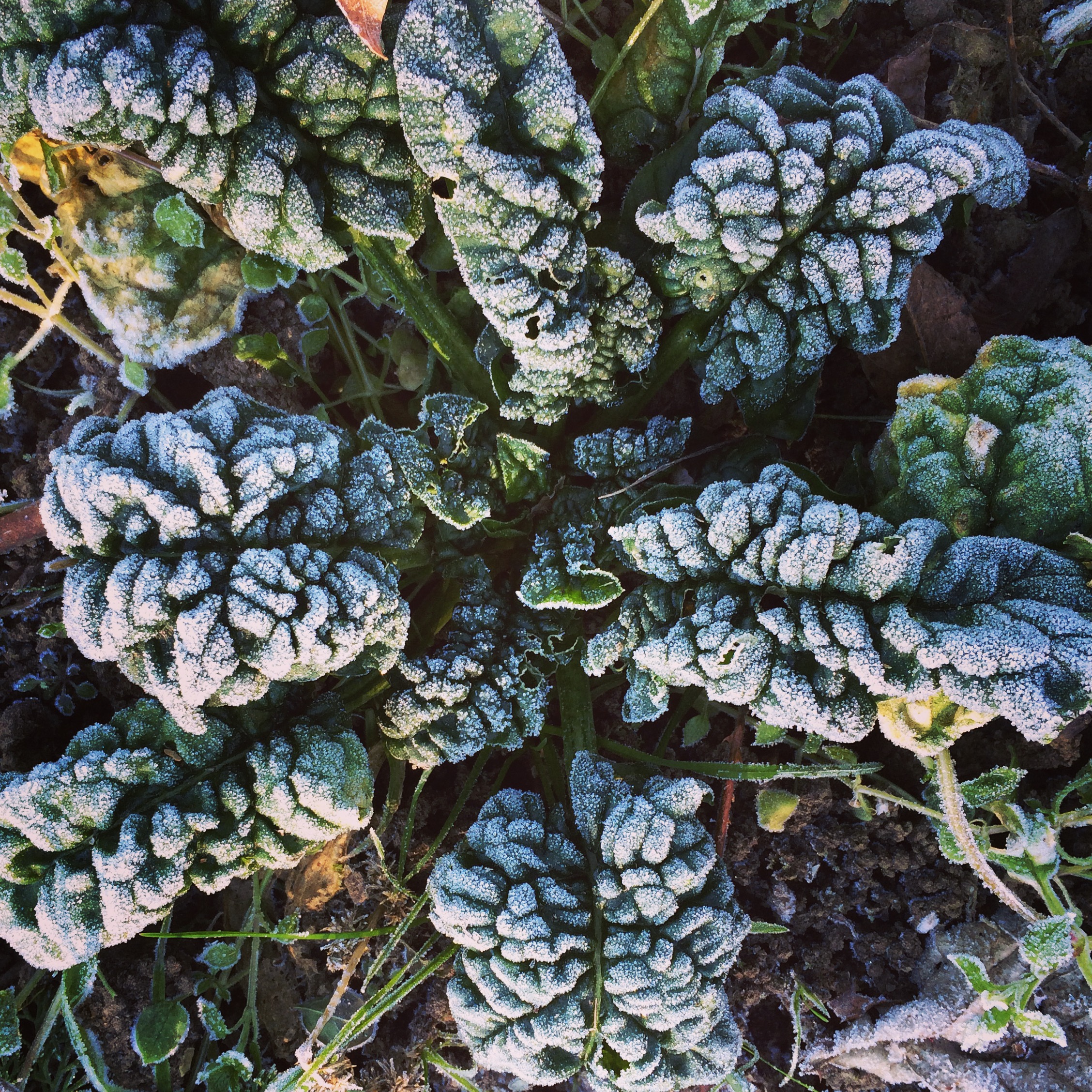
Savoy (wrinkly-leafed) spinach is much more winter-hardy than flat-leafed spinach.

Savoy (wrinkly-leafed) spinach is much more winter-hardy than flat-leafed spinach.

THIS WEEK’S SUBSCRIBER MENU:
• Sugar Pie Pumpkin
• Topless Carrots
• Topless Beets
• Cabbage or Brussels Sprouts Tops
• Leeks
• Romanesco Cauliflower
• Garlic
• “Viking Purple” Potatoes

NEXT WEEK’S SUBSCRIBER MENU:
• Squash
• Topless Carrots
• Topless Turnips
• Cabbage
• Onions
• “Yukon Gold” Potatoes
• “D’Anjou” Pears from Cliffside Orchards
• Fresh Thyme

Click on the links above for information and recipes about these crops.

COMING SOON: Kohlrabi, Brussels Sprouts

First, we need to explain our Winter Holiday CSA Schedule:
The Tuesdays (November 18 and 25) are regular pickup days. Saturday/Sunday (November 22/23) are a two-week pickup, in which both weeks’ worth of produce will be picked up on one day. There is no CSA pickup the weekend of November November 29/30. This allows Teo to take Thanksgiving Thursday and Friday off to be with his family and relax. We will be at the markets Saturday and Sunday, but with a limited amount of produce.


So, to be clear, Regular pickup on Tuesdays, no pickup the weekend after Thanksgiving.

Frozen wind has a way of drying out plants that are supposed to be winter-hardy. Even the poor kale plants will need time and water to recover.

Frozen wind has a way of drying out plants that are supposed to be winter-hardy. Even the poor kale plants will need time and water to recover.

When we first heard about the “Polar Vortex” two weeks ago, we started watching weather reports religiously. I watched on the TV at the gym, I downloaded two more weather apps to my phone (for a total of FOUR) and checked them all every couple hours, comparing the predictions.

NONE of them hinted at what we got.
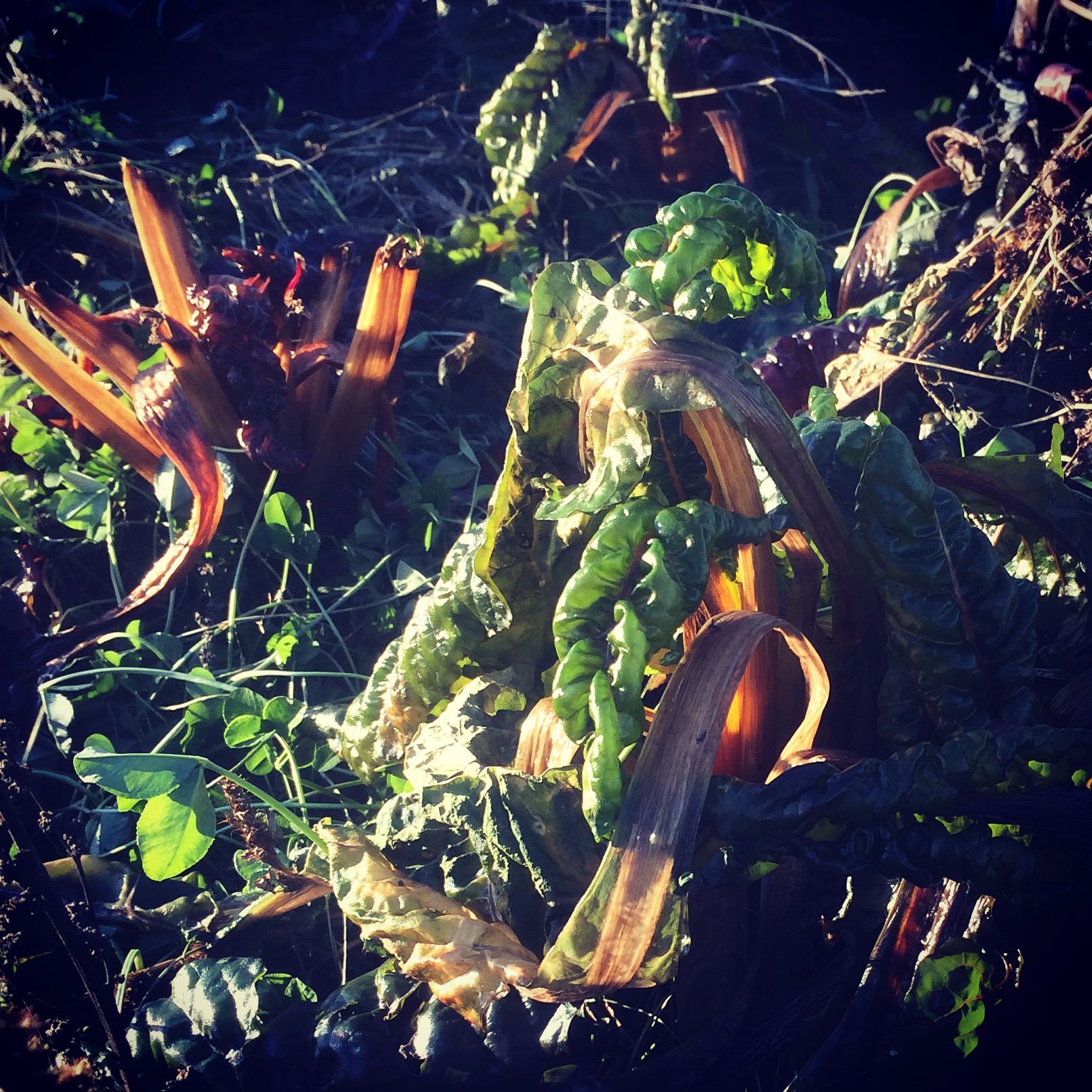
Our Swiss Chard plants survived the week of freezing temperatures, but the leaves are cooked. Hopefully, they will grow new leaves after the weather warms.

Our Swiss Chard plants survived the week of freezing temperatures, but the leaves are cooked. Hopefully, they will grow new leaves after the weather warms.

The average was that it was going to be very windy, and that we would be spared from the coldest arctic air, probably not dropping below 28° or so. Monday morning, we rose, ready to prevent nature from destroying all of our crops that had been flourishing in the extended Indian Summer/prolonged Fall warmth. We rolled out frost blankets on our remaining cauliflower patch of several thousand plants, covered the just-ready Radicchio planting, and the gamble of a fall Fennel crop. They would make it as long as it didn’t drop below 25°. That was our estimation. All of the winter squash, curing in the greenhouse got boxed up and put into the walk-in cooler.

We harvested the remaining cauliflower that wouldn’t make it. Harvested a few crops for CSA and markets. Things we were sure wouldn’t make it. And Monday night the wind DID roll in as predicted, gusting and making a mess for people everywhere through Tuesday. We survived the wind and the bit of chill.
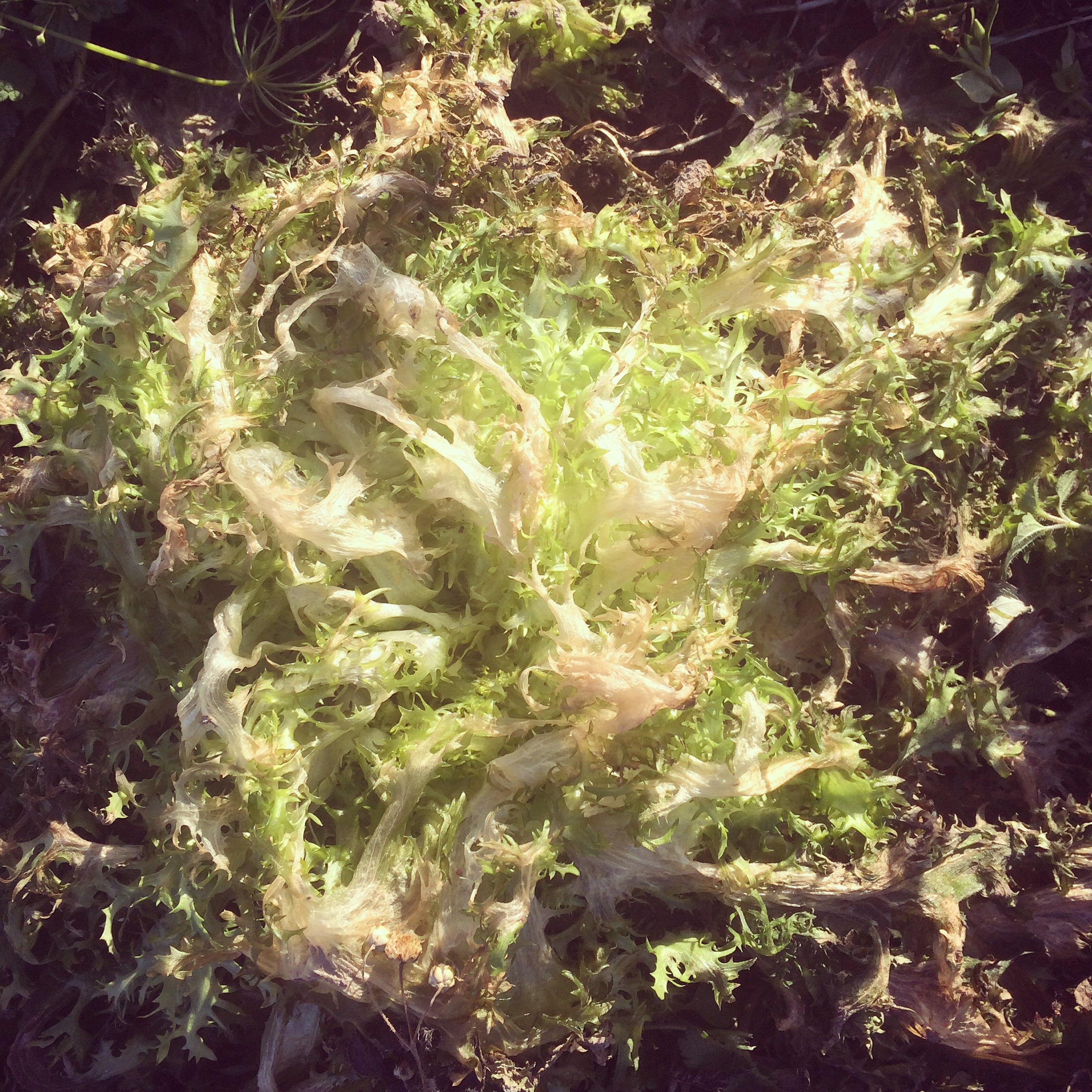
We had hoped the Endive and Escarole would survive the cold, so we would keep enjoying winter salads, but the outside leaves are freeze-burned, even though the center leaves are just fine.

We had hoped the Endive and Escarole would survive the cold, so we would keep enjoying winter salads, but the outside leaves are freeze-burned, even though the center leaves are just fine.

We checked the temperature every night and every morning, and every time we walked past the little computery box receiver. We were feeling pretty confident Thursday, but it didn’t stop. Friday morning it was 17°. Saturday morning it was 19°. All my produce froze as I unloaded it at the U District market. Sunday warmed up a bit. Monday afternoon I checked for damage, and it was pretty sad.

Kale is durable, chard not quite so much. Even though all the plants survived, the leaves were frozen and desiccated by the two days of freezing wind. They will need water and time to pop back to life.

Although Romanesco Cauliflower has a flavor somewhere leaning toward broccoli, it grows like a cauliflower plant with a central head wrapped in leaves.

Although Romanesco Cauliflower has a flavor somewhere leaning toward broccoli, it grows like a cauliflower plant with a central head wrapped in leaves.

The good news is that we still have lots of food. Amazingly, the Romanesco Cauliflower survived with it’s frost blanket. We have lots of squash, onions, garlic, leeks, cabbages, roots, and radicchio. Of those things, the only leafy survivors are cabbages and radicchio—we all need to learn what to do with them for the next five weeks of our CSA. I’ll be updating the Cabbage page with more recipes, and I may just make a NEW page for Radicchio.

Winter Week 2—Polar Vortex, Episode 1

Broccoli, rescued from the icy grip of the Vortex, and into your CSA this week. Hopefully it will survive for another flush of sprouts.

Broccoli, rescued from the icy grip of the Vortex, and into your CSA this week. Hopefully it will survive for another flush of sprouts.

THIS WEEK’S SUBSCRIBER MENU:
“Jester” Squash
• Topless Carrots
• Broccoli Sprouts
Cabbage
• Beets or Fennel
• Kale, Mustard Greens, Chard, or Turnips, or Endive/Escarole
• Onions
• “Yukon Gold” Potatoes

LARGE SHARES: (also available in the Trading Box)
• Artichokes or Zucchini (really the end, this time)
• Radicchio
• Leeks

TRADING/SHARING BOX:
• All of the above and more

Click on the links above for information and recipes about these crops.

COMING SOON: Kohlrabi, Pie Pumpkins, Savoy Cabbage, Escarole, Romanesco Cauliflower

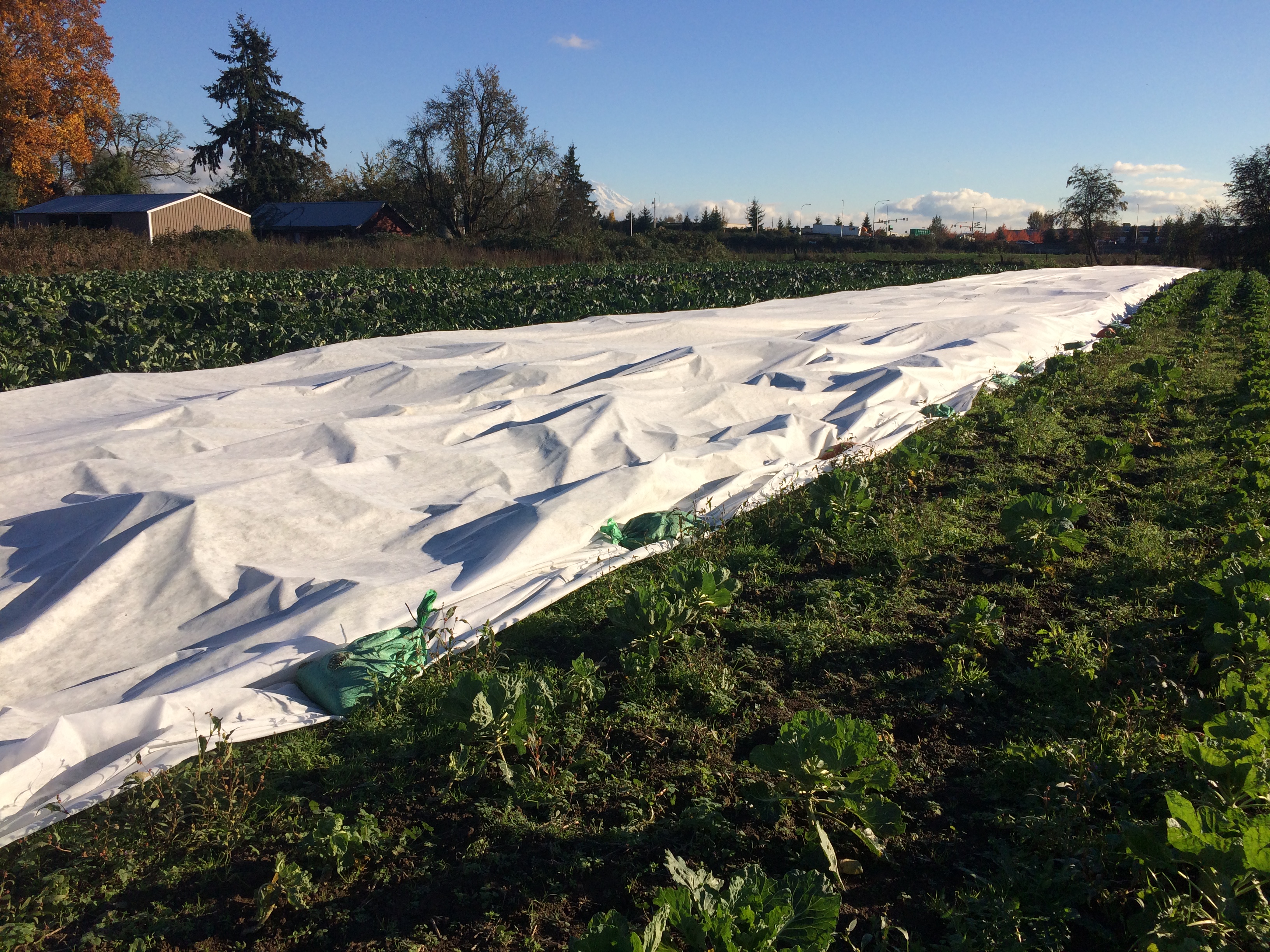
Goodnight, Cauliflower. Preparing for the Arctic Blast by covering the nearly-ready cauliflower patch with frost blanket anchored by sandbags. Hopefully it does the trick. There are nearly 2,000 heads of Romanesco, Purple, and White cauliflower, nearly ready to harvest. They just need another week or two. Brussels Sprouts on the right, Cabbages on the left. Mount Rainier in the background.

Goodnight, Cauliflower. Preparing for the Arctic Blast by covering the nearly-ready cauliflower patch with frost blanket anchored by sandbags. Hopefully it does the trick. There are nearly 2,000 heads of Romanesco, Purple, and White cauliflower, nearly ready to harvest. They just need another week or two. Brussels Sprouts on the right, Cabbages on the left. Mount Rainier in the background.

At Farmers’ Markets this weekend, all the vendor talk was about the POLAR VORTEX, fueled by the Asian SuperCyclone. Luckily, it’s now looking like it will funnel through the East side of the state, and the Cascades will protect us. This time.

It’s a good thing, too, because not only has this fall season been amazingly beautiful and generous, but we have so much more to come! A full patch of various cauliflowers, another flush or broccoli, kohlrabi, radicchios, fennel, and tons of cabbages. All of these more tender crops will complement the winter hardy crops nicely.

Winter is prime time for cabbage. We have several types coming up—especially the very cold-tolerant Savoy Cabbages. Wrinkly and tender, they are delicious and versatile. Check out our new Cabbage Page for ideas.

What the cold really means is that everything is about to become EVEN SWEETER AND MORE DELICIOUS! That’s right: Temperatures below 32° turn those starches in the plants into natural antifreeze—SUGAR! Kale, Collars, Chard, Spinach, Carrots, Cabbage—they will all be even more delicious in another week! I can’t wait. I haven’t had kale once this fall, because I’ve been waiting for that temperature drop. At last!

We are in need of a Handyman to complete a few projects around the farm. Our butcher shed needs electricity and a door, the washing shed needs lights, and I would really like to have sliding doors on the greenhouses. If you are interested or know someone, please pass them along. We can trade for food (including meat) or a combination of cash and food.

Winter Week 1—Falling into Our Winter Season

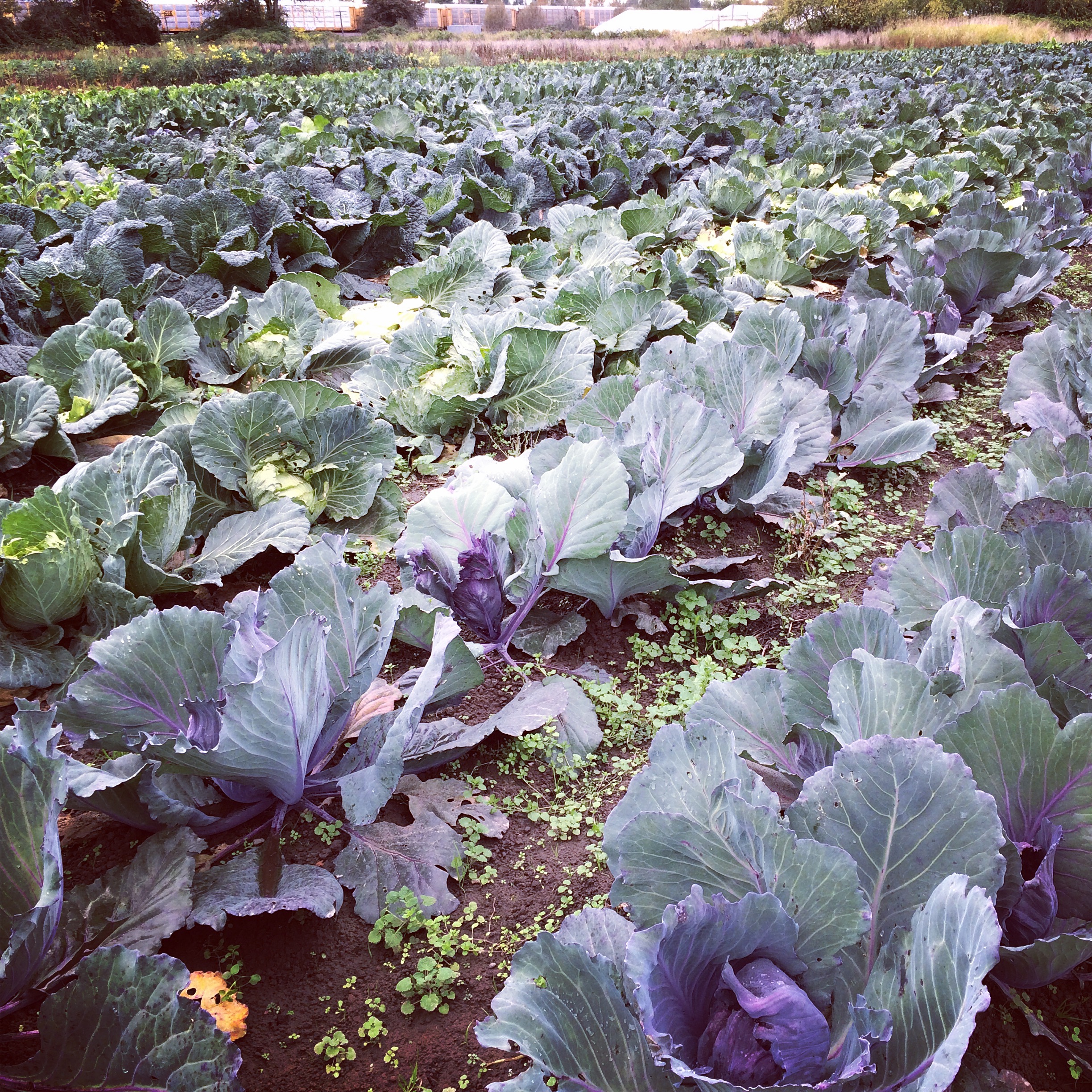
Our Fall Brassica field is looking amazing—and it's November! Cabbages of many kinds, Broccoli, Cauliflower—White, Purple, and Romanesco—all are coming to you in this wonderful Winter Season!

Our Fall Brassica field is looking amazing—and it’s November! Cabbages of many kinds, Broccoli, Cauliflower—White, Purple, and Romanesco—all are coming to you in this wonderful Winter Season!

THIS WEEK’S SUBSCRIBER MENU:
“Ambercup” Squash
• Topless Carrots
• Cauliflower
• Brussels Sprout Tops
Curly Endive
• Spinach
• Beets of many colors
• Kale. Mustard Greens or Chard
• Leeks
• Garlic
• Curly Parsley

LARGE SHARES: (also available in the Trading Box)
• Mustard Greens
• Fennel

TRADING/SHARING BOX:
• All of the above and more

Click on the links above for information and recipes about these crops.

COMING SOON: Kohlrabi, Pie Pumpkins, Savoy Cabbage, Escarole

Curly Endive is slightly bitter, but it's delicious in salad with fruit and cheese, or any other salty/savory combination. Those curly leaves hold lots of dressing!

Curly Endive is slightly bitter, but it’s delicious in salad with fruit and cheese, or any other salty/savory combination. Those curly leaves hold lots of dressing!

Our Winter Season has begun, and what a glorious one it promises to be! We still have not had a frost or any freezing weather, so we have a lot of crops that we don’t usually enjoy in November.

The Turkeys finally got moved out to pasture! They really don't like being in a building, they like being ON things, so there's no point in building them a shelter. The donkeys are a little perplexed with them.

The Turkeys finally got moved out to pasture! They really don’t like being in a building, they like being ON things, so there’s no point in building them a shelter. The donkeys are a little perplexed with them.

If you had been to the farm in the last two weeks, you know what a mess all that rain made in the chicken yards. The chickens have now been moved to drier ground behind our house. The turkeys are enjoying their move to the Donkey Pen.

In November, we decapitate the Brussels Sprouts plants so they will put all their energy into growing the nuggets in their leaf joints. Right now they are the size of a fingernail, but in a few weeks they will be walnut-sized.

In November, we decapitate the Brussels Sprouts plants so they will put all their energy into growing the nuggets in their leaf joints. Right now they are the size of a fingernail, but in a few weeks they will be walnut-sized.

We are in need of a Handyman to complete a few projects around the farm. Our butcher shed needs electricity and a door, the washing shed needs lights, and I would really like to have sliding doors on the greenhouses. If you are interested or know someone, please pass them along. We can trade for food (including meat) or a combination of cash and food.