Category Archives: Uncategorized

Winter Break?

We will be butchering our boar this week, and making sausage. We will be making Bratwurst and Sweet Italian, both in links, and we’ll be selling them in 5# units at $6 per pound. Email me if you are interested, shelley@whistlingtrainfarm.com.

Have you noticed? The days are getting longer. Just those three minutes a day, but they add up, don’t they? Already our days are 45 minutes longer than they were on December 21. In another month we will have 90 extra minutes each day to see and soak up energy outside. Of course, February is usually the coldest month, when we have the most freezing. But, it’s usually sunny!

The rain is blowing sideways today and Teo just called to find out if he had to work today. There aren’t many jobs that can be done outside like this. He has been working hard lately though, anxiously trying to get the last of the garlic planted. He’s a half-box away from having 250# of hard neck garlic varieties planted. This year we put in 50# of Musik (the huge, delicious variety with big, easy-to-peel cloves), 50# of Purple Italian Easy Peel, 25# of Spanish Roja, and 25# of German Red. There are still 75# of Italian White, a soft neck variety, left to go, and the shallots.

It is most important to get the hard neck varieties planted early, because they simply won’t form bulbs if they don’t experience a good spell of cold weather. The softneck varieties are more suitable for warm climates because they don’t need that cold spell. If we don’t get them planted until spring, the bulbs might not get as large, but they will bulb. Same with shallots. We are planting extra soft neck garlic this year because we want to make garlic braids this summer. Braids are a handy way to store garlic through the winter (and the softneck varieties DO store better) and we can make extra for selling at farmers markets in the fall.

Hopefully it will not be as wet tomorrow, and he can finish planting before the snow falls.

Also on the to-do list before we start planting next month:
• Clean all the greenhouses and prepare for planting
• Build CSA/Farm brochure and CSA application
• Organize seed-starting supplies and order seed
• Clean chicken-houses and move hens
• Fence new chicken/cow pasture
• Order March chicks for fall egg production
• Get tractors and machinery serviced
• Put together cultivating tools so we have less hand-weeding and less crop-loss
• Decide if I want to commit to offer meat chickens (fryers) this year
• Take down pole bean supports
• Pull up plastic mulch
• Map out the new, larger CSA u-pick area
• Invent the Budding Farmer Club, for CSA kids
• Invent the Gardening/Self-Sufficiency Workshop for CSA adults

And, for our 15th Farm-iversary this year:
• Update the farm website
• New farm sign for the street
• Order T-shirts
• New signage around the farm
• Hopefully, paint a mural on the wall of the walk-in cooler/shipping container

Is it all do-able? I hope so!

It’s only January, but spring is just around the corner.

Solstice Nears—Winter Weeks 7 and 8

IMG_2115Because next week is Christmas (which we celebrate), we will not be picking anything and there will be no CSA pickup anywhere after the 23rd. Everyone will pick up both weeks’ produce on their usual pickup day this week. If you have a conflict and need to pick up on a different day, please let us know. If that doesn’t make sense, please let me know right away. 🙂

THIS WEEK’S SUBSCRIBER MENU:
• “French Fingerling” potatoes
• Big Turnips
• Golden Beets
• Parsnips (been saving them all year for this week)
• Salsify
• Red or Yellow Onions
• Leeks
• Garlic
• “Festival” Winter Squash
• Sugar/Pie Pumpkin
• Turnip Greens
• Kale
• Baby Savoy Cabbages
• Swiss Chard
• Radicchio
• Arugula or Mizuna
• Cliffside Orchards “D’Anjou” Pears

Sadly, we are finished for the winter. We have run out of carrots, many greens, and most squashes. You’ll find more information in the text below, but that’s the heart of it. We will make up the two missing weeks in the spring when there is more produce.

Click on the links above for information and recipes about these crops. Click HERE for detailed photos on how to cook greens.

This winter has been a strange one. It hasn’t been excessively cold, but it seems as if it has been extraordinarily wet. We have much standing water around the farm and in places in the fields—more than usual. The extra rain has made a lot of leafy crops disintegrate, but I also blame ourselves for not adding enough lime last year. Among other things, the calcium from the lime (not the fruit, but Calcium Carbonate) helps strengthen the cell walls of plants, making them more resistant to the cells bursting and causing deterioration of tissues. More lime next year. Maybe more row covering as well.

With this week’s double pickup, we will be done for the winter, but no need to worry! As in the past, we will make up the two missing weeks of winter produce in the spring—between the spring and summer seasons. That puts us in early June, when we typically have much more to offer. We believe that you will be happier with your produce selection in those two weeks than if we try to scrounge for two weeks in January.

The Winter Solstice arrives on Friday, and it’s never too soon for my taste. The shortest day/longest night is as bad as it gets, and I put up a lot of lights to try and forget that we really only have about 6 hours of light this time of year. I like to imagine what it must have been like in very olden times. In the days before electric lights and heating, or even before gas lit and heated homes and made life more comfortable. When tiny houses were filled with smoke from fireplaces and eyes strained to complete tasks by candlelight. When fresh food was scarce, and a family only had what they had managed to store away during brighter days. The days of root cellars, wood-sheds, and that fatted goose, plump with grain from the fall.

It may not seem like much, but the three minutes of extra light we northerners get from each passing day after December 21 adds up. Those extra minutes bring the promise of fresh spring greens, abundant fresh eggs, and an explosion of all forms of new life. It’s not especially noticeable until around February, when grass greens up and hens start laying, and then we start planting. The bees will emerge and forage on blooming maple trees, and possibly alder or willow—the first plants to bloom around here. Not much for honey, but those tree blossons are rich in pollen for feeding baby bees. After the Solstice, we begin looking for those signs of spring. And we start counting the days until we can start planting again.

It will be only a few weeks until we seed carrots in the greenhouses for April picking, and in February we will plant salad greens inside for April and May. The seed catalogs have already arrived, and once the holidays have passed, we will study and make lists, adjust our planting schedules, and try and fit even more into our little farm than we did last year. It’s always going to be a good year, and a better one than last year.

Of course, that’s assuming that the world doesn’t end on Friday, December 21….

15686_474948289223499_994801388_n

Rain and Mud—Winter Week 5

Purple Mustard Greens. Tender and tasty, with a bit of horseradish bite.

Purple Mustard Greens. Tender and tasty, with a bit of horseradish bite.

THIS WEEK’S SUBSCRIBER MENU:
•  Carrots
• “Elba” Potatoes
• “Heart of Gold” Winter Squash
•  “Copra” Yellow Onions
•  “Osaka Purple” Mustard Greens
•  Swiss Chard
• Tatsoi

Click on the links above for information and recipes about these crops.

COMING SOON:
Radicchio
Arugula
Leeks

Our days are continuing to get shorter. We’re down to about 9 hours of real daylight—compare that to the 15 hours of daylight we have in June. It’s really a profound change, and it’s one that the plants and animals notice, as well as the humble humans.

The plants are actually not growing anymore. They need about 10 hours of daylight to produce significant photosynthesis and, therefore, growth. But we keep picking them, robbing them of their leaves and they are slowly picked down to stubs. Just a few weeks to go until they can be left alone until spring brings longer days and lures growth to return.

All of our winter crops are really about inventory—how much we planted in the waning summer, and how much is remaining in the ground. How much is damaged by pests or a runaway pig, or hungry coyotes that dig carrots and beets out of the ground. Aside from the squash, onions, and garlic, everything else that we include in our Winter CSA Season is outside, in the wet ground. It tastes better that way, as freezing temperatures turn the starches in the plant parts into sugars that resist freezing. Better to survive the winter with, survival is all about getting those flowering parts to the kinder weather of spring.

Better for those who eat them, I say. Delicious.

Thanksgiving—Winter Weeks 2 and 3

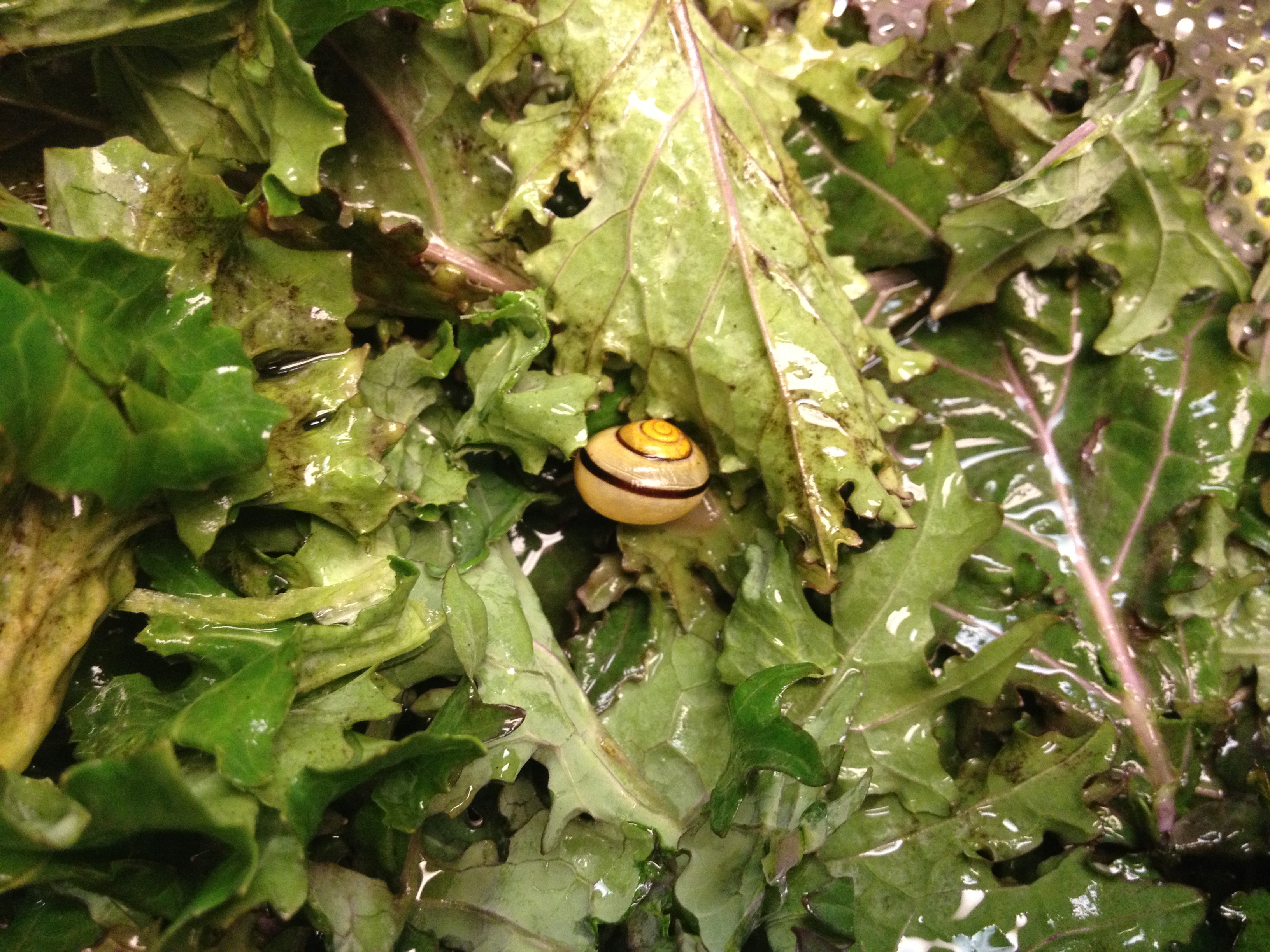
Picking yummy greens in the wet season means you might find a critter in them. It just means they taste good. It even happens to me. I just took it out and put it outside. No biggie.

Tuesday/Wednesday people will pick up both weeks separately. Weekend people will pick up both weeks’ produce this weekend. There is no pickup the weekend after Thanksgiving. If that doesn’t make sense, please let me know right away. 🙂

THIS WEEK’S SUBSCRIBER MENU:
• “German Butterball” potatoes
• Yellow Onions
“Acorn” Winter Squash
Brussels Sprout tops
• Arugula
• Mizuna
• Sweet Peppers
• Baby Fennel

NEXT WEEK’S SUBSCRIBER MENU:
• “Georgia Jet” Sweet Potatoes
• Shallots
• Pie Pumpkin, either “Winter Luxury” or “Baby Pam”
• Beets
• Carrots
• Radicchio
• Tatsoi
• Tonnemaker’s Orchards Apples

Click on the links above for information and recipes about these crops. And click HERE for detailed photos on how to cook greens.

COMING SOON:
Salsify
Mustard Greens
Baby Bok Choi

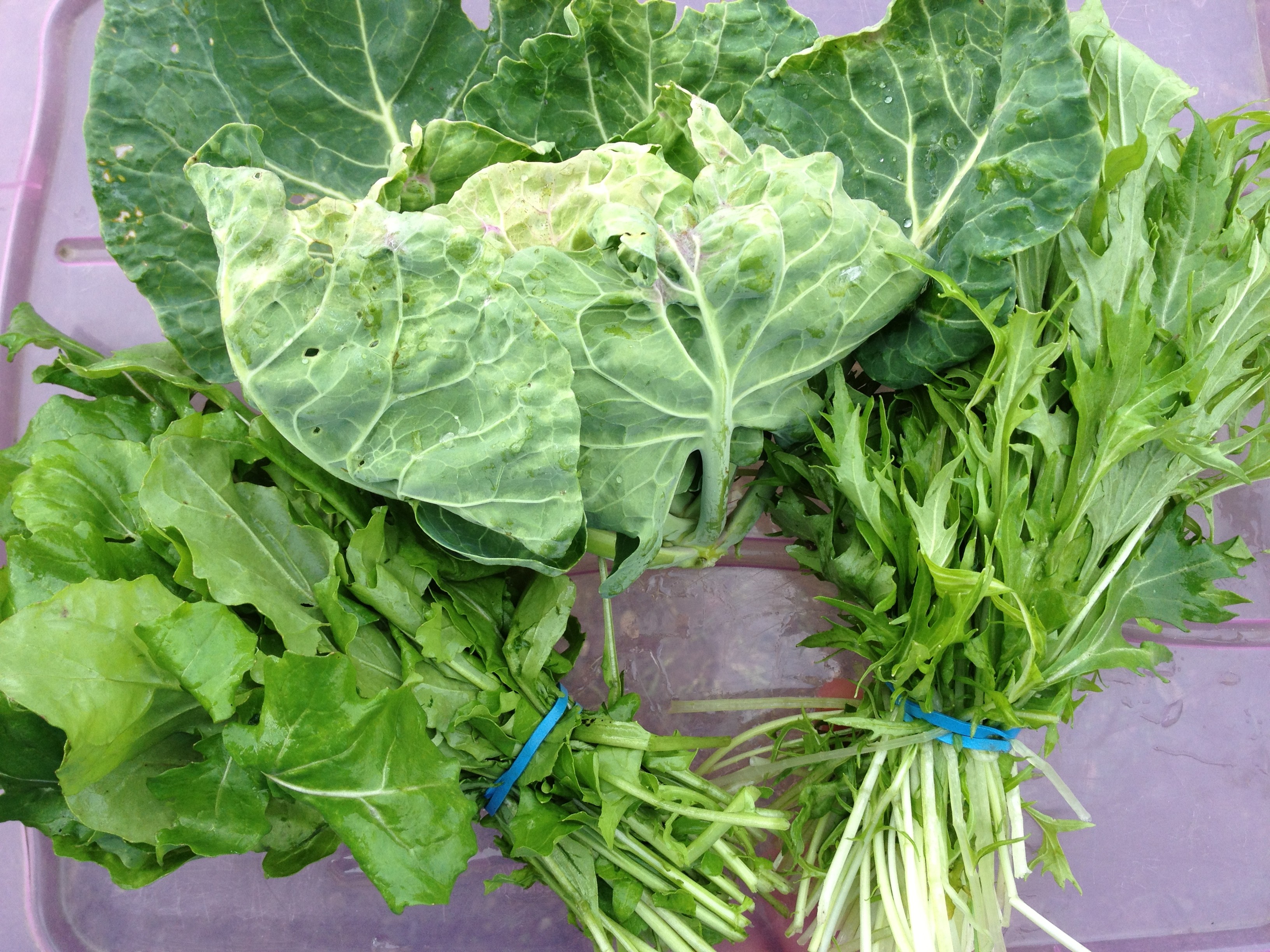
This week we picked (from l. to r.): Arugula, Brussels Sprout tops, and Mizuna.

Every fall it’s important to prune the Brussels sprouts plants. They grow in a tall stalk (although ours are pretty short this year because we got them planted late) and they make the little sprouts up the stalk at the leaf joints. If they could, they would keep growing up several feet, “ripening” the sprouts gradually as they go up the stalk. However, if you want those sprouts to be sized consistently and get done at one time, they need to be pruned.

Fluffy, leafy Brussels Sprouts plants. We always prune the fluffy tops out of the plants about now, to encourage the plants to concentrate on making the sprouts larger. Otherwise, they’ll just keep growing taller and sizing-up the sprouts from the bottom of the stalk up.

We do this by decapitating them. Really. We just cut that leafy rosette of leaves off of the top of the plants. Commercially, they just toss them to the ground, but they are SO delicious! Tender, sweet, and green. Basically, they’re almost the same as kale or collard greens, or even cabbage. Just sauté or steam them and eat them up. Very tasty greens.

Tiny Brussels Sprouts on the stalk. A baby sprout forms at the junction of each leaf stalk and the main stem.

Amazingly, the pepper plants are still trying to ripen the last of the peppers in the greenhouse. The tomatoes finally died with the cold snap last week, but the peppers are more durable. We are trying to get them used up so they don’t go to waste, AND because we need to move the cows into the greenhouse. You may ask, why would we do that? 1: Because cows don’t like to be wet or muddy, and we don’t have a big barn for them, and we don’t like to scoop a lot of heavy poop. Our cows are spoiled and pathetic and would give anything to be dry and warm. And 2: Because cow manure is magic fertilizer and we get great vegetable production after this manure application. If we just put the cows inside, we don’t need to do any spreading. Especially if we follow the cows with chickens to break up the patties.

Thanksgiving is coming up. Please note the schedule for weekend pickup—pickup two weeks’ worth of produce this weekend, November 17-18, and then no pickup after Thanksgiving, November 24-25. Mike will be at farmers markets both weekends, but many people are out of town or not cooking those few days after the big feast, so it’s simpler this way. There are plenty of different things that will keep well so you don’t have to eat it all at once, but if you’re the one preparing the big meal it is all there for you.

Winter Begins—Winter Week 1

If you cut your squashes into rings and bake them, you can have cool teeth like these after you’re done eating.

THIS WEEK’S SUBSCRIBER MENU:
• Carrots
• Green Tomatoes
• Kale
• “Purple Viking” or “Purple Majesty” Potatoes
• “Purple Frills” Salad Mustard
• “Delicata” Winter Squash
• Italian Parsley
• Garlic

Click on the links above for information and recipes about these crops.

COMING SOON:
Mizuna
Pea Shoots
Beets
THANKSGIVING!

I didn’t get a blog post done in time to thank all of our wonderful summer subscribers for being with us for the past summer. It was one of our best, if I don’t say so myself.  Lots of variety, lots of food. Plenty of new things, but lots of traditional, “not-scary” things too. Everyone who joined Tonnemakers’ Orchard was happy with their fruit subscription as well, so I believe we’ll be carrying that on next year. It was definitely a winning deal for everyone.

But now we are in our chilly Winter Season. We’re wrapping up the tomato harvest by pulling all the green tomatoes out of the greenhouse and giving them to you. There are a lot of chutneys, pickles, and other things to do with them—great with turkey—as well as frittering them or baking them. I’ll try and find some recipes. After the tomatoes are cleaned up, we can plant salad greens in there for the end of winter, maybe for spring.

The carrots are getting sweeter every week. Cold temperatures concentrate the sugars in the roots, and although the choice of variety has something to do with carrot flavor, California carrots will never be as sweet as northern carrots kissed by frost. The same goes for other root crops, as well as leafy green crops like kale and Brussels sprouts. Remember that.

We’re starting off this week with “Delicata” winter squash. This is a sweet variety, also called “Sweet Potato” or “Peanut” squash. They are easy to cut open and bake, but they can be steamed or microwaved. I find that the flavor is more concentrated and sweet when baked, but maybe that’s just me. Check out this new page on Breaking Into Winter Squash if you need more help, and the page of squash recipes on our Winter Squash page.

We hope you will enjoy your next 9 weeks with us, exploring local winter produce. Everything is grown here on our farm—nothing from Mexico, California, or any other warm place.

Summer Week 19: Fall Reigns

The men bonding while hunting for pumpkins. The pumpkin patch got too weedy for people to walk in, so the boys gathered them up and moved them to the farm stand for easy picking.

THIS WEEK’S SUBSCRIBER MENU:
• Carrots
• Tomatoes
• Sweet Peppers
• Spinach
• Fennel
• “Purple Frills” Salad Mustard
“Jester” Winter Squash
• Garlic

Click on the links above for information and recipes about these crops.

COMING SOON:
Potatoes
Tatsoi
Mizuna
Pea Shoots

It seemed as though summer would last forever. Warm, sunny days and cool nights, with no rain. But inevitably, it turns. The frost comes, the rain rolls in, and the clouds return.

Soup season returns. Greens taste sweeter with frost, and the hard-shelled winter squashes become a staple food. There are a lot of recipes on our Squash page, linked above and soup is always a comforting, easy choice.

Spinach is sweet and hearty in the fall, and this week’s exciting crop—salad mustard is a winner! Try it in a sandwich, or on top of your cooked spinach or a soup. It’s mustardy, but not hot. Tasty and pretty. Make sure and try some of the fennel recipes—or just cut it into wedges and roast it with carrots. The stems are great used like celery, chopped into tuna or chicken salad, or just to much up.

The tomatoes and peppers are lingering on, they are just taking longer to ripen. It hasn’t been cold enough to kill the plants, so they keep on setting fruits and ripening those that are mature enough. Amazing—it’s almost November.

If you haven’t picked up your Jack-O-Lantern pumpkins yet, this is the last week—Halloween IS next week, after all. Starting in November we will start breaking into the Sugar Pie, Eating Pumpkins. Pie, Soup, Pumpkin Bread—they are all calling me.

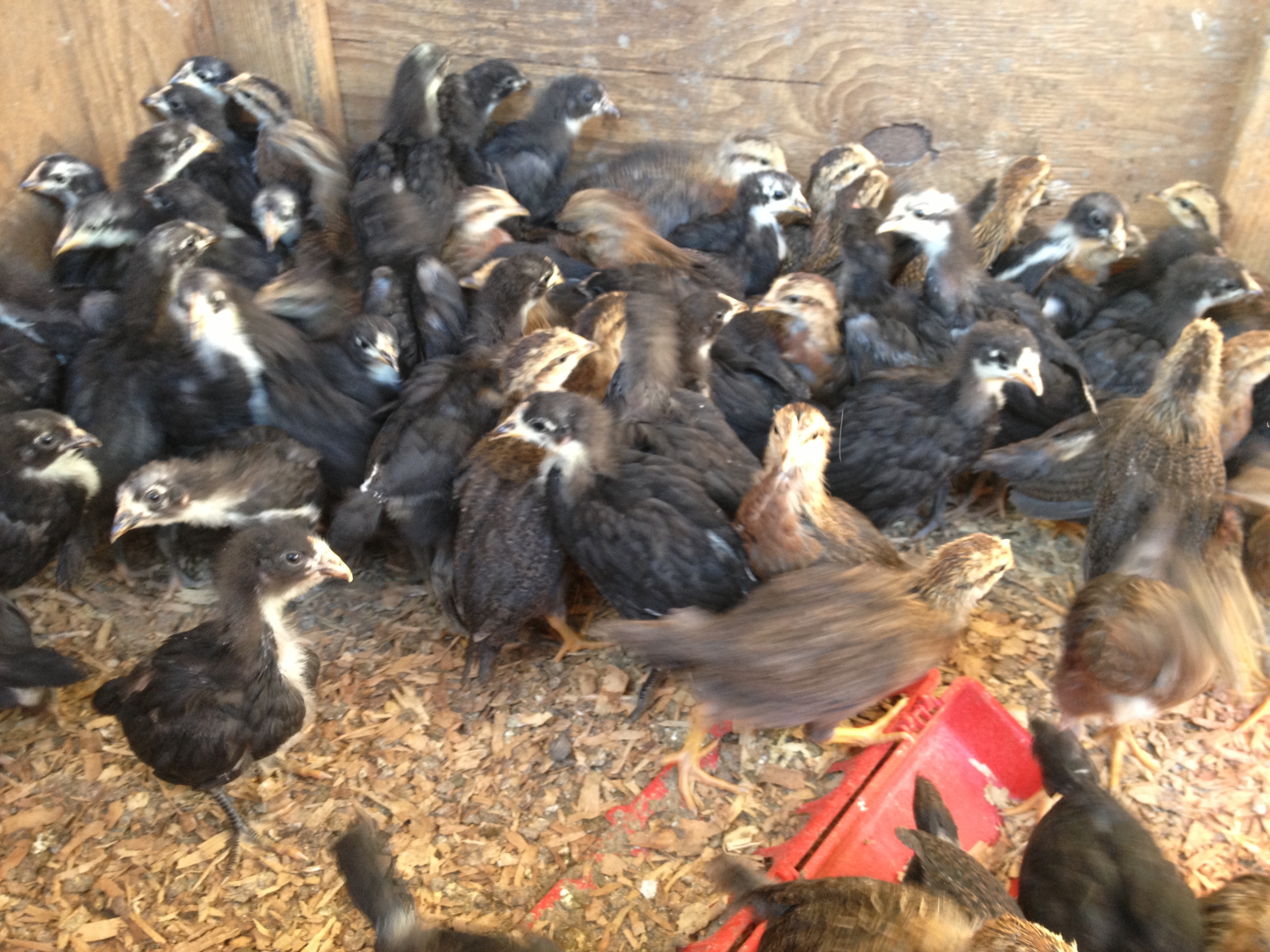
The little pullets are about a month old now and have their first set of feathers. It’s almost time to move them to bigger quarters! Only 6 months to go until eggs.

The little laying pullets that arrived last month are fully feathered and past their most fragile stage. Soon we will move them outside, or possibly into one of the greenhouses. It takes about six months for them to reach maturity, when they will start laying. That should be about April, when the increasing daylength tells them it is time. On the opposite side of the calendar now, the hens have entered their molt—when they lose all their feathers to grow a new, clean set to get them through the winter. They are not able to produce eggs and make feathers at the same time, so there are no eggs to be had now. The long wait has begun….

Summer Week 16: Goodbye to Summer

October sunflower heads bobbing in the dry, fall breeze. There are still so many to take home from the cutflower garden!

THIS WEEK’S SUBSCRIBER MENU:
• Lettuces
• Cannellini Shelling Beans
• Arugula
• Collard Greens
• Torpedo Onions
• Tomatoes
• Sweet Peppers
• Eggplant

Click on the links above for information and recipes about these crops.

COMING SOON:
Potatoes
Baby Turnips
Spinach
Hard-Shelled Squashes

The Harvest Moon rises over the pole beans. A Harvest Moon is the first full moon after the Autumnal Equinox.

Technically, Autumn begins on or around September 21. It’s a vague marker, really. Sometimes fall slowly creeps in with the rain and wind, stormy and wet. This year, it’s strangely sneaking past us camouflaged by summer. It may be October, but it is sunny, dry, and warm. At least, during the day. At night it’s getting chilly and frosty. We actually made it into October before we lost the basil and summer squash plants. I don’t know if I remember getting our first frost that late in the season before. Some years, we get a damaging frost in early September. Not this year.

We are still irrigating. In October. We are still planting—in October. Usually we try to beat the imaginary planting clock, with a deadline of September 1—before the rain starts, simply because it’s nearly impossible to plant anything in mud. Sticky soil makes it impossible to use seeding machinery, and very difficult to use hands to set transplants.

But we are still planting. It’s dry, might as well throw some more ___  in the ground. This week, it’s salad greens. What the heck—might as well try, right?

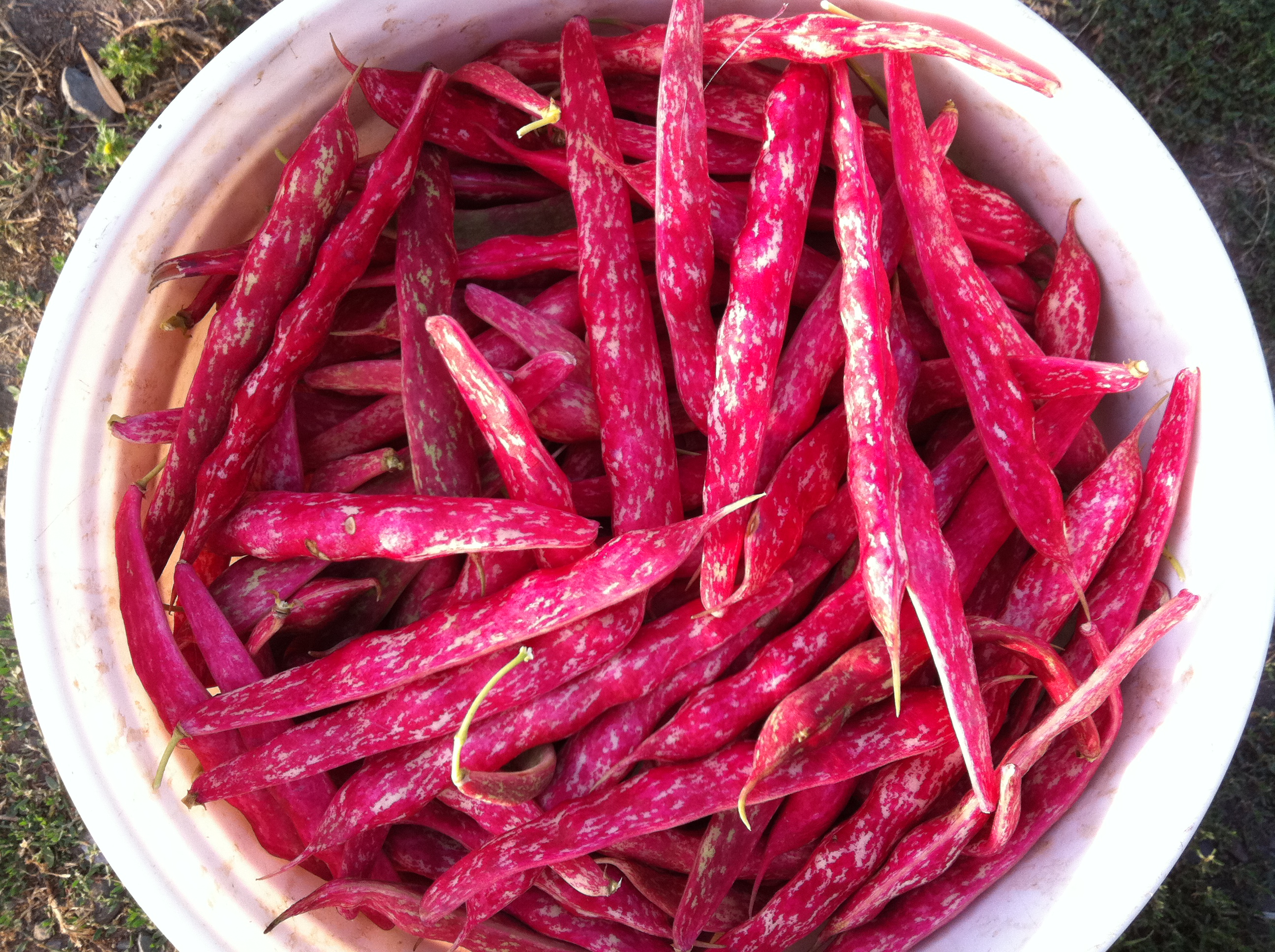
In the meantime, we are having an awesome harvest of Shelling Beans. In wet years, we struggle to get them picked before they get moldy. But, in a dry year, the beans dry beautifully and the colors are nice and bright. This week we are offering Cannellini, which are an Italian white Kidney-type bean. They still only take 15-20 minutes to cook at a simmer. If you can’t use them up now, let them dry for later. Just remember that you’ll need to soak them before you cook them if they are dry.

Make a quick ratatouille with the surprise eggplant and peppers, to go along with the bountiful tomatoes we’re having this year. We had a delicious salad of arugula, sliced tomatoes, and cured olives the other night. Very tasty.

Don’t forget that our winter season is only five weeks away—I know it’s easy to forget with the everlasting summer. 10 extra weeks of deliciousness—all the way into January. Let us know if you’re interested, or pick up a flyer in the farm stand.

Summer Week 14: Fall Colors

This variety is from Italy, “Stregonta”. It means “sorceress”. They are pretty and delicious, nonetheless.

THIS WEEK’S SUBSCRIBER MENU:
• Lettuces
Shelling Beans
• Arugula
• Carrots
• Cucumbers
• Tomatoes
• Sweet Peppers or Eggplant
• Fresh Dill

Click on the links above for information and recipes about these crops.

COMING SOON:
Potatoes
Turnips
Spinach

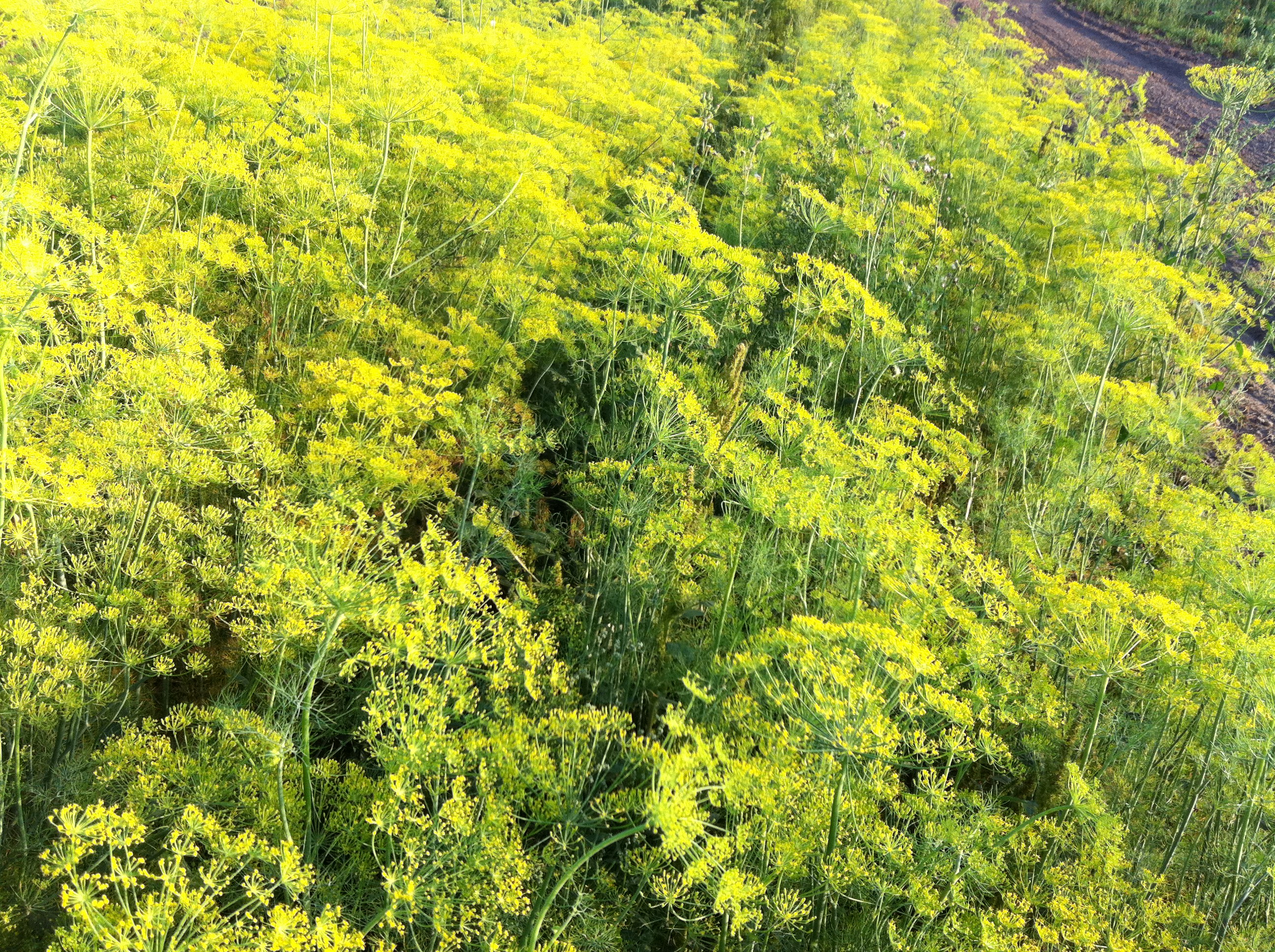
The dill patch in full bloom. This is the stage that is best for pickles. It sure is pretty!

I don’t have a big theme to talk about this time, but there is a lot going on. Fall planting is just about wrapped up. The problem is the watering—it’s so dry! Warm and dry are great for planting, but the seeds won’t sprout without some water, and everything needs water! We’ll get there.

Usually shelling beans aren’t ready until October, but the extra few weeks of summer weather have speeded them up. The snap beans are done—which usually wouldn’t be missed either, except that it still feels like summer. The basil is nearly done, due to the foggy mornings—basil doesn’t like to be wet and cold.

Enjoy the shelling beans this week. NOTE: they are not a snap bean, and you DO need to shell them before cooking. Just pop them out of their pods and use them like a dry bean, except that they don’t need to be soaked because they are still full of moisture. Check out the link to the shelling bean page for cooking information.

The fall crop of arugula is ready, even as the last summer lettuce patch is finishing because of the warmth. Too much warm and sunny weather makes it want to flower. Bummer. Now we’ll be filling in with salad mix, and it won’t be ready for a few weeks.  Didn’t anticipate that happening. BUT, we have so many tomatoes! And peppers. And if I’d anticipated such an amazing year, I would have planted more eggplants. You never can tell.

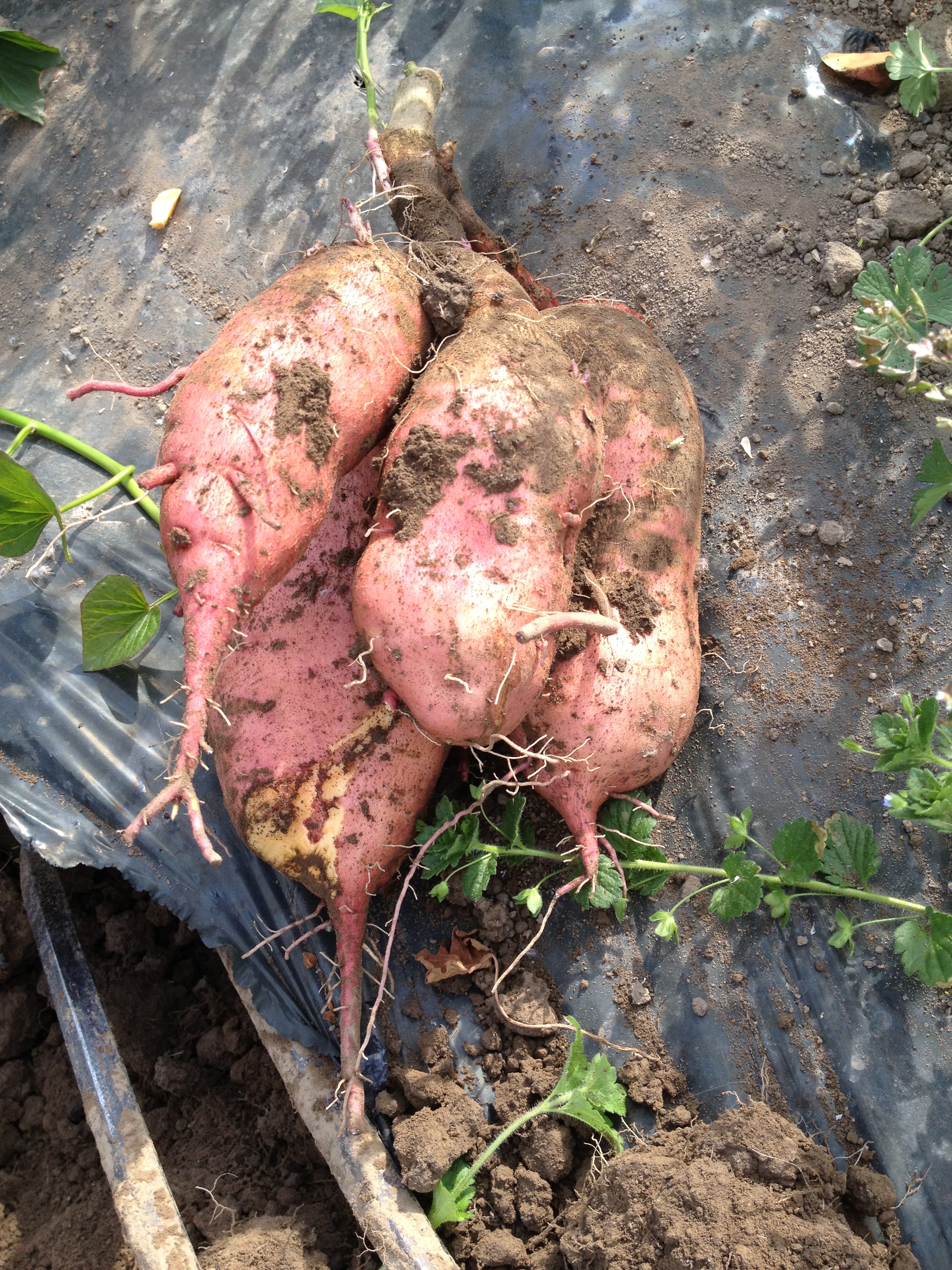
I also didn’t anticipate these babies:

An amazing season produced our first amazing Sweet Potatoes! Several pounds per plant, and they are earmarked for Thanksgiving week, available only in our Winter CSA.

Sweet Potatoes! Thanksgiving week will be blessed by sweet tubers. They’re only part of the winter season, so sign up now!

Summer Week 13: Local History

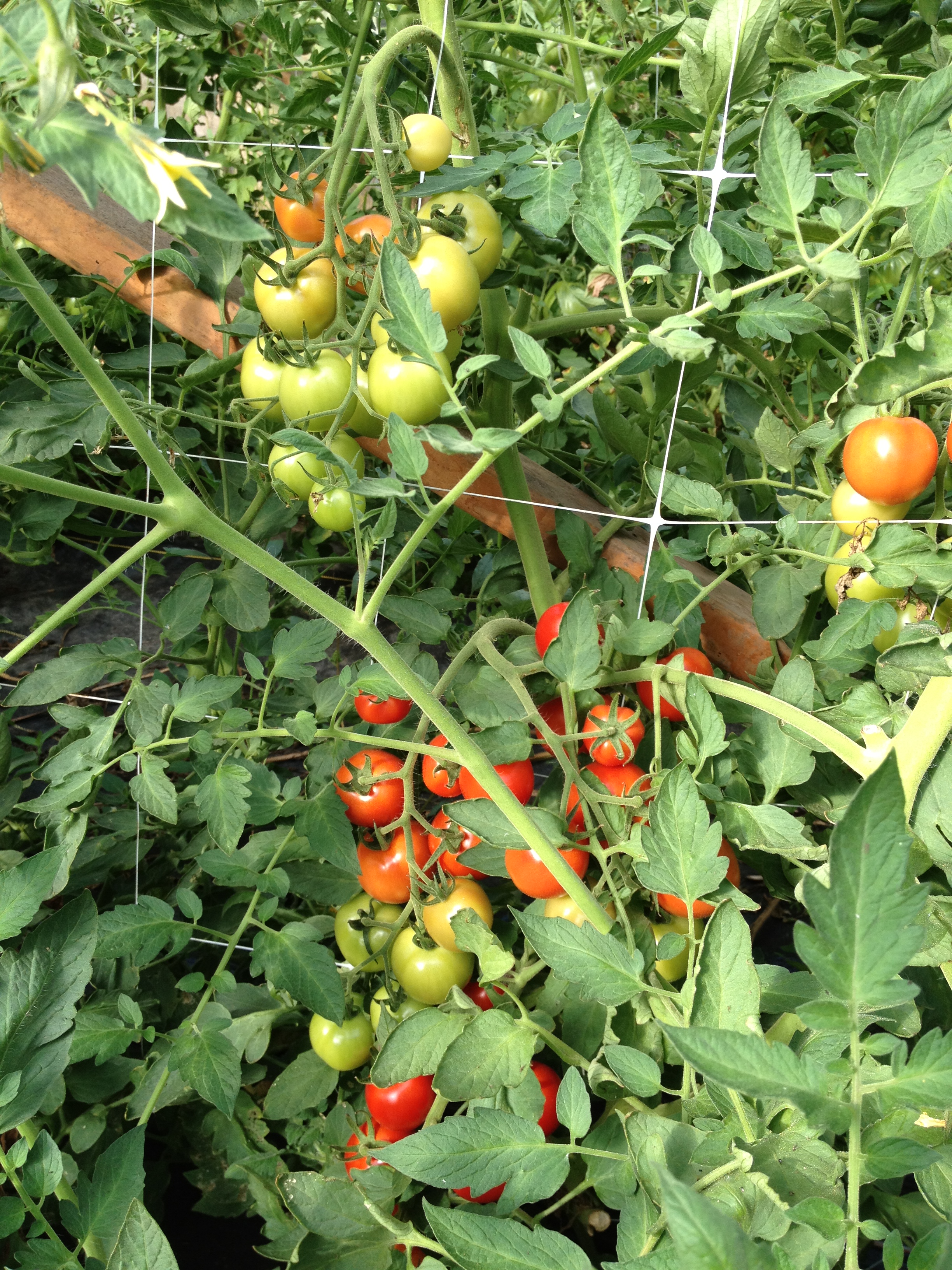
There are so many tomatoes that are ripening in the greenhouse!

THIS WEEK’S SUBSCRIBER MENU:
• Lettuces
• Romano Beans
• Swiss Chard
• Beets with Greens
Fennel or Cabbage
• Cucumber or Summer Squash
• Tomatoes or Sweet Peppers
• Purple Basil or Cilantro
• “Italian Late” Garlic

Click on the links above for information and recipes about these crops.

COMING SOON:
Carrots
Arugula
Shelling Beans

You may have noticed that there are signs on our bridge about new weight limits for trucks. This is impacting us a little—the school bus can’t cross the bridge anymore, that kind of thing. The bridge is old and there’s no money for repairing old bridges, so if the trucks don’t stay off it’s going to fall apart. The thing that caught my eye on the flashy sign, though, was that the bridge has a name. It’s the “Thomas Alvord Bridge”. That got me thinking as well, about local history.

Not many people know who Thomas Alvord was. There are a lot of things that share his name. For example, if you look at a map, sometimes you’ll see that our little neighborhood here is called “Thomas”. There’s also a white board sign down behind the White River Feed Mill that calls out the name “Thomas”. You used to be able to see it before the fancy 277th St. overpass was built, when cars crossed the train tracks down there. You might also remember the Thomas Academy, a small, private school just on the other side of 277th. Maybe you saw the historical marker across from the AAA Junkyard down the street, before some ne’er-do-well pushed it over, that identified “Alvord’s Landing”.

There used to be a lot of “landings” on the Green River. I’m sure there were on other rivers, too. The Green River used to be a major commerce-way, with various good being sent up or down the river on flat-bottomed steamboats. These goods were loaded and unloaded at landings. There are number in Kent— Langston’s Landing, Van Doren’s Landing, etc. There’s a mural in downtown Kent, on 1st Ave by the bakery that shows horses and wagons carrying hops, grain, and other goods to a river landing.

Thomas Alvord and his wife were one of the first white families to settle in Kent after the Seattle Indian Wars of the 1850’s, and they bought property on the Green River here and set up their ranch and trading business. They were followed by others, including John Langston and James Jeremiah Crow. Farmers started to move in and settle, and the river landings remained the most reliable method of transportation until the Northern Pacific (now the Union Pacific) railroad came in 1883.

Another interesting note: Kent was famous for growing hops back in the 1880’s. One story says that the city was actually named for the famed hops variety called “Kent”. That industry was sadly dismantled when the hop blight of 1891 swept in and ruined crops for everyone. There are some wild hops growing here and there around the area, and the steel sidewalk grates have stylized hops vining all over them.

At any rate, it’s interesting to know about our surroundings and the history of where we live. I love that the tree tunnel down the road is formed over one of the oldest roads in King County, because of the need to transport farm products to the city and abroad.

Romano Beans are delicious sautéed with Torpedo Onions in butter.

I also love that we have an abundance of tomatoes and peppers right now. The Romano beans are so heavy this year! We’ve been eating them several times a week. They are not a shelling bean, they are a wide, flat green bean. Here’s my favorite method of cooking. Cut the ingredients into chunks. Sauté the onion in a chunk of butter or olive oil, and then put the bean chunks in and sauté them until tender, about 10 minutes. Salt and pepper are all you need. Cosmo likes the stingers cut off the ends, but other than that I use the whole thing.

Soon, fall will be upon us and we’ll be moving back to lots of greens and roots and squashes. And that reminds me as well, that our summer season will come to an end in a few weeks. Our winter season starts the first week of November and runs through the second week of January—10 weeks of delicious winter produce. You’ll get a discount if you sign up by September 15, and that will help us make our annual investment in seed garlic for next year, as well as get started on another big greenhouse!


Summer Week 11: Blue Moon

We let the baby pigs out to explore dirt and mud when they’re between 3-7 days old. This is when they start instinctively looking for iron, and they love to root around in dirt and eat quite a bit. Pig milk (all milk, for that matter) lacks iron, but the growing little bodies need it, so once their immune systems are ready, out they go. When it’s too cold outside I bring shovels of dirt into the barn for them to root in. Commercially, baby pigs are given iron shots at 3 and 10 days old to take care of this issue. I don’t like giving tiny pigs shots—dirt is easier and makes them happy.

THIS WEEK’S SUBSCRIBER MENU:
• Lettuces
• Snap Beans or Tomatoes
• Swiss Chard
• Zucchini or Summer Squash
• Beet Greens with Baby Beets
• Cucumber
• Lemon Basil
• Fresh Dill
• “Romanian Red” Garlic

Click on the links above for information and recipes about these crops.

COMING SOON:
Carrots
Cabbage
Basil
Shelling Beans

I think August is probably our busiest month. It is the height of the summer harvest season, with so much to pick every day, and it is also the height of summer growing season, with so much needing weeding and watering. And, it is also the end of the planting season—the last big planting push of all the fall and winter crops. If we want to pick it before next May, it’s got to get planted by the first week of September or there won’t be enough time for the plants to get to a mature size before our daylength wanes to the point that there is just not enough hours of light to allow for plant growth.

It’s been such a busy, wonderful summer, that we’re actually a little behind in planting. And we haven’t pulled the onions and shallots for winter storage yet. I apologize for the state of the farm right now—the edges and flower garden are a weedy, dry mess. We’re trying to keep up, but the priority is planting right now. And feeding YOU!

The hens are also noticing the change in seasons. They have gone on egg strike, as they usually do in August. We are only getting about two dozen eggs a day right now, and that means that if you want eggs, you better reserve them ahead. Priority is given to those with an egg punch card, of course.

Honeybees love all members of the Buckwheat family. Japanese Knotweed is the giant of the family, bearing loads of nectar-rich blooms. Smartweed is a common weed around here too, but Buckwheat is the one we plant as a cover crop. It grows quickly in hot weather, doesn’t need much water, AND produces a lot of bloom for the bees.

It’s time to crack open the bee hives again too. Time to check and see if there’s any honey to spare for the humans. They’ve been so busy the last few weeks, I can’t wait to see. They are really enjoying the 1/2 acre of Buckwheat we planted as a cover crop and bee forage. I remember noting last summer that once the blackberries were done blooming, there really wasn’t much for them to feast on, so the buckwheat is filling that gap, giving them one last nectar source before cold weather comes. Besides, I love the dark, tangy, molasses-like honey that comes from Buckwheat.

These cone-head cabbages are an improved version of the heirloom, “Early Jersey Wakefield”. They taste just as sweet as round cabbages, but the pointy head is fun. Why improve it? Because the heirloom doesn’t always head-up consistently, and not many people want a headless cabbage.

Look for these pointy-headed cabbages in your share in the next week or so! I just like to grow them for the unique shape. Why make everything round?

Speaking of round things, enjoy the beautiful Blue Moon tonight. A blue moon is the rare second full moon in any given month. There won’t be another one until July, 2015. Take a look and bask in its’ glow.