Monthly Archives: March 2010

>Spring Week 1-2: Winter Makeup

>We have a few crops that we can start harvesting, so we are beginning the Spring Season two weeks early. This way we can make up the two weeks of Winter of 2009 before the official spring season begins. If you had a winter share last year, and a spring share this year, you are starting now. If you did not have a winter share last year, but bought a spring share this year, you will start next week.


Last week we all had the stomach flu, so I didn’t get to the computer to post anything. I apologize for that, but it started with Della Sunday night, then hit Cosmo Tuesday night, then Mike and I on Thursday night. We’re feeling better now, and ready to get on with the show.
THIS WEEK’S SUBSCRIBER MENU:
• Siberian Kale
• Spinach
• Turnip Rapini
• Leeks
• Spring Onions

COMING SOON:
Radishes
Arugula
Salad Greens
Stinging Nettles

I hope everyone knows what to do with the Kale and Spinach. My usual thing to do with either is cut into ribbons and sauté with garlic and olive oil. They’re both good in scrambled eggs, or in soup too.

Rapini is the holy grail of the spring season. This is an amazing, delicious byproduct of members of the brassica family that cannot be missed during it’s short season of abundance. Visit the Rapini page to learn more.

Spring Onions are like big green onions. I use the whole thing, slice it up and cook them with anything. They’re sweet and not too pungent. Leeks can be used like an onion, they’re excellent with eggs as well, and they’re also delicious braised or sautéed as a green vegetable. They are not strong-flavored, but pleasantly oniony. Quite tasty.

Salsify is a very uncommon vegetable in the United States. It is still popular in Europe. Also called “Oyster Plant” because the delicate flavor has a vague resemblance to oysters, it can be added to soup or potato dishes, or used on its own. Visit this page to find recipes.

>Spring Is Here

>

Spring has been here, and it seems to be back to winter for a few days, but I thought I’d post some photos and share our winter activities with everyone.
The beautiful weather in February made it possible to get some ground plowed-up and planted. We ordered our onion transplants early and Luis has almost finished planting them. We got 5 cases of “Walla Walla” onions which we can start harvesting as early as June for little sweet salad onions. Hopefully that will be enough to last until September. We also got 1 case each of Red Torpedo and Cipollini, and for winter storage we got 2 cases of yellow and 1 case of red. There are about 1800 plants in a case, so that’s a heck of a lot of onions. Hopefully it will be enough for everyone. The overwintered spring onions and green onions are not included in the case order, because we plant those from seed, so I don’t know how many thousands of onions we end up planting for the CSA subscribers. It’s a lot of thousands.
The garlic is up, and you can see it here with last fall’s leeks in the background. We’ll be picking those soon for the Spring Shares. Unfortunately, we won’t have quite as much garlic as last year (last year we had a humungous crop) because we didn’t want to risk the huge investment in case we flooded and lost it all.

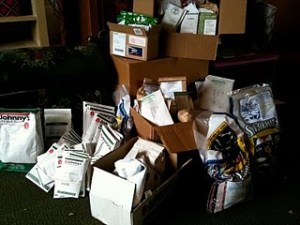
Most of our seeds have arrived and I’ve got them all inventoried. Does this look like $3,000? It doesn’t to me, but that was our total. We’re still waiting for the Italian beans and potatoes.

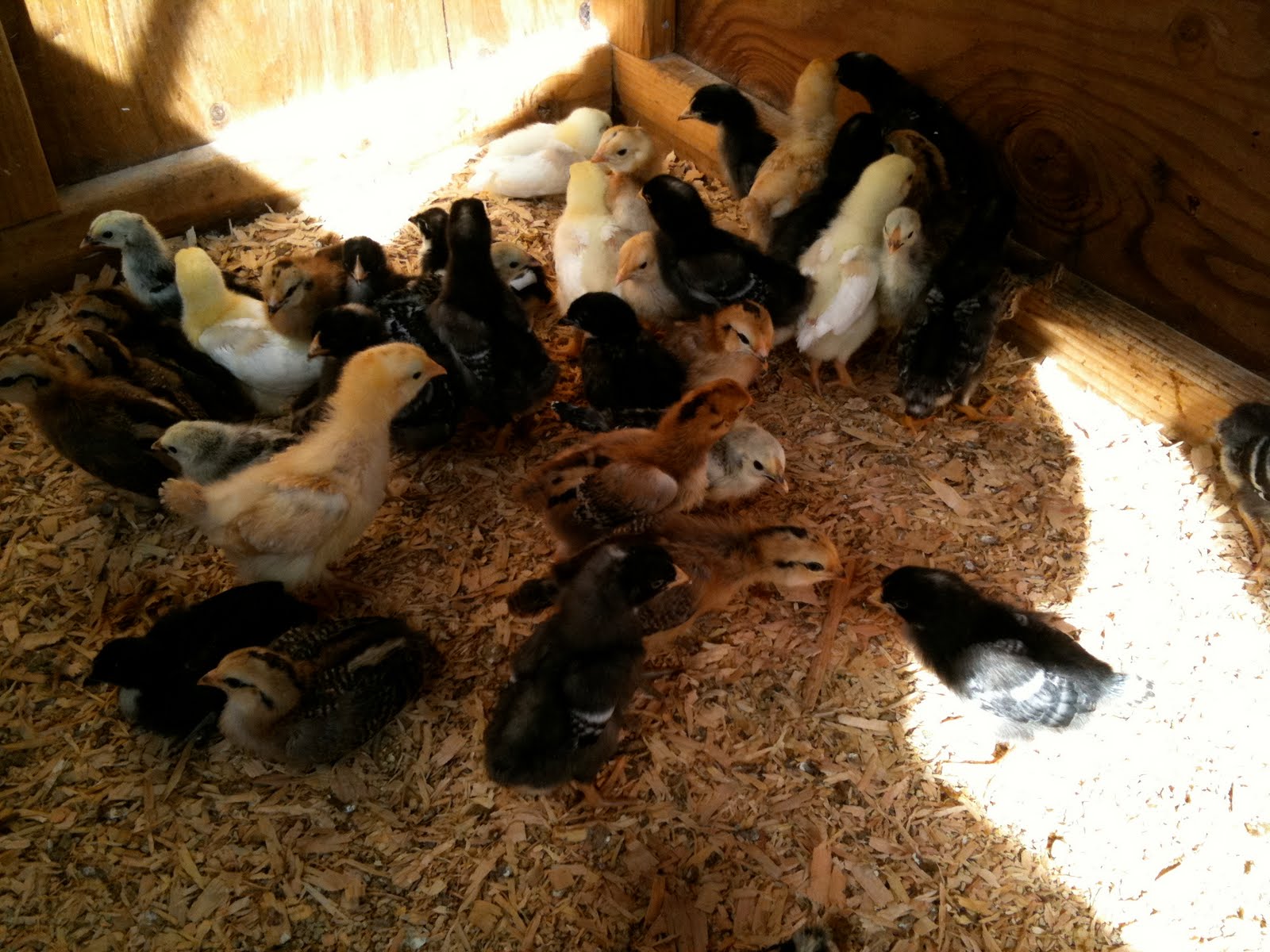
The new chicks arrived last week, and are growing well. There are 75 and they’re supposed to be girls. They should all start laying eggs in late summer, as the current hens are getting ready for their vacation.
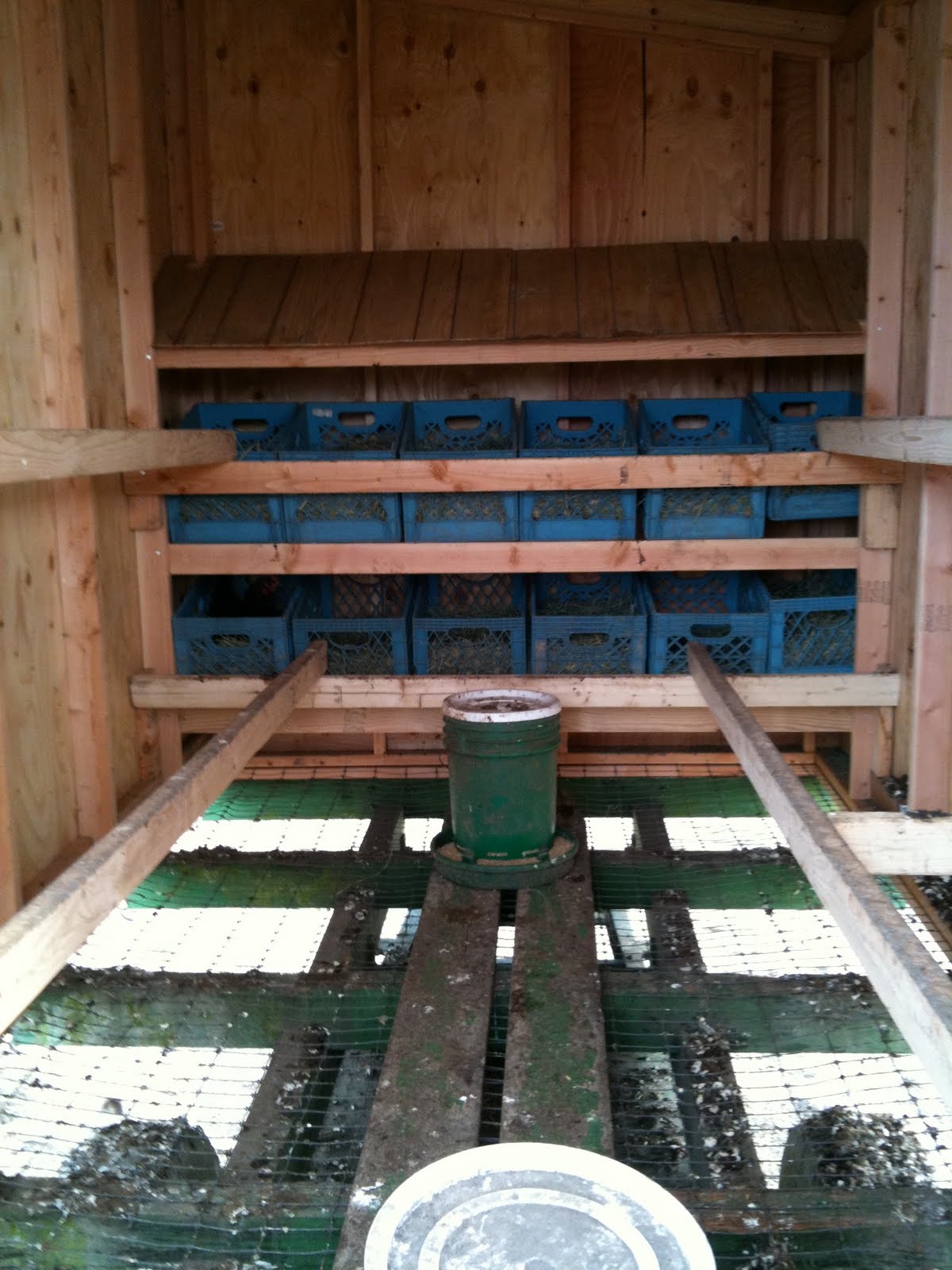
The decision to build a new hen house finally was pushed to the top of the list when we tried to move the old one and it fell apart. Time for a viking funeral for that one. We pondered how to build a replacement cheaply for a few days, when we remembered that we had an old metal and wood farm trailer in the back. We haven’t used it, like, ever and the wooden decking was all rotting out, but the steel frame was still fine and so were the wheels and axles. Voila! We built the house on top of it and now we’ll be able to move them anywhere we want to . Wheels are an amazing invention. It will be a huge improvement over dragging.


The biggest plus is that we can stand up inside this house. There is plenty of roost space for sleeping, a wire mesh floor so the manure goes straight to the ground, and a lot of nest space that is accessible by the children. More work for the kids—that’s the motto for this year.
The cows have been busy as well. Juniper had her baby, a black girl we named Penelope, on March 5th. Then, Beauty had her baby, a dun (brown) girl we named Matilda, on March 8th. Both girls are doing well, and so are their mamas.


>Salsify

>


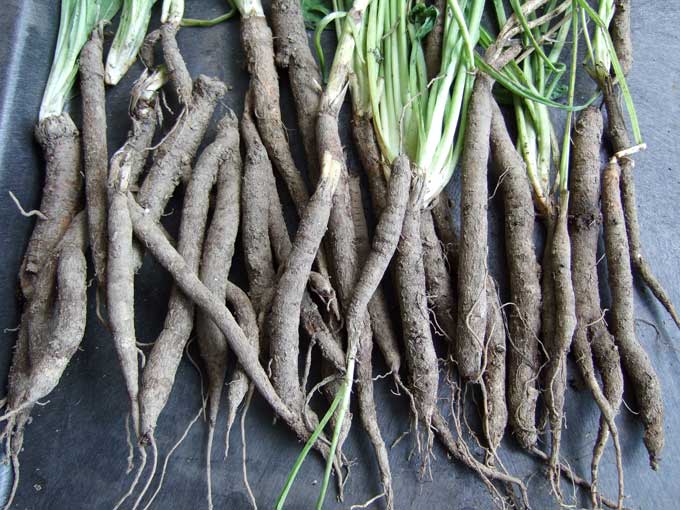
Salsify Roots

Salsify is in the sunflower family, which includes the chicories, and the lettuces, as well as the artichoke. It is a long-season plant, which has long grassy leaves and a long narrow root. The delicate, creamy white, faintly oyster-flavored flesh gives it it’s alias “Oyster Plant” and “Vegetable Oyster”. I don’t taste this myself, but others must. The root is the edible part of the plant.


The root has a slightly firm texture of young turnips or celery root. It can be steamed and easten au naturel, not or chilled; sauced with herbs and butter or a vinaigrette. It can also be fried, robed in cream sauce, gratinéed, puréed; alone or in combination with other root vegetables, including potatoes.

The roots must be peeled before cooking because the skin contains a sticky substance that is easily removed with vinegar and salt. The root discolors when exposed to air, so once peeled put it in water containing lemon juice or vinegar if you want it to stay white.

BATTER-FRIED SALSIFY FRITTERS

4-5 cups Cold Water
3 tbsp. Cider Vinegar
5 Salsify Roots, about 1/2 pound in all
3/4 cup All Purpose Flour
1 cup Ice Water
1/2 tsp. Salt
Light Oil (Canola) for frying

1. Put the cold water and vinegar in a bowl. Using a vegetable peeler or paring knife, scrape away the skin of the roots. Rinse them and then cut into 2-inch lengths, then quarter them lengthwise to make thin sticks. Put them into the acidulated water to prevent discoloration.

2. Preheat an oven to 3o0° to keep the fritters warm. In a deep skillet pour in oil to a depth of 2 inches and place over medium heat until hot. (You can also pan fry in shallower oil).

3. While the oil is heating, put the flour and salt in a bowl and whisk or beat in the ice water. When the oil is ready, dip the salsify pieces, 4 or 5 at a time into the batter, and them slip them into the hot oil. Fry until golden brown and cooked through, 2 to 3 minutes. Using a slotted spoon or tongs, remove the fritters to absorbent towels to drain. Place in the oven until all the fritters have been fried. Serve hot.

PAN-ROASTED SALSIFY

4 large Salsify roots
Juice from 1 Lemon
1 tsp. Black Peppercorns
4-5 sprigs Thyme
1 Bay Leaf
1 tsp. Coriander Seeds
1-2 tbsp. Olive Oil
1 tsp. Butter
Salt and Freshly Ground Pepper

1. Peel the salsify and place in a shallow pan with water to cover, lemon juice, black pepper, 3 sprigs of thyme, bay leaf, coriander, and salt to taste. Bring to a simmer and cook until tender.

2. Remove salsify from liquid and once cooled, cut into small pieces (batons) of equal size.Heat sauté pan over medium heat and add olive oil.

3. Add salsify and season with salt and pepper. Cook until golden brown. Add the butter and the remaining sprigs of thyme and toss until the butter foams. Remove from heat and transfer to paper towels. Serve immediately.