
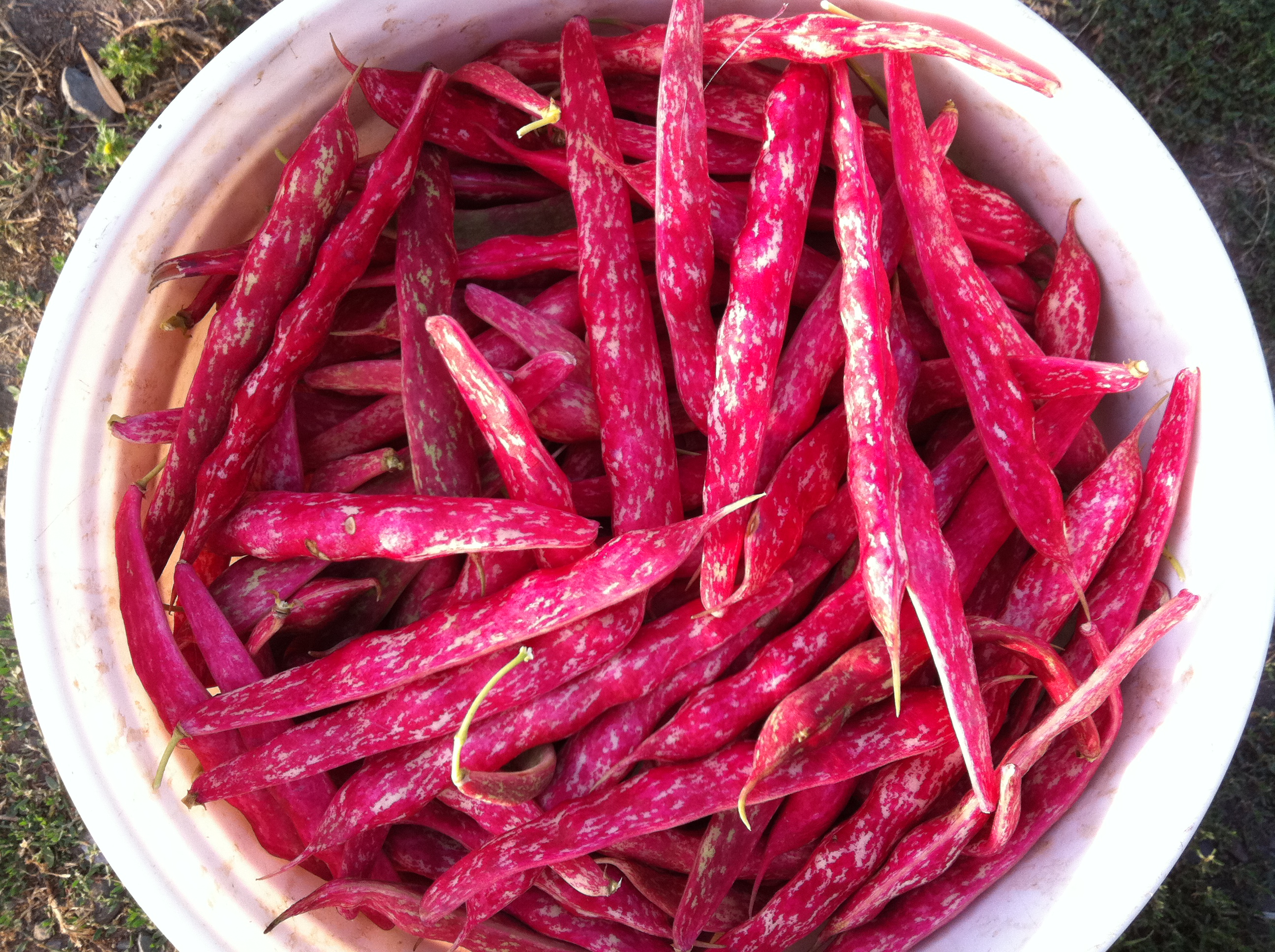
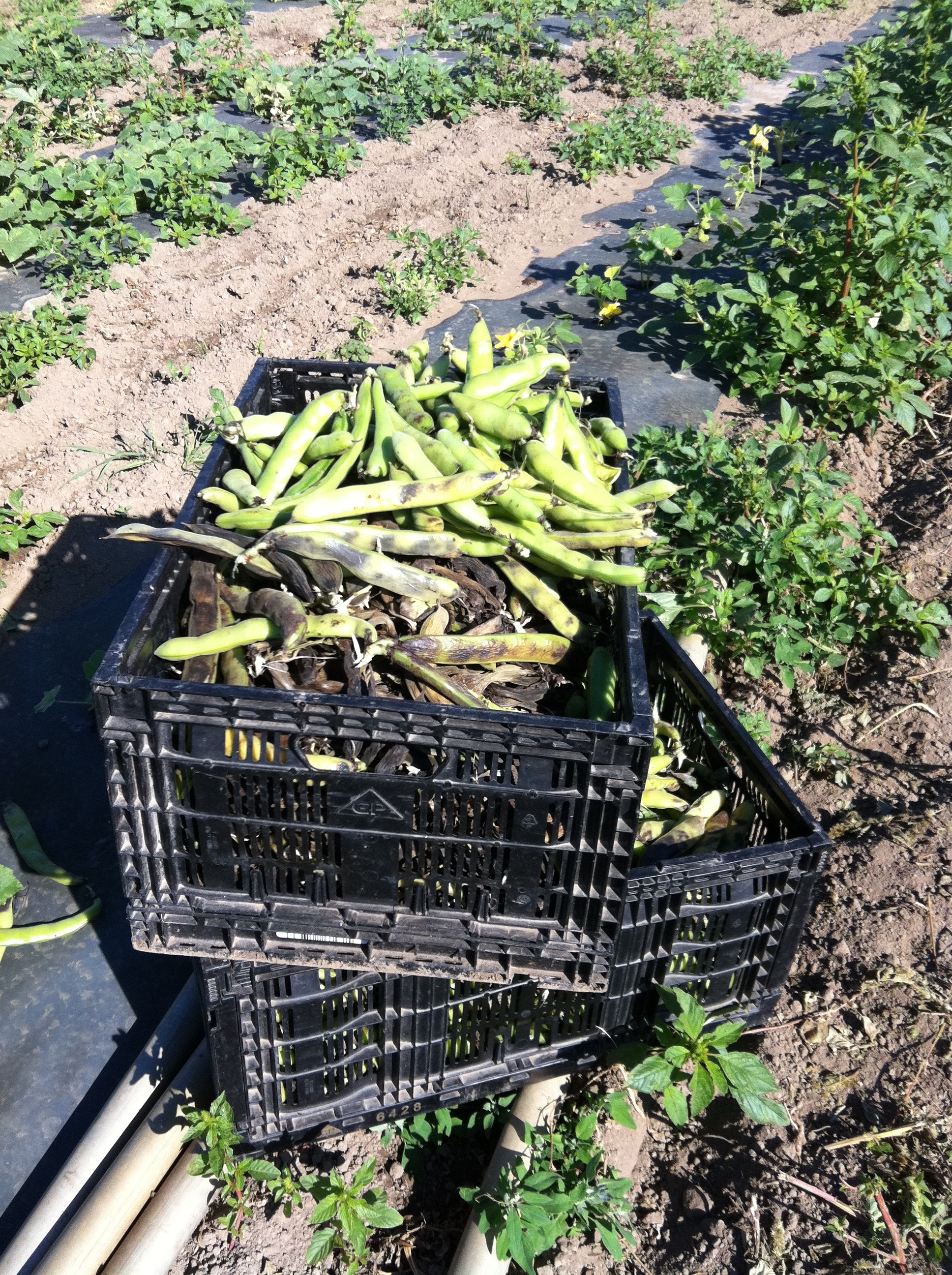
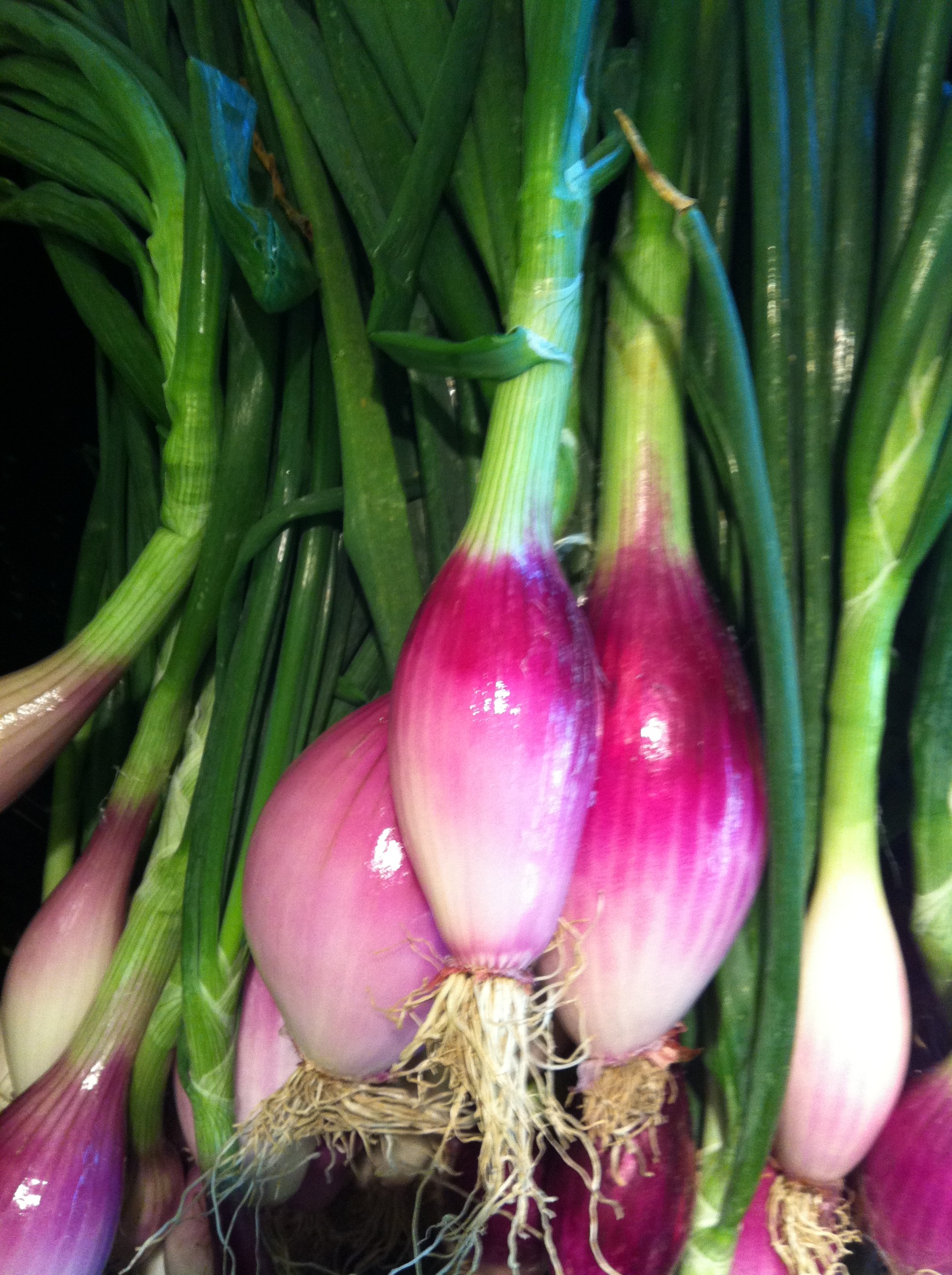
This variety is from Italy, "Stregonta". It means "sorceress". It was supposed to be a pole strain, and we were saving seed, but it turned out to be a bush variety and they are done WAY early. They are pretty and delicious, nonetheless.
THIS WEEK’S SUBSCRIBER MENU:
• “Stregonta” Shelling Beans
• Green Onions or Walla Walla Onions
• Cabbage
• Swiss Chard
• Zucchini and/or Summer Squash
• Cucumbers
• Genovese Basil
• Garlic
Click on the links above for information and recipes about these crops.
COMING SOON:
Green Beans
Lettuce
Spinach
We all know this has been a strange year. As yet another example, we already have shelling beans. In a typical year, we don’t have any varieties ready until at least the end of September. But not this year. The “Stregonta” are ready now, and the “Cannellini” will be ready in another week or two. Then the other varieties will follow. There is a whole page of recipes, so be sure to click on the link.
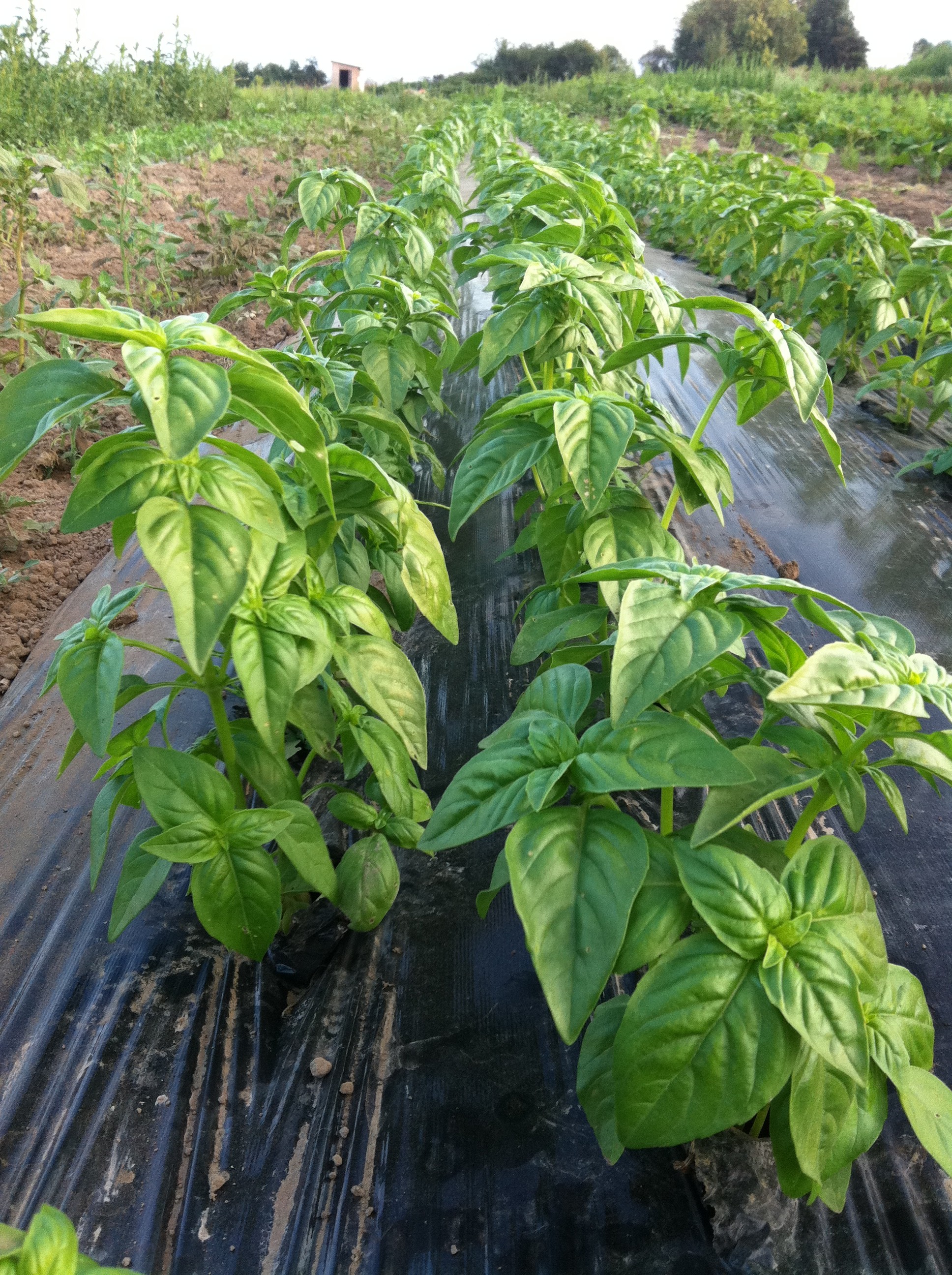
We planted 10,000 basil plants. Can you smell it yet?
The basil is finally ready. We have waited for weeks for the little plants to grow big enough to bunch, and it has finally happened. Make pesto, or chop it up and toss it with your sautéed squashes, or just roll around in it. It smells and tastes amazing. We’re having pesto and pasta for dinner tonight, with Pecorino, of course.
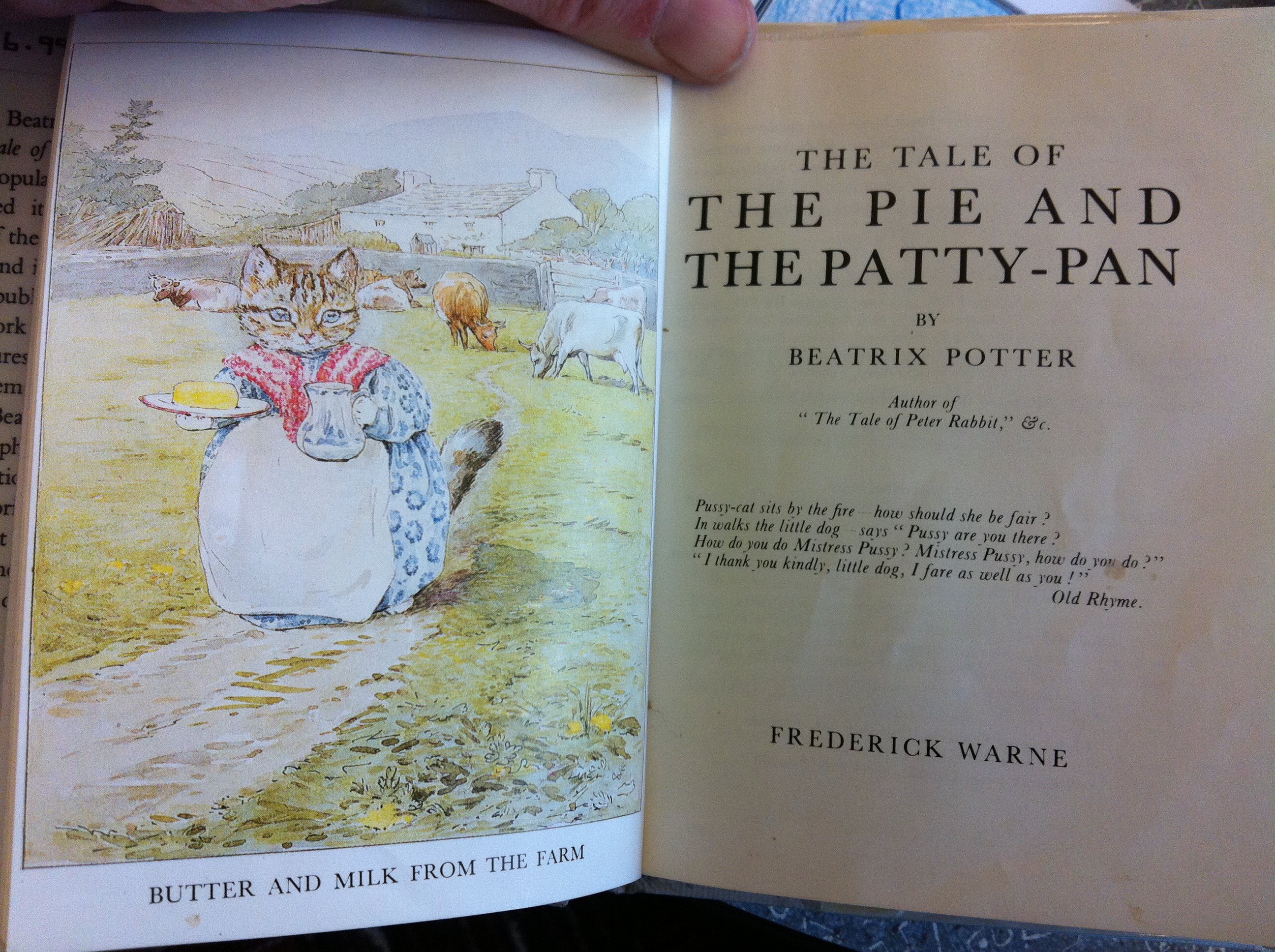
Beatrix Potter's, "The Pie and the Patty Pan".
And now the story: I have wondered for years, maybe even decades, what is a pattypan? Last spring, as I sat in the childrens’ section of the library, I was browsing through the collection of Beatrix Potter books on the table. I thought I had seen them all, but then I saw a new one: “The Pie and the Patty Pan”. I gasped, and read it, and then took some pictures. I hope the copyright police don’t come and get me.
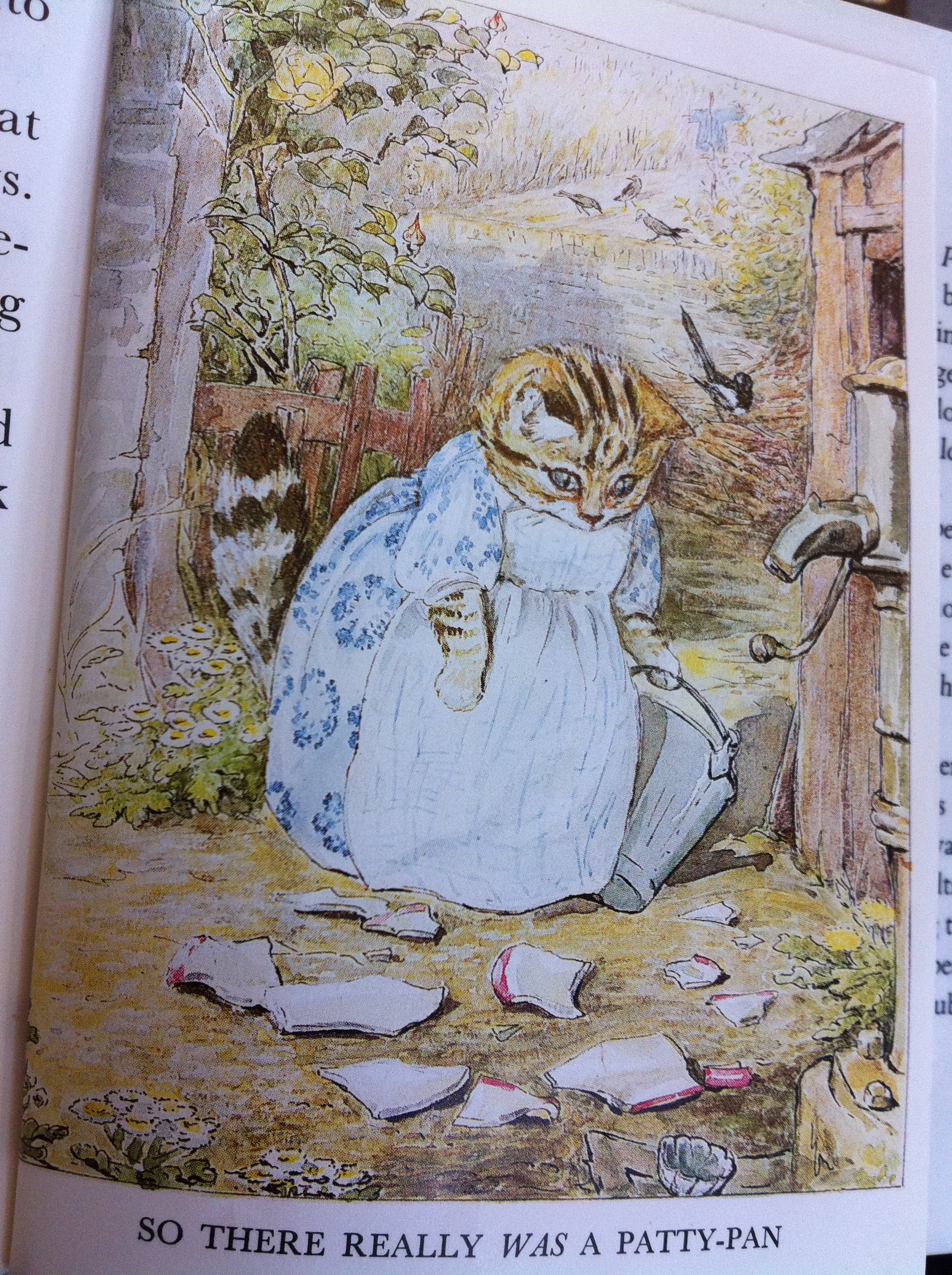
So there really was a patty-pan. Poor Miss Kitty.
There in the story, about a little dog and cat who are visiting and having a potluck, is a patty pan. It’s just a little pie tin, with scalloped edges. I have a number of them, for making single-serving tarts and pies. You can just see it in the bottom right of the picture.

Pattypan Squashes. This variety is "Benning's Green Tint". There are a number of heirloom varieties in the Seed Savers' Exchange book. I once got seeds from someone in France, I remember one variety named "Patisson Panaché Vert e Blanc". It was pretty.
After reading the story and looking at the illustrations, I could see why this type of squash was named a pattypan.



 Whistling Train Farm