Category Archives: Uncategorized

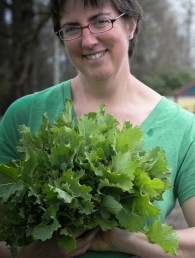
>Spring Week 1: Rapini

>THIS WEEK’S SUBSCRIBER MENU
• Rapini, Rapini, Rapini
• Green Garlic
• Kale
• “Grumulo” Radicchio
• Beets

COMING SOON
• Swiss Chard
• Sorrel
• Chives

Welcome to what we must call Spring! Of course, we had yet another hailstorm today, our first harvest of this new season. The ground is still very wet, and while Mike has been able to get the tractor out in the field a few times, we still have not been able to plant much in the field. We did plant salad greens, pea shoots, and radishes in the greenhouses about a month ago, and they just finally started germinating about a week ago. Thanks to the extended winter we’re having, they’re about three weeks later than we’d hoped.

But, spring will come—hopefully this weekend. Sun is actually forecasted, and it’s supposed to climb into the 60’s! We heard that on this day last year it was 74°. Hard to believe. But things always work out. Cold, wet weather is great for broccoli, salad, and peas, after all.

Spring did arrive in great force about a month ago, in one uplifting way. The herons returned! Last year, our neighbors the Pearsons hosted the 78th Ave. Great Blue Heron Colony. The ever expanding community was home to a minimum of five nests! And we’re pleased to report that there are two new nests in the pine trees right above our house! Very noisy, but I find it comforting to be awoken at night by their squawking and squabbling. Call me crazy. Also exciting, is that the far-ranging, nomadic man we call “The Owl Guy,” visited twice this winter, and placed nest boxes in the old grain silo behind our house, as well as in other undisclosed locations in the area. Two weeks ago we started hearing horrible screeching noises from the silo, and tonight Della and I explored with the flashlight to find two pairs nesting and feeding babies. They definitely do NOT enjoy visitors and they stared and screeched at us until we left. But, very good news indeed, as rats and rabbits are a growing problem in our area, with no real predators except for raptors.

We put up bird feeders this winter and enjoyed watching the goldfinches change from white and grey to very nearly (now) gold. Quite thrilling to see that change, and we’ve had Flickers and Downy Woodpeckers visit our feeder as well. Cosmo’s favorite are “his” chickadees, but we also enjoy all of the others, except for the starlings.

As always, our spring season begins with all of the crops that make it through winter. Green garlic, from the patch that we harvested last year—it must be impossible to harvest ALL of it. Rapini, from last year’s turnip crop (and kale, cabbage, kohlrabi, and all other brassicas—see the separate post on this topic, to come soon), and an exciting type of Radicchio, meant to harvest in the spring. This type is called “Grumulo”, and it is fall planted and forms nice little rosettes of green or red in the spring. See the post on Chicories in the recipe section for recipes.

I also want to add that we DO have fresh eggs. We’ve downsized the flock to make it easier for Della to take over the husbanding of chickens, and to make them a more exclusive item for our loyal subscribers. That said, the only way to get the delicious eggs is to buy an egg punch card. Here’s how it works: you pay $45 for an egg card, which buys you 10 dozen eggs. You keep the card and mark off every time you get a dozen eggs. When you run out of boxes, you buy a new card. Seattle folks just let me know if you want a full dozen or half dozen every week with your share. It’s easier for me to remember if you set a fixed order, rather than making me remember a full dozen one week, 1/2 dozen every other week. I can’t guarantee I’ll get it right every time. So, starting with next week, let me know and we’ll get on the egg roll.

RAPINI (OR BROCCOLINI) WITH THEME & THREE VARIATIONS
adapted from Cook’s Illustrated

BLANCHED RAPINI (BROCCOLI RAAB)
1 pound Rapini (broccoli rabe), washed, cut into 1-inch pieces
2 teaspoons Salt

1. Bring 3 quarts water to boil in large saucepan. Stir in rapini greens and salt and cook until wilted and tender, about 2 1/2 minutes. Drain and set aside.
2. Cool empty saucepan by rinsing under cold running water. Fill cooled saucepan with cold water and submerge greens to stop the cooking process. Drain again; squeeze well to dry (or twirl in a salad spinner) and proceed with one of the following recipes.

Variation 1:
RAPINI WITH GARLIC & RED PEPPER FLAKES
2 T extra virgin Olive Oil
3 medium Garlic Cloves
1/4 teaspoon Red Pepper Flakes
1 recipe Blanched Rapini Greens (above)

1. Heat oil, garlic and red pepper flakes in medium skillet over medium heat until garlic begins to sizzle, about 3 to 4 minutes. Increase heat to medium high, add blanched rapini greens,
and cook, stirring to coat with oil, until heated through, about
1 minute. Season to taste with salt, serve immediately.

Variation 2:
RAPINI WITH SUN DRIED TOMATOES & PINE NUTS

Ingredients for Variation 1, plus
1/4 cup Oil-Packed Sun-dried Tomatoes, cut into thin strips
3 tbsp. Toasted Pine Nuts

1. Follow recipe for Rapini with Garlic and Red Pepper Flakes, adding sun-dried tomatoes, garlic, and red pepper flakes.
Add toasted pine nuts to skillet with rapini greens.

Variation 3:
RAPINI WITH ASIAN FLAVORS

Ingredients for Variation 1, plus
1 tbsp. Soy Sauce
1 1/2 tsp. Rice Wine Vinegar
1 tsp. Toasted Sesame Oil
1 tsp. Sugar
1/2 tsp. Finely Grated Ginger

1. Mix soy sauce, rice wine vinegar, toasted sesame oil, and sugar in small bowl; set aside. Follow recipe for Rapini with Garlic
and Red Pepper Flakes, adding ginger along with garlic and red pepper flakes. Add reserved soy sauce mixture to skillet along with rapini.

EVA COON’S RAPINI/KALE-INI

1 bunch Kale-ini (or rapini)
2 tbsp. Anchovy Paste
Juice and zest of 1 Lemon
4 tbsp. Olive Oil

1. Stir-fry the kale-ini in a hot wok with a little oil until bright green but still crisp.
2. Whisk together rest of ingredients and pour over veggies in wok. Stir to heat dressing slightly and serve.

>Rapini—It’s All In The Name

>End of the Season

>I just wanted to post an official notice that our winter season is finished. We are so thrilled to have had your incredible support this season, and we are very happy that we were able to make it through the last week before we had the big freeze that wiped out what was left. A week of temperatures in the 20’s will do that. It didn’t even thaw here during the day for us last week.

I apologize for not posting this sooner, but I thought everyone knew, as I sent an email. And, we recently welcomed a foster child into our home, (it will be two weeks tomorrow) and it’s taken some time to get us all settled together and pay attention to the business much.

We hope you all have a wonderful winter, and those of you who signed up for a spring share, we look forward to seeing you in the spring. Spring shares will start the second week of April, and if you are signed up, we will make sure you receive notice and a reminder before we start up again. If not, we look forward to seeing you in the summer!

Thank you again for your wonderful support this year,
Shelley, Mike, Della, Cosmo, and Ethan

>Winter Week 7

>THIS WEEK’S SUBSCRIBER MENU:
• “Buttercup” or “Acorn” Winter Squash
• “Yukon Gold” Potatoes
• Beets
• Onions
• Kohlrabi
• Napa Cabbage
• Bunched Greens

Coming Soon:
Cabbage
Scarlet and Gold Turnips
Sweet Baby Carrots

***NOTE***
NEXT WEEK IS A SUPER-SHARE WEEK AGAIN.
We will harvest/pack two weeks worth of produce for you in order that we skip the week of Christmas and have a holiday. There will be no pick up December 25, 26, 29th or 30th. Regular pick up will resume beginning January 1 and continue for the final 3 weeks of our winter season, weather permitting.
***********

Every winter and spring we have farming friends who experience great losses. Last year it was the Carnation/Monroe area, the year before the Skagit. This year we have friends damaged in the Chehalis area. We are so lucky here. Some would say that we are crazy to farm here, in the midst of development. But not only are we close to our market base, a location in the middle of the industrial mecca here means that the dam upriver spares us from much of what nature has to offer in the winter. The Green River used to flood like the Chehalis, Skagit, or Snohomish Rivers. Every year. There are no basements in the old houses down here. That is not to say that the Green River will never flood again, just that it is unlikely to flood every year as in the past.

We are planning on making a donation to Lewis and Mason county farmers affected by the big flood. We know many of them, and there are a lot more that we don’t know, but they all need help. If you would like to contribute with us you can give us a payment to pass along, in the name of Whistling Train Farm CSA Holders. We will send our donation December 21, the day of the Winter Solstice. We will send payment through Washington Tilth Producers, our local organic farm support system. Or you can make an independent donation at

https://www.networkforgood.org/donation/MakeDonation.aspx?ORGID2=721577554&vlrStratCode=AnUNTW1FPB3iQU6tH2UZ7NqSHOSfGCSVpMQKqdmrUpwZ0ib4X1%2bUTWUnXhfQMLpH

25 years or so ago, the fathers of development said “build it, and they will come”. But unlike the idyllic Field of Dreams in the movie, we got pavement and warehouses. Traffic and lights. Luckily there were a few others who saw the destruction of farmland as well and fought to put together a farmland preservation program. Luckily King County has had leadership that valued farming, and many acres of land were set aside as farmland forever, before the state mandated it. Other counties were not as lucky. Sure, it will never be enough, but it is something, and we are spared here. Our area, between 277th St. and the Green River, and across the entire valley was designated Agricultural Production District (APD), meaning that it can’t be developed. It has to stay open space, available for farming forever. There are other protections available as well, like the Purchase of Development Rights program (PDR), in which the county (or other agency) buys the development rights portion of land and puts it in trust as a conservation easement, so that the land can’t be developed or subdivided. Most of the land farmed/owned by Carpinito Brothers is preserved this way, as well as T&M Berry Farm, our neighbor, and the Pearsons Berry Farm down the street.

The idea behind this is that it keeps the land affordable for those of us who want to farm. The current land price is roughly $50,000 an acre here. If we wanted to buy our 15-acre farm at that price it would be $750,000, without a house. We are able to make a decent living farming, but we’d never get a loan for that. If the county chips-in with us and buys the development rights, we should (hopefully) only have to pay about $15,000 an acre. Much more affordable. We don’t intend to get rich selling the land later, we’d sell it to another younger farmer.

After ten years here, we are trying to finally buy our farm. Our landlord, King County, and we are all working to figure out this puzzle. And bankers, of course.

I am a huge believer in positive thought. Call it faith or prayer if you like. We wouldn’t have kept on farming all this time if we didn’t believe. If I may, I’d like to ask for all of you to pool your thoughts with us to make this happen. It would be truly amazing not to wonder every year how long we will be here. And we could finally feel like settling down and making things look and feel permanent.

>Winter Week 6–Jerusalem Artichokes

>My apologies for this week’s post being late. The hay truck I mention below knocked out our phone cable (and DSL) but was fine until Monday night, when I walked a cow over it and she got caught and pulled it loose. I can guarantee the phone repair guy hadn’t heard that one before.

THIS WEEK’S SUBSCRIBER MENU:
• “Festival” Winter Squash
• “Red” Potatoes
• Sunchokes (a.k.a. Jerusalem Artichokes)
• Siberian Salad Kale
• Tatsoi
• Baby Bok Choy
• Lettuce or Spinach
• Garlic

Coming Soon:
Napa Cabbage
Scarlet Turnips
Leeks

I think the word “vacation” means different things to different people. For some, it implies travel. For most, it conjures up long sleepy days free from commitment and work. For me it means a break in which we can accomplish tasks that we haven’t been able to finish all year. So, what did our Thanskgiving break consist of?

Monday: a soggy, stormy day. We rented a big truck and drove to Oakville, near Chehalis, to pick up 5 tons or so of good grass hay for the cows. We loaded it all by hand and drove home.

Tuesday: dry in the morning, raining in the afternoon. We unloaded the hay by hand and stacked it in the barn up to the ceiling. Very tired and sore, we returned the truck and did restaurant delivery and errands.

Wednesday: A fine, dry day, but very cold. Finished butchering stewing hens–25 of them, plus the two “fryers” that escaped the August butchering. The hen weighed nearly 9 pounds, and the young rooster (call him a tom if you want, because he might as well have been a turkey) weighed nearly 12 pounds and is stuffed and in my oven as I write. That’s a big chicken! After school we picked up our Christmas tree.

Thursday: Freezing weather and snow was forecasted for the weekend, so Mike got to picking for the restaurant and weekend farmers markets. (We still need our paycheck, after all. Christmas is coming!) I did my volunteer at Kindergarten day.

Friday: Freezing and raining. Very cold. Mike continued picking until everything froze for the night. It started snowing after he came inside.

Saturday and Sunday: Freezing, snowy, icy rainy farmers markets. And then, back to normal.

Monday I started finally planting next year’s garlic. In September we didn’t have time, October was too wet to make the beds, and then it was November and freezing every day. I got nearly 1/4 finished in just one day, by myself, so I’m optomistic that it will get done soon.

And now, Jerusalem Artichokes!

MASHED JERUSALEM ARTICHOKES
3 1/2 pounds Jerusalem artichokes
1 pound boiling potatoes
1 tablespoon salt
3 cups milk
3 tablespoons unsalted butter, softened

1. Peel Jerusalem artichokes and cut into 2-inch pieces. Peel potatoes and cut into 3/4-inch pieces.

2. In a 5-quart kettle combine artichokes, potatoes, salt, and milk with enough water to cover vegetables by 2 inches and simmer until vegetables are tender, about 25 minutes.

3. Drain vegetables in a colander and return to kettle. With a potato masher mash vegetables with butter and salt and pepper to taste until smooth.

Vegetables may be made 3 days ahead and chilled, covered. Bring vegetables to room temperature before reheating, covered.

CREAM OF JERUSALEM ARTICHOKE SOUP

2 Tbsp butter
2 teaspoon chopped garlic
1/3 cup chopped onion
1 pound Jerusalem artichokes (washed, sliced 1/4-inch thick)
2 cups chicken stock
1 cup cream
salt and pepper
1 teaspoon chopped chives
Preparation

1. Melt the butter in a medium-size saucepan over high heat, add the garlic and onion and cook until soft, about 2 minutes.

2. Add the Jerusalem artichokes and sauté about 2 minutes.

3. Add the stock and simmer until the chokes are tender.

4, Add the cream and bring back to a boil. Season with salt and pepper.

5. Purée in a blender until smooth. Strain through fine sieve. Keep warm. Sprinkle with the chive. Serve.

JERUSALEM ARTICHOKE CHIPS WITH LEMON THYME DIP

1/4 cup mayonnaise
1 teaspoon finely grated fresh lemon zest
1 teaspoon fresh lemon juice
1 teaspoon chopped fresh thyme leaves
4 cups vegetable oil
1/2 pound Jerusalem artichokes

1. In a small bowl stir together mayonnaise, zest, lemon juice, thyme, and salt and pepper to taste until combined.
In a 4-quart heavy kettle heat oil over moderate heat until a deep-fat thermometer registers 325°F.

2. While oil is heating, cut unpeeled artichokes lengthwise into 1/8-inch-thick slices. Fry artichokes in 2 batches in oil 1 1/2 minutes (artichokes will not color) and transfer to paper towels to drain.

3. Heat oil to 350°F. Return artichokes in 2 batches to oil and fry, stirring occasionally, until golden and crisp, about 5 minutes. Transfer chips with a slotted spoon to clean paper towels to drain and season with salt.

Serve chips with dip.

JERUSALEM ARTICHOKE GRATIN

1 pound Jerusalem artichokes, peeled and sliced 1/4-inch-thick and reserved in cold water until ready to use
3 cups milk
8 ounces creme fraiche or sour cream
2 tablespoons freshly squeezed lemon juice
1 cup grated Gruyere cheese
1 tablespoon minced fresh thyme
1 teaspoon coarse salt
1/4 teaspoon freshly ground pepper
1/2 pound Yukon gold potatoes, peeled and sliced 1/4-inch-thick
5 ounces shallots, peeled and sliced thinly
5 ounces peeled chestnuts, halved lengthwise
4 slices white bread, lightly toasted, crusts removed, and torn into small bits (to make 1 to 1 1/4 cups)

1. In a large saucepan, combine Jerusalem artichokes and milk. Bring to a boil, and reduce to a simmer, and cook for 10 minutes. Drain, reserving 3/4 cups of the milk.

2. Preheat oven to 450 degrees. In a medium bowl, whisk creme fraiche, reserved milk, lemon juice, 1/4 cup Gruyere, thyme, salt, and pepper.

3. Add artichokes, potatoes, chestnuts, shallots; gently mix to combine.

4. Transfer to a 6-cup shallow baking dish, and cover tightly with parchment-lined aluminum foil. Place on a rimmed baking sheet, and bake until artichokes are tender, about 1 hour.

5. Remove foil, and sprinkle with breadcrumbs and remaining 3/4 cup cheese. Bake, uncovered, until golden brown, 8 to 10 minutes. Serve warm.

>Winter Week 4 & 5: Thanksgiving!

>THIS WEEK’S SUBSCRIBER MENU:
• “Heart of Gold” or “Acorn” Winter Squash
• Pie Pumpkin
• “Yukon Gold” Potatoes
• Beets
• Turnips
• Carrots
• Cabbage or Kohlrabi
• Baby Bok Choy or Mustard Greens
• Lettuce
• Radicchio
• Arugula or Frisée or Mizuna
• Onions
• Italian Parsley
• Apples

Coming Soon:
Scarlet Turnips
Leeks
Jerusalem Artichokes
Spinach

>Winter Week 3

>THIS WEEK’S SUBSCRIBER MENU:
• “Heart of Gold” or “Acorn” Winter Squash
• “German Butterball” Potatoes
• Beets
• Siberian Salad Kale
• Spinach
• Arugula
• Green Onions

Coming Soon:
Lettuces
Radicchio
Cabbage

>Winter Week 2

>THIS WEEK’S SUBSCRIBER MENU:
• “Spaghetti” Winter Squash
• “Desiree” Potatoes
• Carrots
• White Turnips
• Baby Bok Choy
• Collard Greens
• Garlic

Coming Soon:
Lettuces
Radicchio
Spinach

A lot of people are asking about the double share for Thanksgiving week. What we have done in the past is combine two weeks worth of produce into one week. So, the week of November 20—25 we will prepare two weeks worth of produce for you to pick up. Then you will not pick up the following week. This gives us a little break, and it gives you extra produce for the holiday. If you pick up on the weekend and want your double share on the 17th or 18th please let us know ahead of time. Just remember, you won’t pick up the following week.

The Spaghetti squash is a strange animal. The flesh isn’t creamy or squashy, it is composed of strands, like pasta. You can bake the whole thing and cut it open after it’s tender, or cut it in half first, deseed and bake it, or steam it. Then use a fork to fluff out the strands. There is a spaghetti squash casserole recipe in the Winter Squash Post from last month. But you can always just use any pasta sauce on it.

The turnips are a special Japanese variety. They are sweet and fruity, tender and tasty. You can even eat them raw without peeling. Try them sautéed or steamed, or roast them. There is a recipe in the post from Summer Week 20.

And, “Desiree” potatoes are a gourmet variety. Try them steamed or roasted. They’re a waxy type, so they’re good for soup, or for frying as well.

We’ve had a nice spell of weather this week—dry and cool, but not too frosty. Perfect for what we’re trying to do. It was even dry enough that Mike was able to finally finish preparing beds for planting the garlic and spring onions, something we usually try to get done before November. But, October was too wet for doing any tractor work. At least we can finally get it done, and it’s not too icy and muddy.

>City Girl Chicken Questions

>When I was out yesterday picking up my veggies I spent a few minutes staring at the chickens, which I assume are yours. So here are my random questions:

Why are there so many different kinds? I saw brown, and black white speckled, and these monstrously feathered chickens.

What are these monstrously feathered chickens?

Some of the chickens were rolling around in shallow holes in the ground – what are they doing? Is that a dust bath?

Do the chickens get locked up in the hen-house every night? Is that where you collect the eggs when they are laying?

As to the veggies, I’ve had a cook-o-rama day! Today is the day I cook my lunches for next week and I’ve had a fabulous morning roasting beets, cooking potatoes, cleaning greens for salad and eyeing that squash to roast!

Yum,

Katherine

>Winter Week 1

>THIS WEEK’S SUBSCRIBER MENU:
• “Festival” Winter Squash
• “Purple Viking” Potatoes
• Beets (Red, Gold, and “Chioggia” candy-striped)
• Purple Cabbage
• Green Onions
• Mizuna
• Arugula
• Mustard Greens

Coming Soon:
Lettuces
Radicchio
Spinach

Welcome to our Winter Season! I’ve tried to link directly to the posts containing recipes for cooking greens and squash, but haven’t figured it out, so if you want to see a lot of recipes, see the list of posts on the right of this page, and click on those links.

There are a lot of yummy recipes in that post, but our favorite way to cook a “Festival” is just to slice it in half (more chopping and rocking than slicing, really), scoop out the seeds, rub a little olive oil on the cut sides and inside, and place the halves cut-side down on a cookie sheet. Bake it at 350° for about 1/2 hour, or 40 minutes, until a fork will slide into the flesh easily. Then a little salt and pepper, and/or butter and my kids will ask for seconds and thirds. They’re just sweet enough to not need anything extra. Of course, they’re also delicious stuffed with a savory mess as well.

“Purple Viking” potatoes are one of my favorites. Not only are they pretty with their purple and pink splashed skin, and striking white flesh, but they are delicious and good for just about everything. They bake, steam, and roast well. They’re great fried up for breakfast. What more can I say—admire them and then devour.

Beets, oh beets. I’m putting together a separate post on beet recipes, because it’s one of the top vegetables I get asked “what do I do with this?” Basically though, I generally roast them. Cut them into chunks (smaller pieces will cook faster). Preheat your oven to 400°. Put the chunks in a roasting pan, drizzle with olive oil, sprinkle with salt and pepper (and rosemary, thyme, or whatever else you like), and put in the oven. Stir them around after about 15 minutes and again in another 15 minutes. Take them out when they’re tender. You can roast beets alone or with other roots. They take longer than potatoes, so if you want to do them together, cut the potatoes into bigger pieces.

I think everyone probably is aware of arugula these days—the slightly spicy, bitter, nutty salad green. There is a recipe in the Summer Week 20 post for a tasty salad, but it’s also good with blue cheese and pears, or nuts and apples.

Mizuna is very mild, better for salad or wilting simply than as a cooking green. I like to make a bed of mizuna on my plate and place a chunk of grilled/broiled meat or salmon on top. That way it gently steams and wilts and soaks up juices too.

Mustard Greens are spicy, and I know they’re not everyone’s favorite. But the purple ones are so pretty, and they’re good for you. Try any of the recipes in the Cooking Greens post, or top with strong cheese, if you like it—like parmesan, romano, or fontina.

The last minute frost hurt the Swiss Chard pretty badly, so we’ll have to save that for next week or the week after. Hopefully the really cold weather will hold off for a bit, since it does make things harder for us, harvest-wise. And it makes for a late start in the mornings, which makes us late for everything. Please have patience on those frosty mornings.