Category Archives: Uncategorized

>Summer Week 6: Fava Beans

>THIS WEEK’S SUBSCRIBER MENU:
• Sugar Snap Peas
Fava Beans
• Napa Cabbage
• Little Onions
• Big Lettuce

CHOICES:
• Golden Chard or Beet Greens
• Extra Napa Cabbage or Extra Lettuce

FRUIT SHARES:
“Rival” Apricots from Rama Farms in Rockport
(There really is no rival for these amazing apricots. I am so happy they could share them with us this year! They are very ripe, so be sure and plan to eat them right away!)

U-PICK:
Wednesday afternoon or Saturday afternoon are the best times for picking. Let us know if you want to come a different day/time. You don’t need to notify us if you plan on picking Wednesday afternoon or Saturday afternoon—only on other days. We will have the rows marked, and we will either be available to show you where to pick, or we will have a map describing where to find the u-pick area.
Shelling Peas (there aren’t many left, and many are drying but are fine cooked)
Sugar Snap Peas

COMING SOON:
Green and Yellow Snap Beans
Swiss Chard
Cabbage
Broccoli
Zucchini
Cherries & Apricots for Fruit Shares

Summer is here, and so is the drought. Not the “state-of-emergency” drought, but the typical lack-of-rain-for-summer drought. We are anxiously watering all day and night now. With our city water connection there is only so much we can do. Using the plastic mulch and irrigation tape helps conserve a lot of water, but we can’t plant everything that way. Many things still need to be watered with sprinklers. We have decided to put in a well next year, once the house is settled. At least we won’t have to worry about that any longer.

We are starting the fava bean harvest this week. We like to graze on them raw in the field, but most people find them tastier shelled and sautéed with garlic and olive oil or butter. There are a lot of things that can be done with them, so be sure and click on the recipe link either in the list above or at the right.

The napa cabbage can just be chopped up and sautéed. I like a little sesame oil and a touch of soy sauce on mine, ginger and garlic are good additions. Then it’s good with anything. It is starting to flower, but don’t be afraid to use the flower stalk. There’s nothing wrong with it.

This will be the end of the peas. It’s just too hot for them now. But beans are coming, and so are the zucchini. Soon we’ll have broccoli and cucumbers too. And all of our different basils. The tomatoes are going to take a long time–a combination of several late starts. When I first put the trays of seedlings in the greenhouse back in April, something ate them all—either a rat or a bird. They were all pulled out of the flats. I would think there would be better things to eat, but apparently not. So, I had to start over and put plastic domes on top just to be safe. Then it was still so cold that they grew very slowly. At any rate, we’ll have tomatoes, and lots of them, at some point in August.

Things change so much here from day to day, that it’s easy to get discouraged by what we think are failures. But aside from the everyday struggles with vegetable crops, we see a lot of small successes as well. For years a family of barn swallows has been visiting our pig barn/shack. About four years ago they actually built their mud nest and I was careful to not disturb them. But they eventually decided it wasn’t a good place and gave up. Every year the swallows return and ignore the nest. But this year, I noticed them feathering it with white feathers left from butchering chickens. Just the other day I heard peeping and saw five tiny heads poking out. (Actually their heads are as big as the adult heads, but I imagine the bodies are small.) Now we are scolded and dive-bombed every time we are near the pig barn, so I just try to get in and out as quickly as possible.

Also, after 10 years of living here, we are seeing bats at dusk. Some people freak out about bats, but I am so excited. No they don’t suck blood, and no they’re not big. They are about the size of a swallow and they are thankfully eating mosquitoes. They wheel around and are great fun to watch. So far I’ve only seen two, but I hope to put up nest boxes this winter for them.

And, dear old Katie, the 10-year old sow is successfully raising 10 babies. They are one week old and thriving, thanks to her amazing mothering skills. She was a bit sick the first day, but she is doing well now, thanks to some good raw milk in her diet, and fresh greens. Commercially sows are only kept for about four years, and then they are considered used-up. But Katie has had probably 16 litters of pigs and continues to be healthy and sound, and make lots of babies. Generally as they age, the size of the litters gets smaller, but not Katie. I have already saved one of her daughters—Lucy, due in October with her first litter—and I plan on saving one from this litter as well, since 8 are girls!
>Summer Week 5:

>THIS WEEK’S SUBSCRIBER MENU:
• Sugar Snap Peas
• Shelling Peas
• Spinach
• Fresh Spanish Roja Garlic
• Salad Mix

CHOICES: Small Shares choose 2, Large Shares choose 4
• Green Onions
• Extra Spinach
• Heirloom Lettuce

FRUIT SHARES:
Sorry, no fruit this week! More next week.

U-PICK:
Wednesday afternoon or Saturday afternoon are the best times for picking. Let us know if you want to come a different day/time. You don’t need to notify us if you plan on picking Wednesday afternoon or Saturday afternoon—only on other days. We will have the rows marked, and we will either be available to show you where to pick, or we will have a map describing where to find the u-pick area.
Shelling Peas
Sugar Snap Peas next week

COMING SOON:
Fava Beans
Swiss Chard
Cabbage
Broccoli
Zucchini
Apricots for Fruit Shares

>Summer Week 4: Peas, Peas, Peas!

>THIS WEEK’S SUBSCRIBER MENU:
• Sugar Snap Peas
• Shelling Peas
• Stir-Fry Mixed Greens
• Lettuces

CHOICES: Small Shares choose 3, Large Shares choose 6
• Green Onions
• Fresh “Spanish Roja” Garlic
• Beet Greens
• Spinach
• Heirloom Lettuce

FRUIT SHARES:
“Chelan” Cherries from Tonnemaker Orchards in Royal City

COMING SOON:
Fava Beans
Swiss Chard
Cabbage
Broccoli
Apricots for Fruit Shares

I don’t know that there’s a lot to add about this week’s produce. Peas are pretty self-explanatory—eat them. We generally don’t cook a lot of peas, we all just eat shelling peas raw, usually in the field. Sugar snap peas, usually we eat raw as well, although I do sometimes sauté them in a little butter. Remember—shelling peas need to be taken out of the pod, and sugar snaps you eat the whole thing.

We are trying out the “choice” system this week, officially. Please make sure that you choose from the five things in the choice list, and don’t take all 5. Small shares will choose three things, large shares will choose 6. Mike will be at the stand on Wednesday to help with this, as I’m sure it will be confusing at first.

Also, we will be starting u-pick next week. Shelling peas will be ready for u-pick first, and sugar snaps the following week. Yes, we are picking peas now, but it makes me nervous to have other people in the rows when there are so many tiny, undeveloped pods there.

Our house has arrived, finally. It needs paint and some love, but we’ll have a house to live in next year without rent, and it was a really good price. We can’t wait to be living on the farm, instead of across the street. We won’t have so much to worry about with the kids, that’s for sure. We just need to wait on the County business, especially the septic system permit. We hope it goes along quickly, but we’ve heard horror stories.

>Summer Week 3: Beet Greens and Garlic Scapes

>THIS WEEK’S SUBSCRIBER MENU:
Clockwise from Left:
• Scallions
Beet Greens
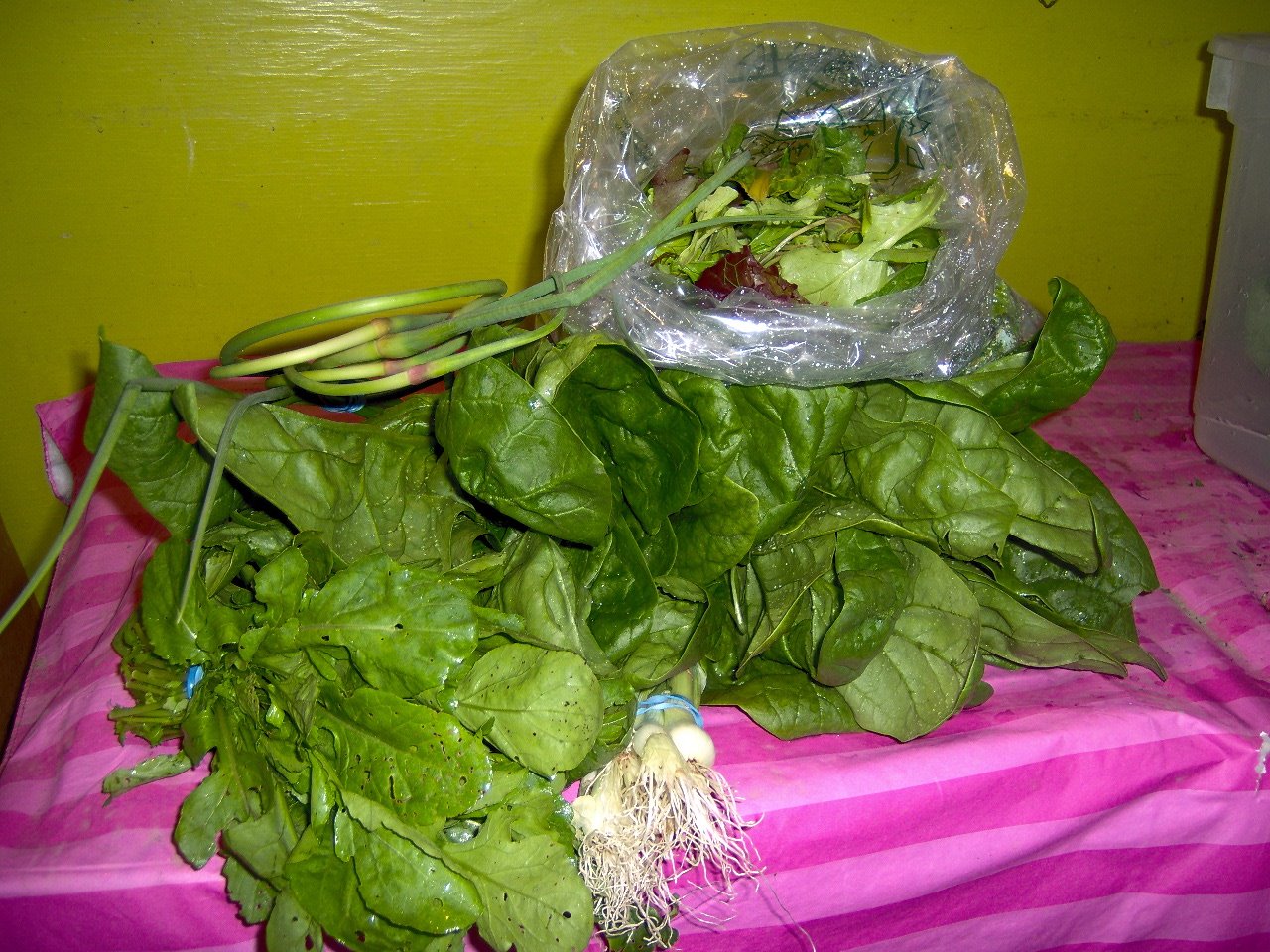
• Stir-Fry Mixed Greens
• Mixed Salad Greens
• Garlic Scapes

FRUIT SHARES: Strawberries from T&M Berries next door

COMING SOON:
Mizuna
Peas
Fava Beans
Swiss Chard
Broccoli
Cherries—for fruit shares

>The Great ‘Scape

>

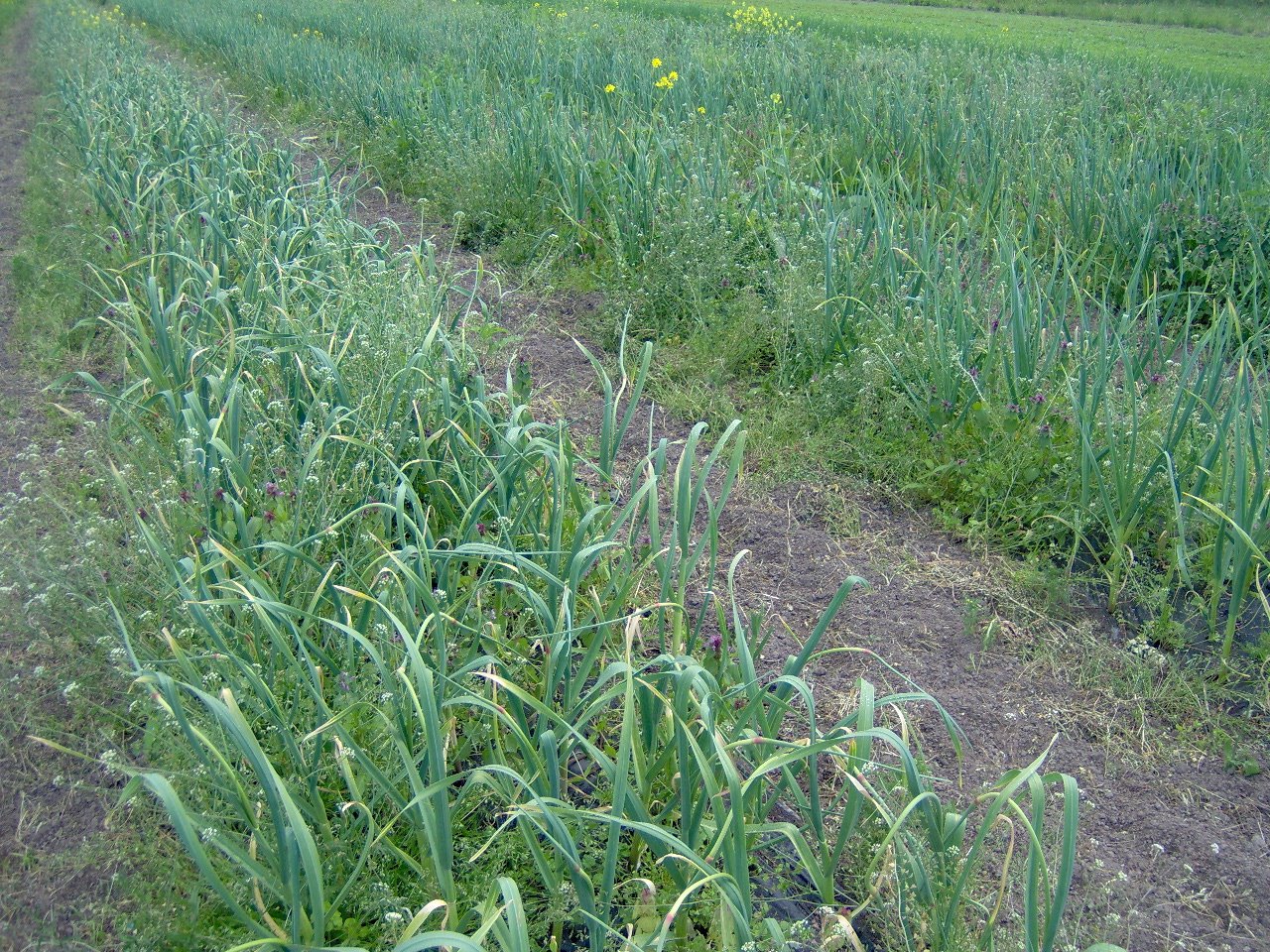
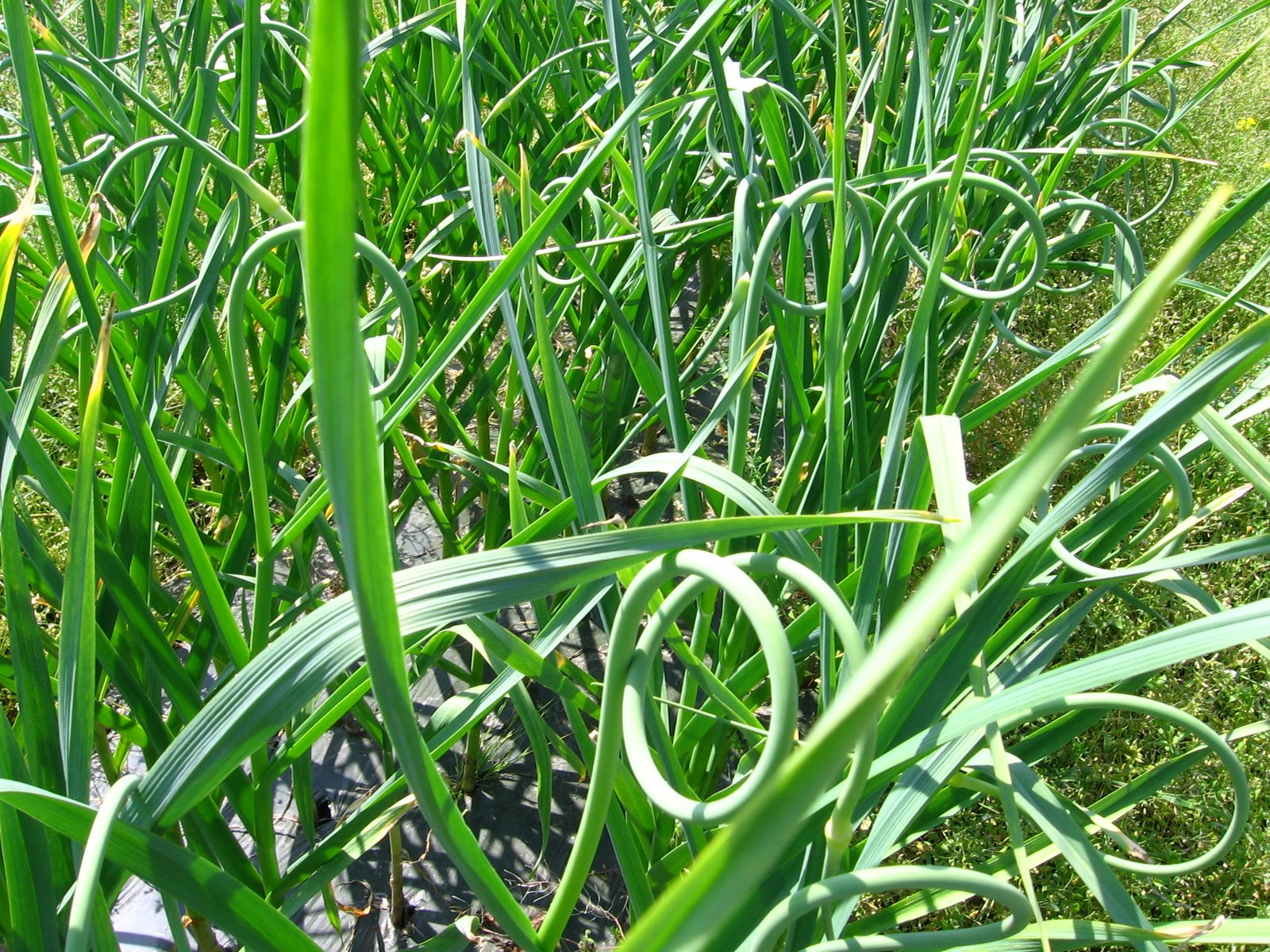
We planted four varieties of garlic in the fall, and of the two hardneck varieties (Chesnok Red and Spanish Roja) The Roja is the first to make scapes this year. Scapes are the flower stalk of the garlic (or any other onion family) plant. We remove them in order to try and steer the garlic plant into putting more energy into a large bulb. But why throw them away when they are delicious used as garlic—chopped and cooked, or roasted or grilled like asparagus. They are a little spicy raw, but some people like them like that. Other customers have reported that they like to purée them with olive oil like pesto and drizzle it on all kinds of things.

The garlic scapes can be cooked like asparagus—my favorite thing to do is brush them with a bit of olive oil and throw them on the barbecue—but they can also be roasted in the oven, or sautéed. Expect them to have the texture of asparagus, but with a mild garlic flavor.

GARLIC SCAPE IDEAS:
(Swiped from Mariquita Farm’s website.)
• Puree with olive oil and a bit of salt for a garlicky pesto
• Add sliced scapes to any stir fry recipe.
• Slice and sprinkle over any pasta, or slice and cook them in almost any sauce recipe.
• Great in guacamole and fresh salsa, too.
• Chop & add to softened cream cheese.
• Add chopped fresh scapes when serving a light garlic soup; can also add them to buttered, french bread floated on the soup. • Use them as you would green onions, they’re just better.
• Good in salads, on bruschetta, pizza.
• An excellent addition to stocks….and much Asian cuisine.
• Put in Thai chicken/basil/coconut soup.

GARLIC SCAPE TORTILLA
1 & 1/2 cups chopped garlic scapes
1/2 cup chopped scallions
1/4 cup hot water
Salt & Pepper
4 large eggs
2 Tbsp. extra virgin olive oil

Place garlic and scallions in a 10 inch skillet with 1 tsp. oil, 1/4 cup water and a pinch of salt. Cook covered over med. high heat until tender, about 5 minutes. Drain well. Beat eggs with salt and pepper. Add remaining oil to skillet. When oil is hot, shake skillet to spread greens evenly, add eggs. Cover and cook over med. low heat until top is set [2-3 Minutes].

MASHED POTATOES WITH GARLIC SCAPES
2 1/2 lbs. russet potatoes, peeled and cut into 1″ pieces.
2 Tablespoons butter (can omit this if on a restricted fat diet/lifestyle)
1-2 Tbsp, olive oil
1/4 cup finely chopped scapes
1/4 cup hot milk (or more)

Cook potatoes until very tender. Drain and return to pot. Over medium high heat, melt butter with olive oil in a small skillet. Add scapes and saute about 5 minutes. Add to potatoes and mash. Gradually add milk while stirring. Season with salt and pepper.

CHICKEN WITH GARLIC SCAPES & CAPERS
2 whole skinless boneless chicken breasts, halved
2 Tbsp. Unsalted butter
2 Tbsp. vegetable oil
4 Tbsp. dry white wine
2 Tbsp. lemon juice
4 chopped garlic scapes
1 Tbsp. drained capers
Between sheets of plastic wrap slightly flatten chicken. In a large heavy skillet heat 1Tbsp. of butter and the oil over medium high heat. Saute until cooked through. Season with salt & pepper. Transfer chicken to a platter and keep warm. Pour off fat from skillet and add the remaining butter, the wine, lemon juice, scapes and bring mixture to a boil. Stir in capers and salt & pepper to taste. Spoon sauce over chicken. Serves 4.

ROASTED GARLIC SCAPES
Take the scapes and put them in a lightly oiled roasting pan, top with salt (kosher or seas salt works best but any will do). Put the loaded and covered pan in a hot (425 °F) oven for 30 to 45 minutes or until they are beginning to turn brown. serve as a side or main dish. Tastes like roasted garlic but creamier.

>Summer Week 2: The First Days of Summer

>

THIS WEEK’S SUBSCRIBER MENU:
Clockwise from Left:
• Scallions
Pea Shoots
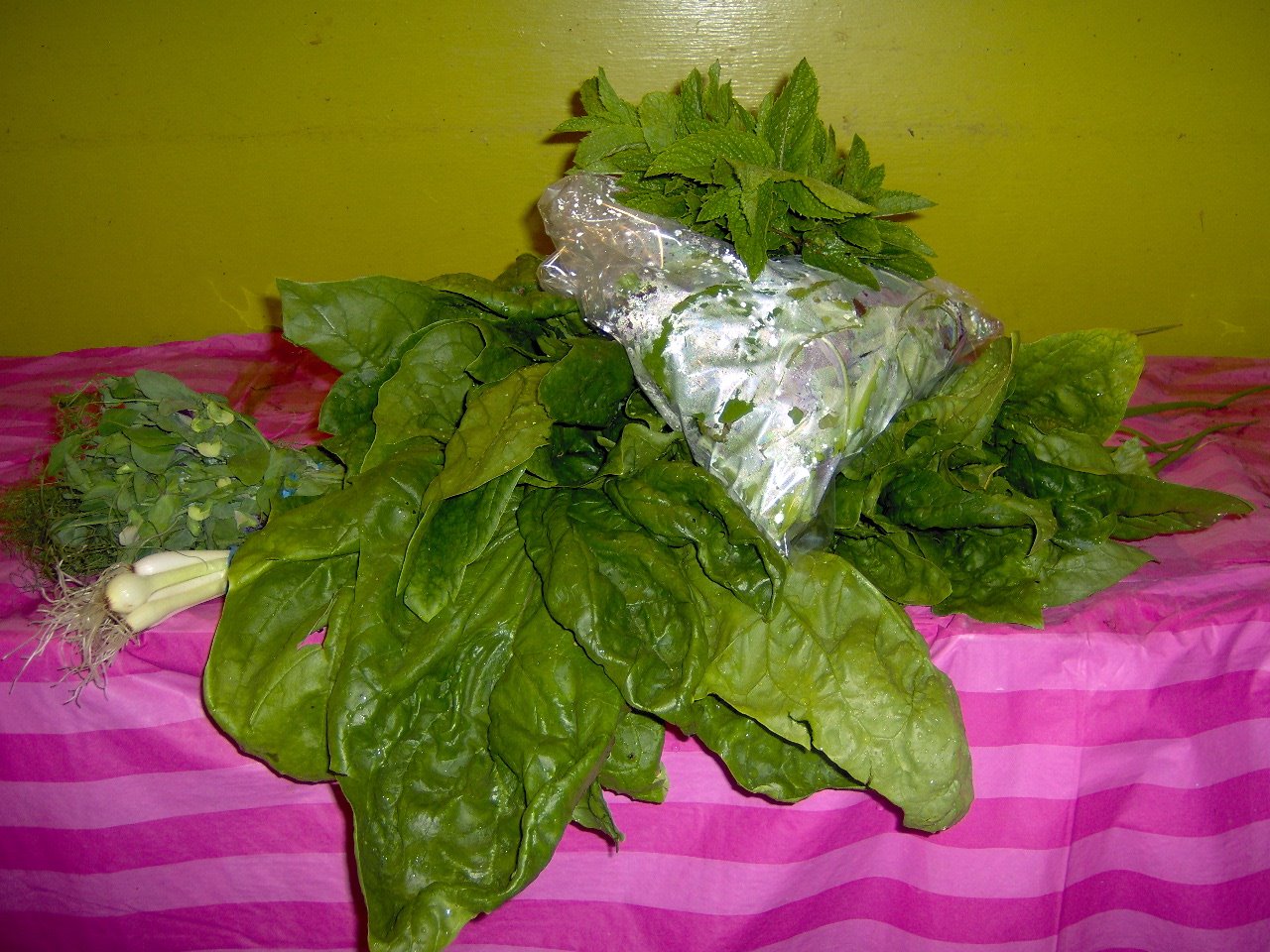
• Spinach
Fresh Mint (If you have too much, just keep it in a glass of water until you can use it. It will last up to two weeks this way.)
• Mixed Salad Greens

COMING SOON:
Garlic Scapes
Mizuna
Lettuces
Beet Greens
Stir-Fry/Braising Greens
Peas
Strawberries—for fruit shares

This week’s list looks just like last week’s, but it will all change soon. And yes, there will be more food soon. The beautiful weather is finally making everything grow! Our neighbors have strawberries coming on, and will be open at the end of the week. The crops are all growing beautifully, and we’re finally starting to catch up with planting. We’re busy planting all the winter crops as well as the summer ones, since we only have a few weeks left. It feels good to be getting somewhere finally.

Friday was the first day of summer, the Solstice, a joyous day…usually.

After months of below normal temperatures, we soared to 88° in the farmstand, where it actually felt quite cool about 3:00. Outside it had to be well over 90°. Great weather for weeding, planting, and clearing the spot for our house which will arrive Tuesday. Not so great for setting out transplants, picking greens, or hanging out with the kids.

I got up early to butcher chickens, which is my new weekly job. Mike had got up at 3:00 to turn on the scalder (a big fiberglass tub with a heating element). Without adequate very hot water, the feathers will not come off of the birds. I got suited up, got everything ready, and the chickens were waiting outside the shed. I killed the first three, and then got ready to dunk and pluck. But the feathers wouldn’t come off. The scalder was not hot enough. What was going on? We boiled water on the stove and carried it to the shed. Then the water cooled off, so we resigned ourselves to the fact that the scalder wouldn’t work, and we’d need the big propane burner to heat water all morning. But all three of our propane tanks were empty. By this time, those first three chickens were stiff as a board and I had to discard them. I fed them to the pigs, who love chicken, so they weren’t wasted, but still… Luckily I only had orders for 3 birds, so the remaining birds after those got to go back to the group and be spared—one more week of life. But, Mike and I had wasted nearly 4 hours trying to get three birds butchered.

Then we had lunch and went back to work.

Then, a panicked call from Mike—The chickens were dying!

And it was lucky that he checked, because the next group of fryers, about 6 weeks old were rapidly dying of heatstroke! We put up shade cloth, got them water, and tried to revive the survivors. At that time, half had died—50 little birds, about game-hen size. Some were too far gone, and drowned in the water we were trying to save them with. The ones that had been able to drink before the water ran out were fine and just hot. A few had been smart enough to hide in the bushes for shade. But not enough. It was a sickening sight. Brave Della jumped in with us, picking up the panting birds and carrying them to the water fountain, or under our quickly-erected shade structure.

These birds are the infamous Cornish cross, a special hybrid breed that was developed to grow very quickly, and produce a very meaty carcass. They’re great eating, but they are fragile. They have an incredibly rapid metabolism, which means they need a very high-protein diet, and lots of water. Even when fed properly, and in a temperature-controlled environment, it’s not uncommon to lose a few to heart-attacks, simply because their hearts can’t keep up with their bodies. They often have leg problems, because their bodies get too heavy for their bones. But, putting them outside early in their lives and forcing them to exercise helps. And it helps to remember that the reason we grow these chickens is that they are tender, juicy, and meaty. Much more so than the old fashioned chickens that can be tough and not meaty. Chewy is how I remember the ones we ate as kids. Good for soup and stewing, but not for a quick roast or fry, or the barbecue. And it also helps to remember that commercially these chickens are kept in controlled-environment buildings that smell like ammonia from all the manure that the birds create (proportionate to the amazing amount of food that they eat in their short lives), and that the commercial chickens never get to see sunshine or smell fresh air, or eat a bug or blade of grass.

Beets—Deep, Sweet Roots

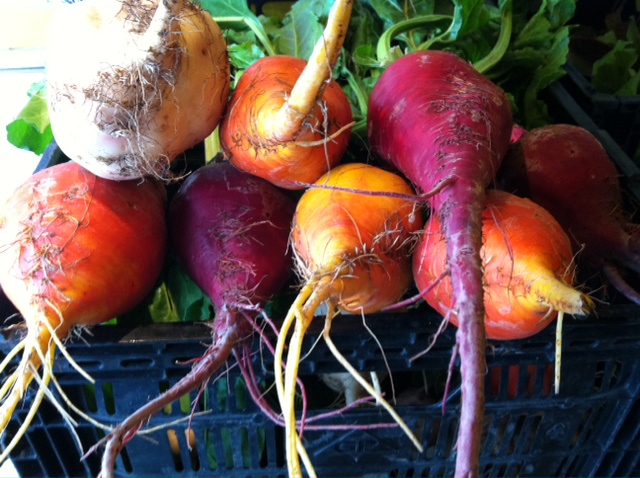
These should be called "Rainbow Beets". But they're actually a contrived "genepool", not really a variety, called 3 Root Grex.

We’ve been growing beets forever. But there is no other vegetable that stirs up such strong feelings—people either love them or hate them. Many folks hate them until they try ours. Nearly everyone runs out of ideas about how to eat them, especially if we’re in one of those farm phases where we dole them out week after week. Here are a few of the best tried-and-true recipes I’ve got up my sleeves. Before you decide you are a beet-hater, I urge you to give them a fresh start.

BEET GREEN PASTA
1/4 cup Currants
1 to 2 bunches Beet Greens
1 small bunch Fresh Mint
1 medium Red Onion (or a few salad onions)
1 to 2 cloves Garlic
1 Bay Leaf
1/4 cup Olive Oil
1/2 pound Dried Pasta, such as rotini, penne, bowties
Salt and Pepper

1. Cover the currants with boiling water, let them soak for 15 minutes, and drain them. While they are soaking, wash the beet greens, strip the leaves from the stems, and cut the leaves into chiffonade. Chop the stems into 2-inch lengths. Stem the mint, wash the leaves and chop into a chiffonade (ribbons).

2. Put on a pot of salted water for the pasta. Peel the onions and the garlic and chop them both fine. Sauté them with the bay leaf over medium heat in 1/8 cup of olive oil for about 5 minutes or until they are translucent. Add the beet leaves and stems and the currants and cook 5 minutes more, covered. Meanwhile, when the water has come to a boil, add the pasta. Uncover the beet greens, season wtih salt and pepper, and add the mint leaves. When the pasta is cooked, drain it and toss well with the sauce, moistening it with a ladle of the pasta water and the rest of the olive oil. Serve immediately.

STIR-FRIED BEET GREENS WITH GINGER & GREEN CHILES
1-1/2 tbsp. Peanut or Canola Oil
1/2 fresh Hot Green Chile, cut into long, fine slivers
1-1/2 slices Fresh Ginger, cut into long, fine slivers
1/2 pound Beet Greens, cut crosswise into fine ribbons
Dash Salt, or to taste

1. Put the oil in a large pan and set over medium-high heat. When hot, put in the chile and ginger. Stir a few times and put in the beet greens. Stir a few times and then cover the pan.

2. Turn the heat down to low and cook until the leaves have wilted. Add the salt and stir a few times. Add 4 tbsp. water, bring to a simmer, and cover.

3. Cook on low heat for about 30 minutes, or until the greens are tender. Stir every now and then during this period. Serve with pasta or rice.

BOILED BEETS & BEET GREENS WITH HORSERADISH DRESSING
3 good-sized Beets (about 12 ounces)
8 ounces trimmed Beet Greens
1/4 cup Olive Oil
2 tsp. Red Wine Vinegar
2 tsp. Prepared Horseradish
1/4 tsp. Salt, or to taste
1 very small Garlic Clove, peeled and crushed to a pulp

1. Put the beets to boil in a large pot with water to cover them by several inches. Boil until they are tender, 30 to 40 minutes. Prod with the tip of a knife to test doneness. Peel, cut in half lengthwise and then crosswise into 1/3-inch-thick slices.

2. Bring 12 cups of water to a rolling boil. Drop in the beet greens and boil about 12 minutes or until they are just tender. Drain.

3. Combine the beets and greens in a shallow serving dish. Mix the remaining ingredients and pour the dressing over the beets and greens. Mix gently and serve warm, at room temperature, or chilled.

HARVARD BEETS
2 pounds Beets, well-rinsed
1/2 cup Sugar
5 tbsp. Red Wine Vinegar
1/4-cup Fresh Orange Juice
2 tsp. Cornstarch
Salt and Ground Black Pepper, to taste
1 tbsp. Unsalted Butter
Grated Zest of 2 Oranges

1. Place the beets in a medium-size saucepan, cover with cold water, and bring to a boil. Reduce the heat to a simmer, cover, and cook until tender—40 to 50 minutes for large beets. Drain and rinse under cold water to cool. Slip off the skins, and cut the beets into 1/4-inch dice. You should have 4 cups. Set them aside.

2. Combine the sugar, vinegar, orange juice, cornstarch, and salt and pepper in a heavy saucepan. Whisk well and bring to a boil over medium heat, whisking constantly until the mixture is clear and thickened, 4 to 5 minutes. Whisk in the butter and zest, and cook just until the butter has melted.

3. Remove the pan from the heat and pour the sauce over the beets. Toss gently. Serve hot or at room temperature.

HOT OR COLD CREAMY BEET SOUP
3 medium Beets, scrubbed
5 Scallions, green and white parts finely chopped
3 Eggs, hard-cooked and diced
1 medium Cucumber, seeded and diced
4 cups Buttermilk
4 cups Whole Milk
1 tbsp. Finely Chopped Dill, plus more for garnish
Salt and Pepper

1. Preheat oven to 400°.

2. Place beets in a small raosting pan with 1/2 cup water. Cover with foil and bake until easily pierced with a sharp knife, 45 minutes to 1 hour depending on size. Allow beets to cool slightly, then run under cold water and slip off their skins.

3. Grate the beets into a large pot. Add the scallions, egs, cucumber, buttermilk, milk, and dill; stir until well combined. Season with salt and pepepr to taste. Serve immediately, or warm over low heat before serving. Garnish with fresh dill if desired.

Good Old Roasted Beets

>Pea Shoots—The Vine of the Fruit

PEAS & PEA TENDRILS WITH LEMON DRESSING
1/4 cup Olive Oil
2 tbsp Fresh Lemon Juice
1 tsp Sugar
2 cups Shelled Fresh Peas or one 10-ounce package frozen Petite Peas, unthawed
8 ounces Pea Tendrils, cut into 4-inch lengths

1. Whisk oil, lemon juice, and sugar in small bowl to blend; set dressing aside.
2. Bring large pot of salted water to boil. Add fresh or frozen peas and cook 3 minutes. Add pea tendrils; cook 1 minute. Drain well. Return vegetables to pot; add oil-lemon dressing and toss to coat. Season with salt and pepper.

PEA SHOOT & GREEN GARLIC PESTO
1 bunch pea shoots (cut above the rubber band and washed)
1 large or 2 small green garlic washed and chopped with plenty of the green top included
4 T. olive oil
1 t. salt (or to taste)
¼ c. freshly grated parmesan
½ c. toasted nuts (walnuts, pinenuts, etc)
12 oz. cooked pasta

Combine pea shoots, green garlic, olive oil, salt, parm (short for parmesan in our kitchen), and nuts in a food processor. Process until you have a nice bright green paste. If it’s not combining well drizzle in more oil as it’s processing. Toss with the just-drained pasta. Garnish with a little freshly grated parm and serve hot, or refrigerate and add a cup of halved cherry tomatoes to make a nice pasta salad.

PEA SHOOT PESTO
1 small Garlic Clove, smashed
1/4 cup Cilantro leaves (optional)
4 ounces Pea Shoots, coarsely chopped
3 tbsp. Fresh Lime Juice (about 2 limes)
1/3 cup Olive Oil
3/4 cup Grated Parmesan Cheese

1-1/2 tsp. Salt and 1/4 tsp. Freshly Ground Pepper
1. Purée all ingredients in a blender. If not using immediately, refrigerate in a airtight container up to 1 week.
2. Use like basil pesto. Delicious on pasta or sandwiches, or spread onto slices of rustic bread and top with shaved Parmesan cheese, or spoon it over soft goat cheese.

SHELLEY’S PEA SHOOT PASTA SALAD
1 bunch Pea Shoots
1 4 oz pkg. Port Madison Farms Fresh Chevre
1 bunch Fresh Mint
A few Scallions
12 ounces Small Dry Pasta
Salt and Pepper

1. Bring a large pot of salted water to boil. Meanwhile, trim the bottom off of the pea shoot bunch and discard the rubber band, cut the bunch in half lengthwise. Chop the scallions and set aside. Separate the mint leaves and cut into chiffonade or chop.
2. In a large bowl, mush the chevre with the scallions and mint. Add salt and pepper to taste. Wait patiently for the water to boil.
3. Drop the pea shoots into the water to wilt—this only takes about 30-60 seconds. Remove with a slotted spoon to a colander. Then put in the pasta and cook until al dente. When done, drain in a colander.
4. Add the pea shoots to the chevre mixture and combine. Add the pasta to the bowl and mix together. Serve hot or cold.

Pea Shoot Risotto

>Summer Week 1: Salad, Spinach, and Pea Shoots

>THIS WEEK’S SUBSCRIBER MENU:
Clockwise from Left:
• Mixed Salad Greens
• “Dinosaur” Spinach
• Pea Shoots
• Scallions
• Baby Bok Choi

Welcome Summer!

I want to welcome all of you to our wacky summer, after a crazy, wacky spring. We had so much interest in our subscription program this year, much more so than in previous years. I’m not sure if it’s because I finally updated our website this winter, or if all the fuel prices and concurrent food prices are pushing everyone a little harder into eating closer to home. Whatever the reason, it’s exciting, and we’re so happy to have all of you!

After so much prolonged winter/spring, “Junuary” weather, finally it broke last weekend and we have been hustling to catch up. We are so behind in planting a lot of things, but then there’s not much we could do about it. Two weeks ago, when the sun broke out last, we hurried to get some ground ready and throw what we could into the ground before the rain came again—I think we had two days—one day to dry up the soil a bit, and another day to get it ready and plant. I got all of the pole beans planted that day, and 1000′ of bush green beans. Then it rained for nearly a week, and it was cold. Too cold. The spinach and peas thrived in it, the lettuce and cabbages were soaking up all that water. But it was just too cold for the beans. I poked around in those rows and all I came up with was mushy, slimy remains of bean seeds. I was crushed. That never happens to us. But, it did this year—$50 of seed, and two weeks lost to rain. But, at least all of my special pole beans germinated—all of them. That includes my four heirloom Italian varieties of shelling beans, the romano beans, and my experimental patch of green string beans. All are ok, and that’s a relief, because all that Italian seed was very expensive, and it took over a month to get it here. There wouldn’t have been time to replant. The bush beans are more expendable. I’ll be replanting Thursday and won’t really have lost much time—we’ll still be picking green beans by late July. Not too bad.

The peas are gloriously happy and one variety is blooming, so shelling peas are only a few weeks away. You can see for yourselves how happy the spinach is—hence the name this week. We don’t plan on having salad mixes regularly in the summer because it’s a lot of work to prepare it for so many of you, but it’s ready early, and the head lettuces won’t be big enough for another two weeks or so.

It looks like we’re off to a bit of a slow start, but there is so much promise in the wings. Just expect a lot of green for the first few weeks—it will all start changing before you know it. In about four weeks we’ll have tons of peas, lettuce, baby beets. In about six weeks we’ll have broccoli, new potatoes, summer squash, and basils. Hopefully we’ll get the tomatoes going here and they’ll catch up quickly in the greenhouse. But no July tomatoes this year—it will be more like August. Rest assured, no matter what happens we’ll be able to feed you though, and you won’t get bored!

>Spring Week 10: Holey Arugula, Batman!

>

THIS WEEK’S SUBSCRIBER MENU:
Clockwise from Left:
• Garlic Scapes
• Spring Mix
• Spinach
• Scallions
• Spinach

Summer Shares start next week!
THIS IS THE LAST WEEK OF OUR SPRING SEASON!

Yes, the “Swiss” arugula is full of holes, but it tastes good. All I can say is it’s a nice change from Pea Shoots, and try not to look at it while you eat it. The holes are the result of the flea beetles that hatched when it was 95° two weeks ago, but as soon as the weather cooled off they died, or failed to reproduce. Now the flea beetles are gone, we’ve had two inches of cool rain, and the arugula tastes good again.

The salad finally did size up. The spinach just keeps getting bigger and better. We have lots of onions. The sugar snap and shelling peas are looking very healthy and they are enjoying the weather. Peas are one crop that loves cool and wet. I had to run out that sunny afternoon and put a new row of twine on all the rows to support them! Even if it’s a cool, wet summer, we’ll have plenty of salad, broccoli, and peas. No one will starve.