Category Archives: Uncategorized

>Summer Week 11 (Beans, Lettuce, Summer Squash, Cucumbers)

>THIS WEEK’S SUBSCRIBER MENU:
• Beans: Green Romano, Yellow Romano, or Yellow Wax
• Summer Squash or Zucchini
• Lettuce
• Carrots
• Salad Onions or Garlic
• Swiss Chard or Cabbage
• Cucumbers

FRUIT SHARES:
Red Haven Peaches from Rama Farms in Bridgeport

U-PICK THIS WEEK:
Green Snap Beans
Yellow Wax Beans
Wild Blackberries

COMING SOON:
Red Cabbage
Kohlrabi
Tomatoes

After yet more crazy weather, I find I’m having a hard time with the logic of it. My mind wants to believe that it’s fall now. After all, I’ve been spending a lot of time getting the kids ready for school, and it’s been so rainy! But no, my mind says it’s still summer. Still need to do farm work, weeding, planting, picking. We still have a lot of farming time left, really. But as Della gets ready to get on the school bus for the first time and head for Kindergarten, and Cosmo heads to Preschool I want to move back into mothering work—cooking, cleaning, knitting, and planning for next year.

Now that the rain has stopped again, we have a window of opportunity. The weeds will grow quicker than in a dry summer, but this is perfect growing weather for all the greens and winter crops. Warm, but not hot, and perfectly moist. There is no way we can irrigate to this point of moisture, we just don’t have the water, or the irrigation equipment. So, it’s a blessing and a curse. It won’t be long until we get our first frost, and those greens sweeten up, potatoes and winter squash are ready for harvest, and we’re all eating apples instead of peaches and blackberries.

This week is the mid-point of our summer season. In ten weeks it will be almost November, and time to head into our winter season. We’ve had so many people asking about our Winter Program already, and I’m not prepared. We haven’t even decided how many winter shares we can handle this year. After last year’s rediculous freezing winter, we are a little gun-shy about jumping into a big commitment again. Maybe 50 will be enough, plus the commitment-free winter farmers markets, where we can go if we have anything, but we’re not locked in. Maybe we can handle 100 families again. We’ll just have to see how we feel in a few weeks. In the mean time, let us know if you’re interested in joining us for winter, because summer subscribers get to secure their spots first.

>Summer Week 10 (Beans, Cucumbers, Summer Squash)

>THIS WEEK’S SUBSCRIBER MENU:
• Green Snap Beans
• Pattypan Summer Squash
• Carrots
• Salad Onions or Garlic
• Broccoli or Cabbage
• Cucumbers (Tuesday people got Radishes, but there weren’t enough to finish the week)

FRUIT SHARES:
Red Haven Peaches from Rama Farms in Bridgeport

U-PICK THIS WEEK:
Green Snap Beans
Wild Blackberries

COMING SOON:
Red Cabbage
Wax and Romano Beans
Tomatoes

Recipes coming!

We’re wrapping up most of our winter planting this week. All that will be left after tomorrow a

>Summer Week 9 (Broccoli, Zucchini, Squash Blossoms)

>THIS WEEK’S SUBSCRIBER MENU:
• Broccoli
• Zucchini
• Carrots
• Salad Onions or Garlic
• Lemon Basil
• Choice of: Squash Blossoms, Beets, Various Greens, or Other Herbs

FRUIT SHARES:
Santa Rosa Plums from Razey Orchards in Naches, and Wild Blackberries
Peaches next week!

U-PICK THIS WEEK:
Sorry, there is no u-pick this week.

COMING SOON:
Radishes
Cabbage
Green Beans
Spinach

We’re wrapping up most of our winter planting this week. All that will be left after tomorrow are winter radishes, turnips, spinach, and arugula. And some lettuces. Life is still chaotic. Sorry about the mess around the farm.

To add to the chaos, we will be butchering fryers in another week or two. We don’t have a lot, but we do have about 40 more than we need. Many of them are large–my guess is that they will be 5-7 pound roasters, not small fryers. We will be charging $4.50 per pound, dressed. (The market price for fryers is $5.50 per pound.) We will also be butchering our old laying hens in early September for use as stewing hens. They will be $10 each, regardless of weight. Please let me know if you are interested in any of these birds and I will put you on our list.

BROCCOLI WITH ASIAN STYLE DRESSING
1 medium head Broccoli
1/2 cup Rice Wine Vinegar
3 tbsp. Peanut Oil
2 tbsp. Soy Sauce
1 tsp. Grated Fresh Ginger
1/2 tsp. Minced Garlic
1/2 tsp. Toasted Sesame Oil
1/2 tsp. Hot Chili Oil (optional)

1. Separate the florets from the stalk and break into smaller florets. Cut the stalk into 1-inch lengths and then into matchstick-size strips.

2. Place the broccoli in a steamer basket set over 1 1/2 inches boiling water and cover. Steam for 5 minutes. Transfer the broccoli to a bowl.

3. Combine the remaining ingredients in a small bowl and stir until well combined. Pour the dressing over the broccoli and mix well.

SAUTEED BABY ZUCCHINI WITH SQUASH BLOSSOMS AND LEMON BASIL
Squash blossoms are extremely perishable; it’s best to use them the day you buy them.
serving size

3 tablespoons butter, divided
1 pound baby zucchini, halved lengthwise, each half cut lengthwise into 3 wedges
1 1/2 teaspoons chopped fresh lemon basil or regular basil
Sea Salt
18 zucchini squash blossoms*

1. Melt 1 tablespoon butter in heavy large nonstick skillet over medium heat.

2. Add zucchini; sauté until crisp-tender, about 2 minutes. Stir in basil. Season with fleur de sel. Transfer to plate.

3. Melt remaining 2 tablespoons butter in skillet. Add squash blossoms and cook until barely wilted and still bright orange, about 2 seconds per side.

4. Arrange atop zucchini and serve.

FARMERS’ MARKET FETTUCCINE

2 tbsp extra-virgin olive oil
3 cloves garlic, peeled and chopped
1/2 tsp ground fennel seed
1/4 cup white wine vinegar
2 1/2 lb fresh ripe tomatoes, seeded and roughly chopped (or one 28-oz can plum tomatoes)
12 oz fresh fettuccine (or dry pasta)
3 small zucchini, julienned
12 fresh squash blossoms, trimmed well at the base (or 2 cups fresh green beans, trimmed)
1 1/2 cups packed baby spinach, cleaned and torn into bite-sized pieces
2 tbsp roughly chopped fresh basil

1. Bring a large pot of salted water to a boil.

2. Warm oil in a skillet over medium-low heat. Add garlic and cook 1 minute or until translucent and fragrant. Add fennel and cook 1 to 2 minutes. Pour in vinegar, increase heat to medium-high and cook until very little liquid is left. Stir in tomatoes with their juices.

3. Reduce heat to low, cover and simmer about 10 minutes (if using canned tomatoes, simmer uncovered, breaking them up with a wooden spoon). While sauce is simmering, add pasta to boiling water and cook according to package directions.

4. Season sauce with salt and pepper, add zucchini and cook 5 minutes. Add squash blossoms and spinach and cook until just wilted, about 3 minutes; remove from heat and stir in basil.

5. Drain pasta, add to sauce in skillet and mix well.

CHEESE-STUFFED SQUASH BLOSSOMS WITH SHAVED BABY SQUASH AND TOASTED PUMPKIN SEEDS
(Three Generations of Squash)

For squash blossoms
3 cups small cherry tomatoes (1 lb; preferably Sungold), halved lengthwise
2 teaspoons olive oil
3 oz mild fresh goat cheese (6 tablespoons) at room temperature
1 tablespoon heavy cream
2 tablespoons chopped green (hulled) pumpkin seeds, toasted until they puff
1/4 cup chopped fresh basil (preferably Thai)
1/4 teaspoon kosher salt
1/8 teaspoon black pepper
12 male squash blossoms with stems (not with baby zucchini), stems trimmed to 1 inch

For vinaigrette and shaved squash
1 tablespoon rice vinegar (not seasoned)
1 tablespoon minced shallot
2 tablespoons mild extra-virgin olive oil
1/8 teaspoon black pepper
3/4 teaspoon kosher salt
1 lb assorted baby summer squash, stems discarded

For tempura batter and frying
6 cups vegetable oil (preferably canola or grapeseed)
1 cup all-purpose flour
1/2 teaspoon kosher salt
1 cup chilled sparkling water

For topping
2 tablespoons green (hulled) pumpkin seeds, toasted until they puff
1/3 cup small basil leaves (preferably Thai) or sliced larger leaves

Stuff squash blossoms:
1. Preheat oven to 250°F.

2. Toss tomatoes with oil and arrange, cut sides up, in 1 layer in a shallow (1-inch-deep) baking pan. Bake in middle of oven until slightly shriveled but not completely dried or browned, about 1 1/4 hours. Transfer pan to a rack to cool.

3. Stir together goat cheese, cream, pumpkin seeds, basil, salt, and pepper in a bowl and fold in half of oven-dried tomatoes.
Spoon 1 rounded tablespoon of this filling into each blossom and twist ends of petals gently to close. Chill, covered, until ready to fry.

Prepare vinaigrette and shaved squash:
1. Purée vinegar, shallot, oil, pepper, and salt in a blender until smooth and emulsified.

2. Slice squash paper-thin (lengthwise) using slicer, then overlap squash slices decoratively on 4 plates to cover surface.

Make tempura batter and fry blossoms:
1. Heat 2 inches of oil in a 3-quart saucepan to 350°F on thermometer.

2. Set a bowl in a larger bowl of ice and cold water, then whisk together flour and salt in smaller bowl. Then whisk in sparkling water until combined well.

3. Working in batches of 3, coat blossoms in batter, lifting each out by its stem and letting excess drip off, then fry, turning, until batter is crisp (it will not brown), 1 to 1 1/2 minutes. Transfer blossoms as fried with a slotted spoon to paper towels, drain, then season with salt.

Assemble plates:
Drizzle vinaigrette over squash slices, then arrange 3 fried blossoms in middle of each plate. Sprinkle remaining oven-dried tomatoes, pumpkin seeds, and basil around blossoms and season with salt and pepper.

>Summer Week 8 (Zucchini, Purslane, Swiss Chard)

>THIS WEEK’S SUBSCRIBER MENU:
• Zucchini
• Swiss Chard
• Amaranth or Mallow Greens
• Purslane
• Salad Onions
• Thai Basil or Marjoram

FRUIT SHARES:
Rival apricots from Rama Farms in Bridgeport
I’m happy I was able to find any fruit this week. Rama farms came through for me though with more of these incredible apricots. Next week will be the beginning of peach season. I’m still working on getting some blueberries to make up for last week, but they’re hard to get in the quantity that we need.

U-PICK THIS WEEK:
Sorry, there is no u-pick this week.

Weeding is the order of the week now. Weeding and planting. Planting fall greens and roots, weeding salad, greens, carrots, and getting the jungle cleaned out between the beds in the squash, cabbages and pumpkin patch—this section alone is nearly 1/4 of our farm this year. The plastic mulch has saved us an incredible amount of weeding. All that needs to be done really is cleaning between the beds, which can be done with the rototiller if caught early enough. However, everything was perfect in the hot week, but it was so dusty I just couldn’t get to it all, and then it rained. The 6-inch weeds that were perfect rototiller munching size became 2 feet tall. Then by the end of another week they are 3 feet tall. I got about half-way finished but now they have to be cut first because the rototiller keeps binding up. Still, it beats hoeing and hand-weeding. It would have cost us over $1000, probably $2000 to hand weed and hand cultivate those rows without the plastic. And, it saves so much water by holding in moisture. We’ll probably only need to water once or twice the whole rest of the summer. If the ground was exposed and we had to use sprinklers, we’d be watering every other week and the plants would be moisture deprived.

We need to get MIke moving on his tractor cultivating so those rows of new basil and greens and carrots can get cleaned up and aerated, and then he can get moving on the winter carrots, beets, and greens. We’re planning lots of colors of everything to brighten up those grey days. I’ve had so many people asking if we had golden beets and the striped “Chioggia” beets. I prefer to wait and have them in the winter, when it’s easier for the farm to get boring. Now we’ve got so many choices in the summer coming up, we don’t really need all those colors of roots.

If I can keep Cosmo out of the tomato greenhouse, we may have enough to share with everyone next week. And the broccoli should be big enough. I’m guessing two more weeks on the green beans because the fruits are only an inch long.

COMING SOON:
• Broccoli
• Cabbage
• Cucumbers
• Stir-Fry Greens
• Radishes
• Tomatoes

MEDITERRANEAN SUMMER GREENS SAUCE
1 1/2 tbsp. Chopped Raisins (optional)
1 tbsp. Salt
2 pounds Greens (spinach, escarole, chard, collards, or other greens, or a mixture)
2-4 tbsp Olive Oil, divided
2 cloves Garlic, peeled and smashed, not minced
4-6 Anchovy Fillets drained and mashed
2 tbsp. Capers, rinsed and drained
10 Black Olives, pitted and halved
1/8 tsp. Black Pepper
1/3 cup grated Parmesan Cheese

1. Soak raisins in hot water until plump, about 15 minutes.
2. Bring a large pot of water to boil. Add the salt, then add the greens. Simmer until tender, 3 to 10 minutes. (Spinach will need only a few minutes, while collards will need about 10)
3. Drain the greens in a colander and run under cold water. When cool, squeeze out excess water with your hands.
4. If using Swiss Chard, heat 2 tbsp. of oil in a sauté pan. Add the chopped chard stems and sauté over medium heat until tender, 5 to 7 minutes. Remove from the pan and set aside.
5. Wipe the pan clean; return it to the burner and heat 2 more tbsp of oil. Add the garlic and cook, turning often, until lightl brownd and fragrant, 3 to 5 minutes. Remove the garlic and discard it.
6. Add the cooked and drained greens (and the chard stems if using) to the pan with the garlic-infused oil and cook for 1 minute, stirring constantly. Add the anchovies to taste; add capers. Stir to combine and continue to cook for 30 seconds. Remove the pan from heat. Set the mixture aside to cool for 10 minutes. Transfer the greens mixture from the skillet to a food processor (do not use a blender).
7. Drain rasisins and squeeze out excess moisture. Add the raisins, olives, and hot pepper flakes to the processor. Pulse process just until mixture is finely chopped and combined, but not puréed. You can also chop the ingredients using a large chef’s knife.
8. Stir in the Parmesan cheese. Serve immediately or at room temperature. Best if used the day it is made.

GRILLED ZUCCHINI SALAD WITH PURSLANE AND TOMATO
1 tsp finely grated Fresh Lemon Zest
3 tbsp Fresh Lemon Juice
1 tbsp finely chopped Shallot or Onion
1/4 tsp Dijon Mustard
1/2 tsp Salt
1/3 cup extra-virgin Olive Oil, plus additional for brushing zucchini
1/4 tsp Black Pepper
3 tbsp chopped fresh Flat-Leaf Parsley
4 Zucchini (1 3/4 to 2 lb total), halved lengthwise
12 oz Purslane, thick stems removed (4 cups)
10 oz Pear or Cherry tomatoes, halved lengthwise

1. Prepare grill for cooking. If using a charcoal grill, open vents on bottom of grill.
2.Make dressing: Whisk together zest, lemon juice, shallot, mustard, and salt in a small bowl. Add oil in a slow stream, whisking until dressing is emulsified. Whisk in pepper and parsley.
3. Grill zucchini: Lightly brush zucchini all over with oil. When fire is hot (you can hold your hand 5 inches above rack for 1 to 2 seconds), grill zucchini, cut sides down first, on lightly oiled grill rack, uncovered, turning once, until zucchini are just tender, 8 to 12 minutes total. Transfer to a cutting board and cool slightly, then cut diagonally into 1/2-inch-thick slices.
4. Toss zucchini with purslane, tomatoes, and dressing in a large bowl. Serve immediately.

>Summer Week 7 (Beets, )

>THIS WEEK’S SUBSCRIBER MENU:
• Fava Beans
• Napa Cabbage (see Winter Makeup Week 1 for recipe ideas) or Swiss Chard or Kale
• Beets
• Carrots
• Salad Onions
• Purple Basil or Sorrel or Marjoram

FRUIT SHARES:
Rival apricots from Rama Farms in Bridgeport
(My plan was to have apricots again this week, but Rama Farms was short and I was only able to get half of what we needed for the full week. Then I tried to get cherries to complete the other half but cherry season is nearly over and the fruits are very expensive again. Then I thought I’d be able to get blueberries to finish off, but the organic blueberry farm in Puyallup is rained out. I’m still on the hunt for blueberries for next week though. Long story short–there is only half the fruit you deserve this week, but it’s not my fault!)

U-PICK THIS WEEK:
Sorry, there is no u-pick this week.

COMING SOON:
• Broccoli
• Zucchini
• Cucumbers
• Stir-Fry Greens
• Radishes
• Tomatoes

Just as we lost a lot of crops in the heat two weeks ago, we similarly lost a lot of crops in the unseasonal rain last week. What a mess! The lettuce that didn’t bolt to seed two weeks ago rotted last week. We tried to pick some on Sunday and it was just black slime inside. Really gross. I don’t know how they grow this stuff in warm, wet climates. Probably lots of fungicides.

Last week we were ready to plant all of our winter crops, and time is getting tight. We’ve had another delay now, although we’ve had so much water they should germinate and grow quickly. And, did I mention that all the rain probably saved us nearly $1000 on our water bill? That’s a lot of zeros! The zucchini and beans are coming along quickly, blooming away, and the broccoli is rapidly forming heads. Shouldn’t be long now for all that good summer stuff. There are loads of green tomatoes, and a few red ones in the greenhouse so they need to finish getting pruned and trained. And about three weeks worth of weeding needs to get done this week. It’s amazing how much quicker the weeds grow than the rows of what we plant. Some things we can’t even find right now because the weeds are so big. And you just can’t weed in the rain, the effort is futile. So, just as with any weather extreme, some crops have thrived and some have failed. There won’t be any lettuce for a little while, until the newest patch comes of age. Luckily we have plenty of other things to eat.

July is when the winter crops need to be planted because when the days get short in fall everything stops growing. Every day that we delay now is about a week of delay into the winter. Next month it will be like two weeks later for every day we are late. Winter planting is very time sensitive. All of those winter plants–kale, broccoli, whatever–need to be nearly full size by October in order to get through the winter as a harvestable plant. With all the regular harvesting to do, plus all this planting and cultivating for winter, July and August give us no free time for anything.

And yet, this is when the farm looks its worst. Overgrown weeds everywhere, fences falling apart, etc. It bothers me that we can’t keep the farm looking tidy, but I have finally realized that in order for that to happen we need to hire a groundskeeper. Someone whose only job is to keep fences clean and spread chips around in the driveways. That isn’t going to happen any time soon because we can barely afford to pay our workers as it is. In September we’ll have a bit of time to tidy up maybe. Usually about the time we wrap up our summer season and it’s too rainy for all of you to wander around the farm. I did find someone who wants to work on our cut flower garden in exchange for a share, so we can still get some fall flowers in and tidy up that area. What a relief. We haven’t had time to get to that project. We haven’t even had time to cut the grass in our front yard. I haven’t cleaned my house in weeks, and I barely keep up with the dishes and laundry, only because if I don’t we run out of clothes and dishes! I am really looking forward to fall this year.

But summer is finally gearing up again here. With a few more days of heat the blooming zucchini and beans will be ready, and the broccoli and cabbage will head up. The tomatoes will ripen and hopefully we’ll have some salad greens again. And we’ll have more choices of what to harvest.

This is the last week for fava beans, so enjoy them or freeze them for later. I’m including a few extra beet recipes, special requests from previous years. And, don’t forget that you can use the napa cabbage as a cole slaw/salad base. You can also sauté it.

BOILED BEETS & BEET GREENS WITH HORSERADISH DRESSING
3 good-sized Beets (about 12 ounces)
8 ounces trimmed Beet Greens
1/4 cup Olive Oil
2 tsp. Red Wine Vinegar
2 tsp. Prepared Horseradish
1/4 tsp. Salt, or to taste
1 very small Garlic Clove, peeled and crushed to a pulp

1. Put the beets to boil in a large pot with water to cover them by several inches. Boil until they are tender, 30 to 40 minutes. Prod with the tip of a knife to test doneness. Peel, cut in half lengthwise and then crosswise into 1/3-inch-thick slices.
2. Bring 12 cups of water to a rolling boil. Drop in the beet greens and boil about 12
minutes or until they are just tender. Drain.
3. Combine the beets and greens in a shallow serving dish. Mix the remaining ingredients and pour the dressing over the beets and greens. Mix gently and serve warm, at room temperature, or chilled.

HARVARD BEETS
2 pounds Beets, well-rinsed
1/2 cup Sugar
5 tbsp. Red Wine Vinegar
1/4-cup Fresh Orange Juice
2 tsp. Cornstarch
Salt and Ground Black Pepper, to taste
1 tbsp. Unsalted Butter
Grated Zest of 2 Oranges

1. Place the beets in a medium-size saucepan, cover with cold water, and bring to a boil. Reduce the heat to a simmer, cover, and cook until tender—40 to 50 minutes for large beets. Drain and rinse under cold water to cool. Slip off the skins, and cut the beets into 1/4-inch dice. You should have 4 cups. Set them aside.
2. Combine the sugar, vinegar, orange juice, cornstarch, and salt and pepper in a heavy saucepan. Whisk well and bring to a boil over medium heat, whisking constantly until the mixture is clear and thickened, 4 to 5 minutes. Whisk in the butter and zest, and cook just until the butter has melted.
3. Remove the pan from the heat and pour the sauce over the beets. Toss gently. Serve hot or at room temperature.

HOT OR COLD CREAMY BEET SOUP
3 medium Beets, scrubbed
5 Scallions, green and white parts finely chopped
3 Eggs, hard-cooked and diced
1 medium Cucumber, seeded and diced
4 cups Buttermilk
4 cups Whole Milk
1 tbsp. Finely Chopped Dill, plus more for garnish
Salt and Pepper

1. Preheat oven to 400°.
2. Place beets in a small raosting pan with 1/2 cup water. Cover with foil and bake until easily pierced with a sharp knife, 45 minutes to 1 hour depending on size. Allow beets to cool slightly, then run under cold water and slip off their skins.
3. Grate the beets into a large pot. Add the scallions, egs, cucumber, buttermilk, milk, and dill; stir until well combined. Season with salt and pepepr to taste. Serve immediately, or warm over low heat before serving. Garnish with fresh dill if desired.

>Summer Week 6 (Fava Beans, Purslane)

>THIS WEEK’S SUBSCRIBER MENU:
• Salad Mix
• Fava Beans
• Bok Choi (see Winter Makeup Week 1 for recipe ideas)
• Beets
• Purslane
• Garlic
• Genovese Basil

FRUIT SHARES:
Rival apricots from Rama Farms in Bridgeport

U-PICK THIS WEEK:
Flowers, although the heat has put a damper on things temporarily. We’ll be planting more flowers soon.

COMING SOON:
• Stir-Fry Greens
• Radishes
• Zucchini
• Cucumbers
• Tomatoes

I’m sure most mothers are often asked “Are you going to have more children?” I know I am, and while I love my children beyond belief (most of the time) I can’t imagine adding another to this crazy life of ours. Maybe if I didn’t have a business to run. But besides, I have plenty of “children” without adding any more humans—baby pigs, baby cows, baby chickens several times a year, etc. Many of the babies have brief stays with us in our house, too. Sometimes baby pigs born on the coldest night of the year get chilled and the easiest way to warm them up is on a heating pad in a cardboard box, with a bottle feed or two. They don’t usually stay in the house for long before they go back to their real moms.

However, there are exceptions. The other day when I was milking, I heard a baby chicken. A new baby chicken, alone. I wandered around the chicken yard toward the sound, and there I found it—a single newly hatched chick. But where was the mother, and the siblings? I couldn’t find the rest of the family, and it was getting dark. A solitary chick doesn’t stand a chance, even on a warm night. Too many critters around to snack on them. So, in the chick came—to the garage, in a box. I wasn’t ready to commit yet.

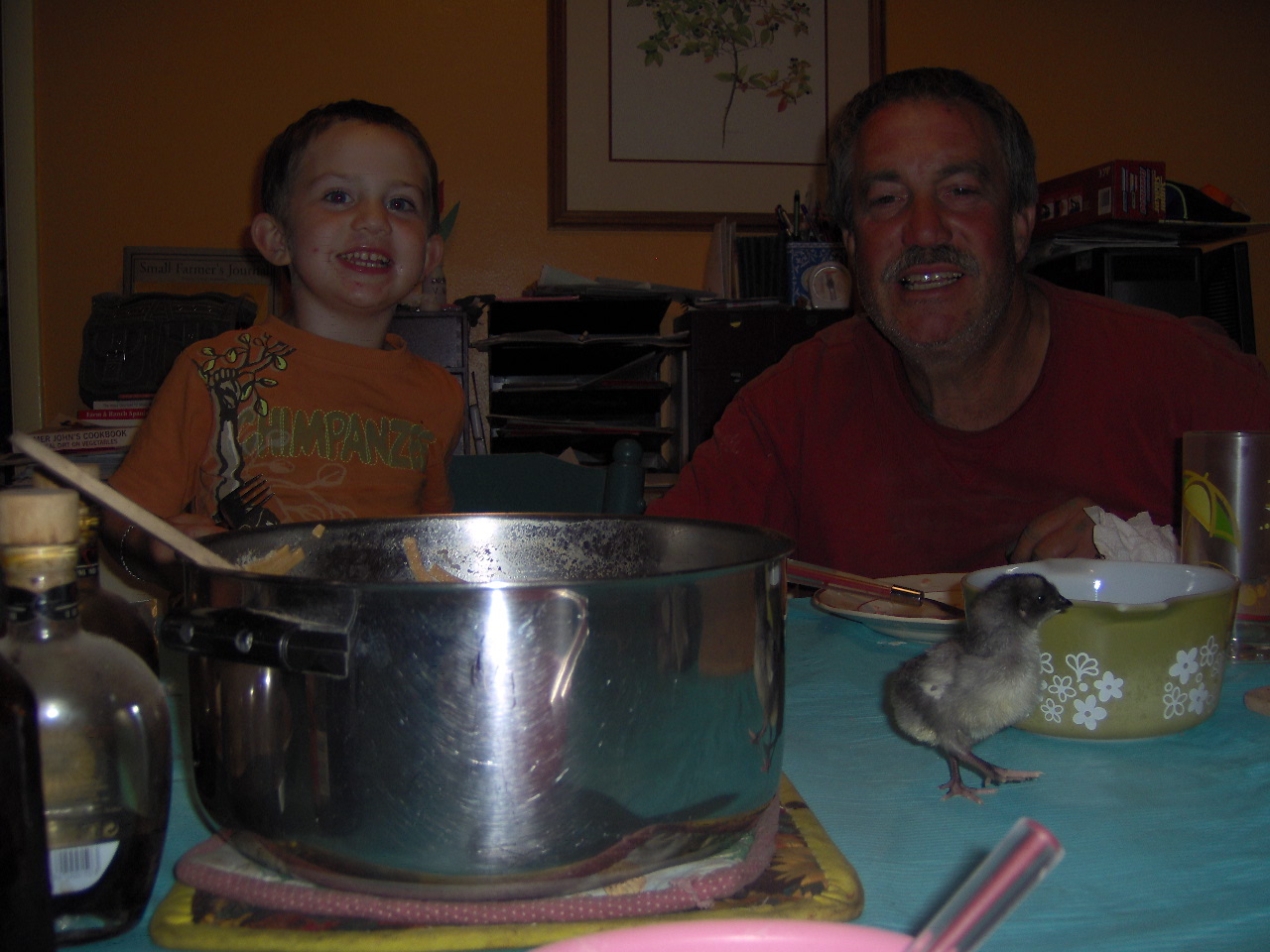
The next morning I heard more baby chicks, so I checked the chicken house again. There was mom—a Blue Andalusian hen, which are somewhat greyish-blue, and nervous. This is a breed known to not set and hatch eggs, by the way. But there she was with her other four chicks, acting properly motherly. So, I tossed the chick into the group of siblings, hoping that it would blend in and assimilate itself. But this little chick didn’t want the family, and mom didn’t seem to notice it. I tossed it in again and walked away, because sometimes that’s the best thing to do. (I’ve learned this through a great many trials and tribulations of “mothering-on” of babies.) No luck—the baby followed ME! I tried again and when one of the roosters started nibbling on the chick, I swooped it up and brought it back home. This time, I found a box to put inside the house, and tiny food and water dishes. The kids added a stuffed toy chick from easter. The chick had bonded with me, and I became it’s mom. Incidentally, the siblings didn’t make it through the night. Here’s a picture of “chickie” enjoying spilled shreds of Pecorino and roasted beets while we eat dinner. (Della is experimenting with chopsticks.)

Cosmo doesn’t think it’s funny that the chick is now his little brother/sister. But I think it’s cute. I can’t take it everywhere I go, but we have snuggle sessions throughout the day. It’s getting big and strong, and I’m sure it will grow up and be a rooster, because that’s the way these things always seem to work. When I was about 11 years old I had a similar experience with a baby duck. A friend of my parents had lost all their ducks to neighborhood dogs except for one baby, and I became its mom. It slept with me at night—at first in a box by my bed, but eventually I got a towel for my pillow and it slept snuggled in my hair. (We pretty much got the poop schedule figured out early!) It ate in my lap at the table, stealing food from my plate. (My most vivid memory is eating peas and potatoes, which the duckling mashed into paste all over my lap!) And, it bathed in our bath tub every day. It learned to come running when it heard the tap turn on, and it learned how to jump up into the tub by itself. I remember the slap, slap, slap of those duck feet on the wood floor. I know my dad got a kick out of the whole thing, but I’m perplexed why my mom put up with the mess. Although I did clean up after it very well, ducks are very messy.

We’re now busy planting winter crops of greens, brassicas, and roots, and trying to stay ahead of the watering. We didn’t lose much last week, but we did lose the tender greens. At least we had some emergency salad mix planted. That should last a few weeks anyway, until something else is ready to take its place. The purslane thrives in hot weather, and its succulent leaves are delicious in salad, or sautéed lightly. Purslane is very high in omega 3s, by the way, and it’s great with sweeter vegetables like beets. Flying Fish restaurant does a dish of roasted beets and purslane leaves. Carrots are on the way next week, they’re just a little small, but growing rapidly with their most recent drink of water. The tomato plants are covered in green tomatoes, so they’re only a few weeks away. And we have lots this year—we filled the big greenhouse with them, so we’ll be able to be generous!

And, a movie I’ve been dying to see for years, “The Real Dirt on Farmer John” is opening across the Country…
It’s coming to Seattle! I wish I could go, but here’s the info in case you can make it!

Seattle, WA
Friday, July 20, 2007
-AMC Uptown 3
-Bellevue Galleria 11

>Summer Week 5 (Fava Beans, Basil, Cinamon Basil)

>THIS WEEK’S SUBSCRIBER MENU:
• Lettuces
• Sugar Snap Peas
• Fava Beans
• Napa Cabbage (see Winter Makeup Week 1 for recipe ideas)
• Garlic
• Genovese Basil
• Cinnamon Basil

FRUIT SHARES:
Bing Cherries from the newly-certified organic Tonnemaker Orchards in Royal City

U-PICK THIS WEEK:
Flowers, although the heat has put a damper on things temporarily. We’ll be planting more flowers soon.

COMING SOON:
• Stir-Fry Greens
• Carrots
• Salad Mix

At last, now that the week is over, I finally have a chance to finish this entry! It’s been a long, hard week with the temperature extremes. As everywhere, we got up over 100° on Wednesday. We made decisions about what to water, what to harvest, based on the probability that certain crops would not make it. Indeed, we lost the spinach and by Friday had lost most of the lettuces, even with an extra soaking. They can only take so much heat. The peas had all started to dry up by Tuesday, and we decided to harvest all of the sugar snap peas that were left on the vines and put them in the cooler. I know some of them looked bad and were sunburned, but for the most part they still tasted good and we feel that it was worth the effort to make sure you all got a final serving this week. We practically watched the vines shrivel into brown, dried skeletons on Wednesday, and the funeral was Thursday. And now it is time to move on.

The main reason for operating a diversified farm that grows many crops, is that in times of weather stress like this week, we still have plenty of crops to harvest. The basil/herb patch got water on Monday, and it thrived in the heat, exploding into beautiful rows of aromatic foliage. The only problem is that it needs to be harvested promptly or it will begin flowering, and then it is less than prime. So, we graced everyone with big bunches of Genovese basil, and cinnamon basil. The Genovese is the classic Italian basil, the one used for pesto. Cinnamon basil can be used to make a pesto as well, and I find it goes better with the sweeter vegetables—beets, peas, etc. It also goes well with a fruit salad, which means you have to change your basil preconceptions, but just try tossing a few leaves into fruit and see how it goes. You might just like it! My big Cinnamon Basil idea was to make a pasta salad by pureeing the basil with olive oil into a pesto, tossing in some peas (raw or sauteed) with some sliced roasted beets and fresh goat cheese (chevre). It’s a lovely pink color as well, helping the mind to accept the cinnamon flavor.

Fava beans are ready now, to fill in the gap between peas and beans. They are the only “old-world” bean, and is actually in the pea family. They are very popular in the mediterranean region, as well as in England, where they are called Broad Beans or Horse Beans. You’ll need to shell them from their pods, and then they can be sautéed, steamed, or eaten raw. Some people like to blanch them in boiling water and remove the skin surrounding each individual bean. I find that this is not necessary as long as the beans are young, tender, and harvested at the proper time, which ours are. Mike says it takes an Italian to grow good Favas, and I think he’s right.

The Napa Cabbage and Bok Choi are doing their part in finishing up now that the spinach has gone, temporarily. They will help fill the gap until the cabbage, broccoli and next spinach patch are ready in the coming weeks. You don’t need to do anything fancy with Napa—just slice it into shreds and use it as salad, or turn it into cole slaw, or sauté it.

We’ve started harvesting our garlic crop, as it turns brown from the heat. If we expect it to keep into the winter, it needs to be harvested while some of the leaves are green, so the paper wrappers can dry around the bulb and protect it. The variety you get this week is called “Musik”. It has huge cloves that peel easily and taste wonderful.

BASIL PESTO
4 Cloves Garlic, minced (use 1 to 2 cloves if they are large)
2 cups Fresh Basil Leaves, rinsed and thoroughly dried
1/3 cup Extra Virgin Olive Oil
1/2 tsp. Salt
1/2 tsp. Ground Black Pepper

1. Place the garlic and basil in the bowl of a food processor or blender. With the motor running, slowly drizzle in the oil through the feed tube, and process until the basil is puréed.

2. Transfer the pesto to a bowl and stir in the salt and pepper. Refrigerate, covered, until ready to use. This keeps in the refrigerator for 2 to 3 days. Or try freezing the pesto by filling ice cube trays with the prepared mixture. Place the filled trays in the freezer, then place the frozen cubes in freezer bags or other containers. Just thaw to use later. (We find that we use 1 cup of pesto for a meal when we have it with pasta, so we freeze it in one-cup containers.)

Try adding ground pine nuts or walnuts and/or Parmesan or Romano cheeses to taste. I prefer to add these things when serving the pesto, rather than while making the pesto.

FAVA BEAN RAGOUT
1 to 2 pounds young Fava Beans
1 clove Garlic
1 small sprig Rosemary
Olive oil
Salt and Pepper
1/4 Lemon

1. Shell the fava beans and discard the pods.

2. Bring a pot of water to a boil, add the favas, and simmer for 1 minute. Drain and cool them immediately in cold water. Pierce the outer skin with a thumbnail and squeeze each bean out of its skin with thumb and forefinger. Peel and chop the garlic very fine. Strip the rosemary leaves off the sprig and chop very fine.

3. Put the fava beans in a saucepan with a mixure of half water and half olive oil, enough to barely cover them. Add the garlic and rosemary, and season with salt and pepper. Bring to a simmer, cover, and cook until the beans are tender, about 5 minutes, more or less, depending on the beans. Finish with a squeeze of lemon juice and another grind or two of pepper and serve.

* If the fava beans are young and tender, you may omit step 2—no need to peel the outer skin from the individual shelled beans. Beans cooked this way are delicious with pasta—toss or serve on the side.

FAVA BEANS BAKED WITH GARLIC & ROSEMARY
Peeled cloves from 2 mature bulbs of garlic
1 cup Shelled Fava Beans (or 2 pounds unshelled beans)
2 sprigs Fresh Rosemary & Thyme (or 1/2 tsp. dried)
1/8 cup Olive Oil
Salt & Pepper to taste
Olive Oil

1. Preheat the oven to 350°

2. Arrange the garlic in the bottom of a small baking dish appropriate to bring to the table. Surround with the favas and cover with the rosemary. drizzle the olive oil evenly over the vegetables. Cover and bake for 40 minutes, or until the garlic is tender. Season with salt and pepper, moisten with additional olive oil, and serve.

FAVA BEAN PUREE
Warm 1/4 to 1/2 cup of good olive oil in a shallow pan, and add a few cloves of minced garlic with some shelled fava beans and a touch of salt and a sprig each of rosemary and thyme, and a splash of water. Simmer about 30 minutes and mash or purée. Add a few drops lemon juice, and as much olive oil as needed to make it spreadable. Serve warm, alone or on grilled bread.

>Summer Week 4 (Rapini, Sugar Snap Peas)

>THIS WEEK’S SUBSCRIBER MENU:
• Lettuces
• Sugar Snap Peas
• Green Onions
• Rapini a.k.a. Broccoli Raab
• Beet Greens OR Spinach
• Mixed Herbs (Marjoram, Basils, Fennel) OR Shungiku

FRUIT SHARES:
Strawberries from our neighbor, T & M Berries
(If you want to u-pick there, call (253) 852-0718 for their hours. Strawberry season doesn’t last long!)

U-PICK THIS WEEK:
Flowers
Shelling Peas, Sugar Snap Peas
(The best times for u-pick are on our farm pick-up days: Wednesdays between 2:00 and 7:00pm (Thursday this week because of the holiday) and Saturdays between noon and 5:00pm. Remember, subscribers can pick as much as they can find for free!)

COMING SOON:
• Fava Beans
• Stir-Fry Greens
• Carrots
• Basil

We hope everyone has enjoyed the holiday this week. We even took a mini holiday ourselves. At the least it was nice to have a morning that didnt involved getting anyone ready to go anywhere. We slept in until about 7:00, went out to breakfast at Wild Wheat, and planted for a few hours. Then went to a friend’s birthday party. That’s about as much of a day off as we get during the summer. After all, things must be planted if we’re all going to eat next month.

I don’t know that recipes are needed for this week. See Winter Makeup Week 1 for Rapini recipes. Sugar Snap Peas are best eaten fresh and simple, I think. We usually just snap the ends off and eat them raw, but they’re delicious sauteed quickly in a little butter as well. And, the mixed herbs have a lot of possibilities. Whip up a quick pesto, or toss them in a salad or pasta.

We will be offering up a survey next week. I want to make sure everyone is happy, and find out if we should be changing anything while we are still early in the season. We will probably be doing a survey every four or five weeks, just to keep tabs on everything. Please help us out by completing it!

And, our other neighbor, the Pearsons have u-pick raspberries and blueberries available now. The kids and I stopped by Monday afternoon to pick blueberries, and so we had berries, ice cream and (whole wheat) fresh scones for dinner. We plan on going again next Monday. They are open Monday, Wednesday, and Saturday from 9:00am.

>How to Pick Peas, with Cosmo Verdi

>Our son, Cosmo has reached a certain level of expertise in the area of pea picking. At the age of 3 1/2 years old, he is a connoiseur of “the fat ones” and can shell and eat fresh peas for a minimum of two hours, while conducting a discourse on beneficial insects. He recently generously spared a moment of his time with me and allowed me to capture a glimpse of this young man, hard at work on his budding pea-eating career. Let’s go with him now—to the pea patch!

One of the most important things to remember when picking peas is that you want the fat pods. Not the skinny pods that don’t have plump and tender peas inside. Here Cosmo demonstrates the ideal specimen for harvest. You can almost see the outline of the peas inside. What you don’t want are the fat pods that are light-colored and wrinkly. Those are over-mature and the peas will be bitter, hard, and dry. Better wait until they’re completely dry and use them for soup.

The pea plants are very fragile, so it’s important to hold the plant with one hand and pluck off the pod with the other hand. Cosmo prefers to hold the plant with his left and pick with his right, but either hand will work for either job. Do what is comfortable for you.

Then, it’s important to eat the peas right away. Cosmo knows that as soon as the pods are detached from the plant all of the delicate sugars in the peas start converting to starches. Starches are not as sweet as sugars, so eat the peas as fresh as possible. Savor them while they are in season, because the season only lasts a few weeks!

And, don’t worry about bees in the peas. They’re too busy working at making more peas to worry about humans in the pea patch. As long as you don’t bother them, they won’t bother you. And the tiny dinosaur looking crawling things are baby ladybugs. They’re the ones that eat the aphids on the plants. There are adult ladybugs in great abundance as well, but they drink flower nectar. It’s the babies that do the real bug-eating work. Here’s a picture of ladybug eggs in the fava beans, as well as their future dinner of black aphids.

>Summer Week 2 (Chinese Cabbage, Lettuce)

>THIS WEEK’S SUBSCRIBER MENU:
• Lettuces
• Shelling Peas
• Green Garlic
• Beet Greens OR Spinach
• Napa Cabbage OR Bok Choi
• Mixed Herbs (Marjoram, Basils, Fennel) OR Shungiku

FRUIT SHARES:
Strawberries from our neighbor, T & M Berries
(If you want to u-pick there, call (253) 852-0718 for their hours. Strawberry season doesn’t last long!)

U-PICK THIS WEEK:
Flowers
Shelling Peas
(The best times for u-pick are on our farm pick-up days: Wednesdays between 2:00 and 7:00pm and Saturdays between noon and 5:00pm. Remember, subscribers can pick as much as they can find for free!)

COMING SOON:
• Sugar Snap Peas
• Green Onions
• Lettuce


A few people who were at the farm at the right moment last Wednesday were lucky to see our brand-new, just-born calf! Our sweet, Dexter milk cow, Beauty delivered her new little girl Wednesday afternoon. She’s since been named Juniper, and we are 99% sure she will stay here with our little herd. You can visit the herd in our new temporary pasture by the big greenhouse. They are busy doing their job of eating a cover crop of cereal rye and field peas, and at the same time they are adding much needed nutrients to the poorest piece of soil on our farm in the form of manure. That spot is very sandy, so nutrients leach through it like a sieve when the rain comes. The roots of the cover crop will add humus and organic matter, and the manure will add nutrients. Then we can plant crops for winter harvest there in August and they should thrive. I will be milking Beauty at about 8:00pm every day, just in case you are in the area and are interested. The black cow with the red halter is not the father, he’s a steer and is about 14 months old, soon to be beef for our freezer.

The peas have finally fattened up and are sweet and juicy, just in time to harvest for this week. The shell peas always dry up first, so we’re picking through them this week, and next week when the sugar snaps are fat and sassy we’ll start working on them. Don’t forget to u-pick! If you can’t make it during pick-up hours at the farm, we’ll have signs up to guide you to the pea patch. Please only pick the row(s) we’ve marked—we’ve chosen the rows for you that are most easily-accessible, and those that are easiest to see the pods.

Our kids love peas, but only raw, and specifically only if they have picked them themselves. And, no matter how I try, I can’t get them to eat sugar snap peas. They always insist on shelling them, and I’m not wasting sugar snaps on them if they won’t eat the pods. Cosmo especially is a great “helper” when I’m picking shelling peas. He scoots down the row in front of me. Usually he will pick his own “fat ones”, but sometimes he swipes them from my bucket. I should be proud that they know where the peas are on the farm, and that they know how to find food for themselves.

All of our transplanted herbs (various basils, marjoram, fennel, shungiku, etc.) needed to be pinched back this week so they will get bushy and productive. Weve chosen to put together a little bag of mixed herbs for you instead of tossing them. Use them to make a mixed-herb pesto, or lovely salad dressing, or throw them in with your cooking greens. If you’ve chosen Shungiku instead, you can saute it with greens, or put it in a salad—many years ago I had it floating in a bowl of clear soup in Japan.

SPECIAL NOTE FOR WEDNESDAY FOLKS:
Due to the holiday next week, we will be doing on-farm pickup on Thursday, July 5 instead of the 4th. Please make sure not to come Wednesday! Regular pickup hours: 2:00-dusk.

BOK CHOI or NAPA CABBAGE WITH GINGERY BUTTER
2 medium Choi, sliced into 1 inch strips
6 tbsp. Butter
2 tbsp. Soy Sauce or Tamari
1 tbsp. Fresh Ginger, grated
1 clove Garlic, minced
Salt & Pepper

1. Bring a large pot of water to a boil. Add the choi and cook until tender but still crisp, 2 to 3 minutes. Drain in a colander and immediately run under cold water. Drain well.

2. Melt the butter in a large skiller over medium heat. Add the soy sauce,ginger, garlic, and choi. Cook, stirring constantly, until the choi is well coted and heated through.

3. Remove the skillet from heat. Season with salt and pepper to taste. Serve immediately.

And, just in case you’re not a big salad fan:
BRAISED LETTUCES
3 to 4 small heads Lettuce, rinsed under running water, tough outer leaves removed
1/2 tsp. Salt
1-2 tbsp. Butter
Black Pepper

1. Tie a piece of string around each head of lettuce, just tightly enough to hold the leaves together and promote even cooking.

2. Brnig 2 quarts of water to a boil, add the salt and reduce the heat to a simmer. Add the lettuce heads and boil for 3 minutes.

3. Drain the lettuces in a colander and let cool. When cool enough to handle, gently squeeze them in your hands to remove any excess water. Remove the string.

4. Melt the butter in a large skillet over medium heat. Add the lettuce heads and cook until lightly browned, about 3 minutes. Continue to cook, turning them carefully, for another 3 minutes. Season with salt and pepper to taste. Serve immediately.