Category Archives: Uncategorized

Spring Week 5: Repeat of Week 4

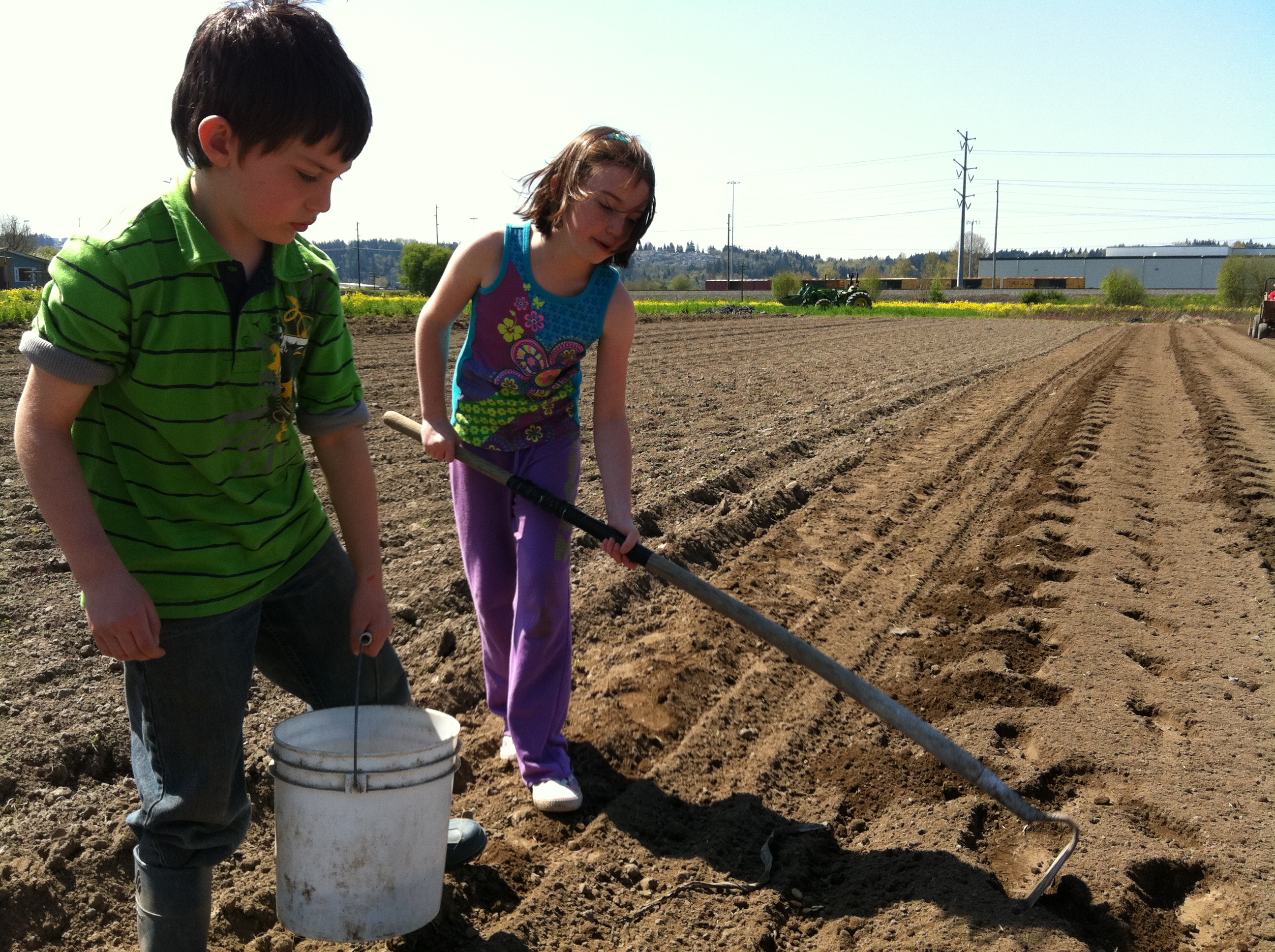
Cosmo and Della take turns placing four Fava Bean seeds in a hill and covering up the hills. This is one of their favorite jobs.

THIS WEEK’S SUBSCRIBER MENU:
• Rapini
• Sprouty Siberian Kale
• Sprouty Red Russian Kale
• Swiss Chard
• Leeks
• Sorrel

COMING SOON:
Pea Shoots
Japanese Turnips
Beet Greens

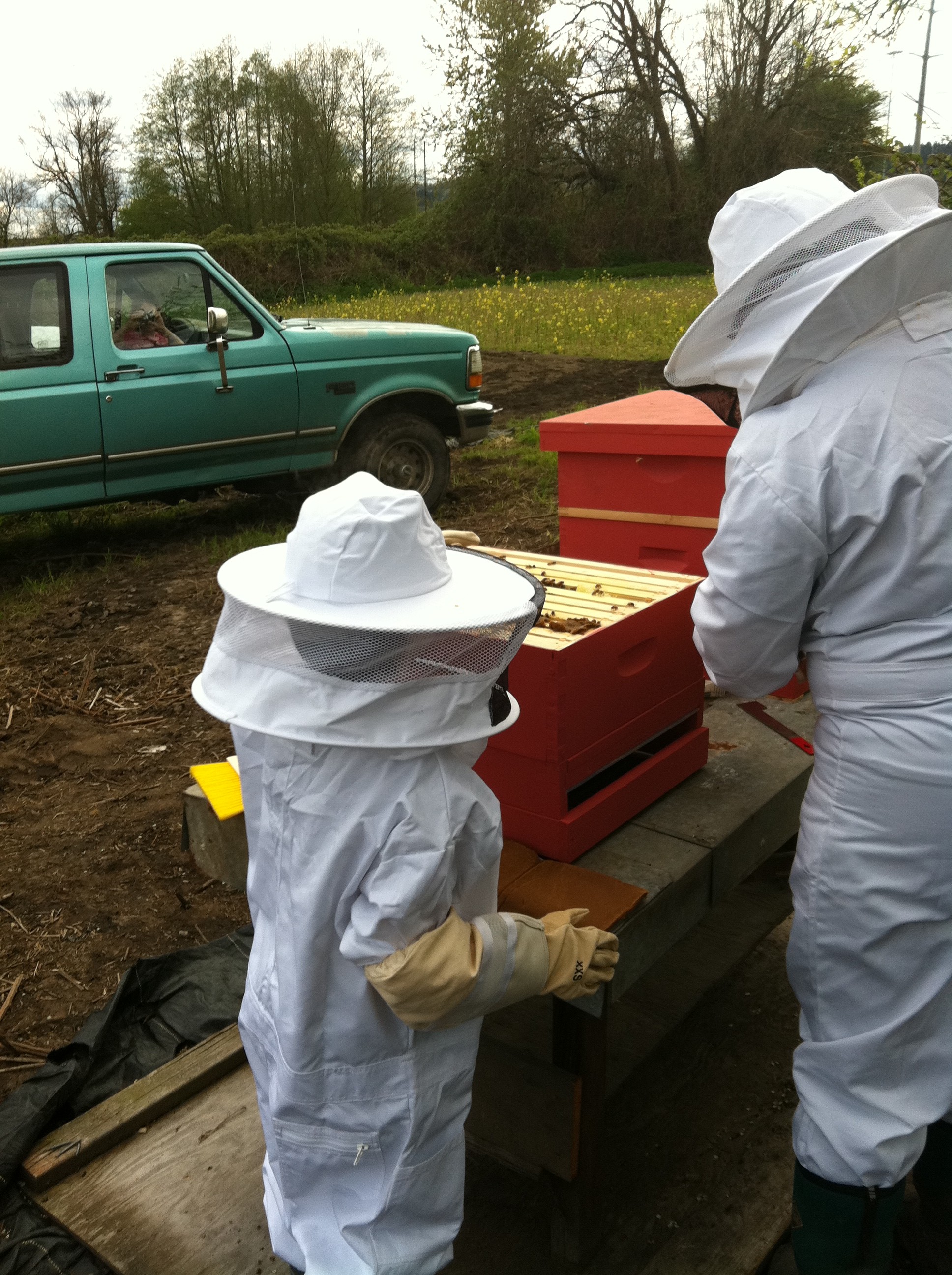
It was a busy week. Wednesday we did indeed pick up our package of honeybees. We brought them home, sprayed them with sugar water, and installed them. It was nearly a catastrophe, and if I wouldn’t worry so much about everything it would be fine. First I worried about how to take the can of syrup out of the box. Then all the bees started pouring out of the box. Then I was afraid they were going to leave. Once we got the hive put together, I worried that the 10% that hadn’t already allowed themselves to be dumped into the hive would not know where their new home was. I leaned the package box against the front door and by the time we went to bed, they were all in theirs.

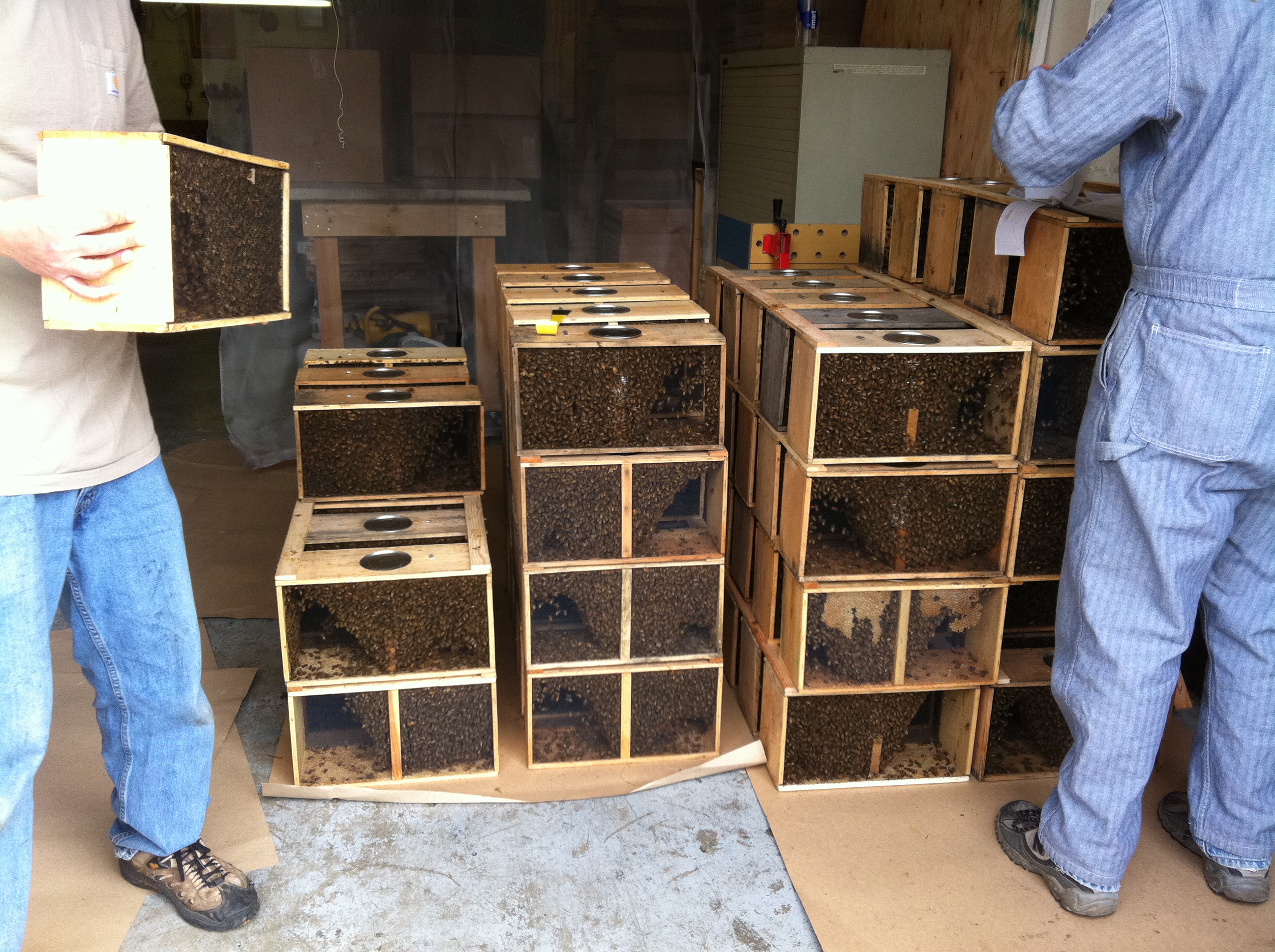
3# packages of bees waiting to be picked up at Beez Neez Apiary Supply in Snohomish.

It was so exciting that I ordered another package of bees. We will pick them up on Friday. If you are interested in doing bees, I highly recommend Beez Neez Apiary Supply in Snohomish. It’s a bit of a drive for us, but they have been very helpful, and the bees are so healthy. After all, I did buy enough equipment to start two hives, so I might as well get another colony started right away. All of the beekeepers say so. By Thursday afternoon they were beginning to venture out, and Friday they were enjoying the plum tree.

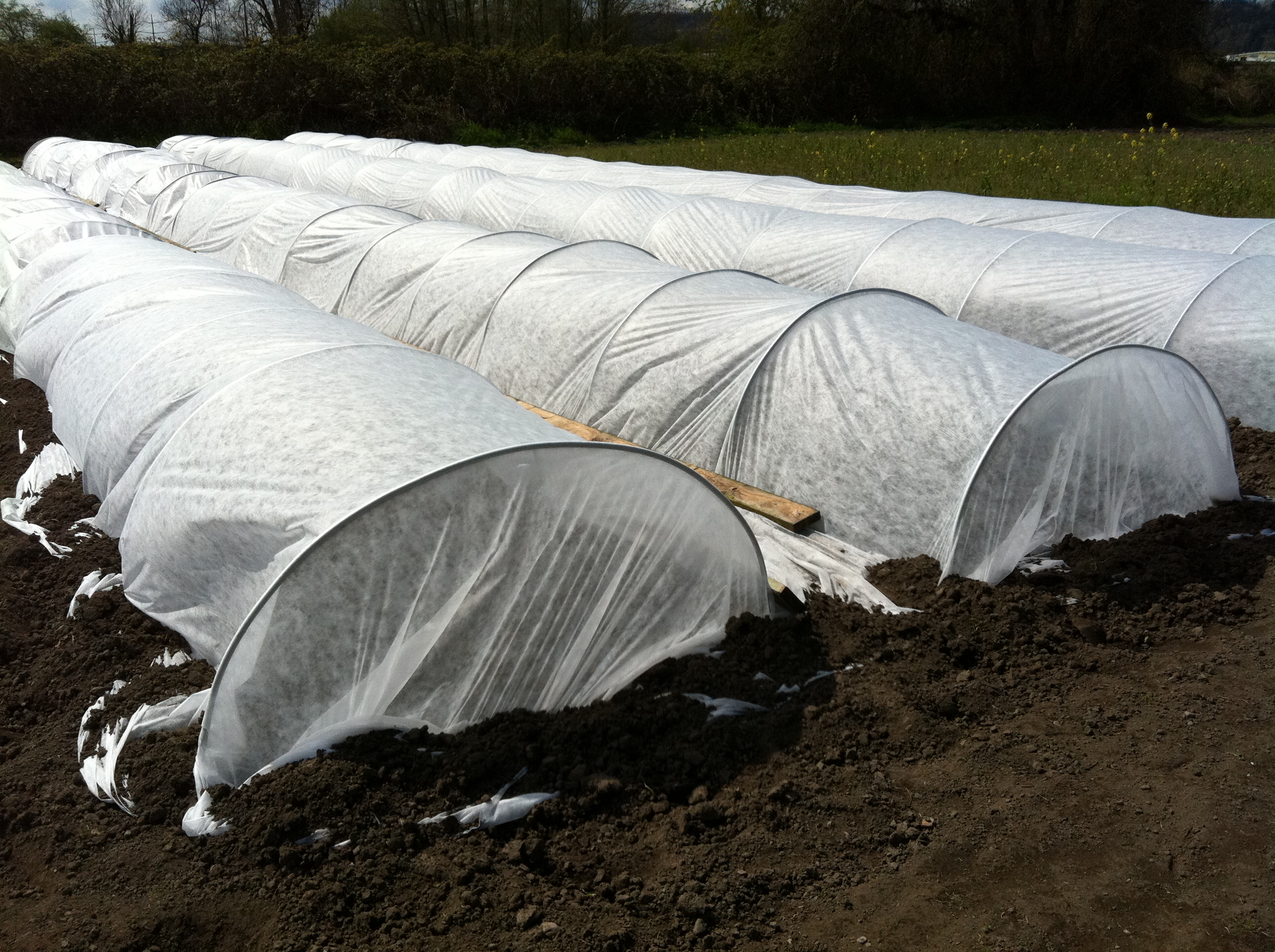
2' tall and 6' wide, these tunnels are perfect for starting early greens.

The low tunnels are put together. Hopefully those dainty spring greens and radishes are growing quicker out of the rain and wind. We’ll check on them soon. The turnips and beet greens in the greenhouse are coming along, although not quite ready yet.

Spring Week 4: Sun and Snow in April

The picture of April.

Friday it snowed. Saturday it was beautiful and sunny.
The ground is drying, but it is still so chilly. 

THIS WEEK’S SUBSCRIBER MENU:

• Rapini
• Sprouty Siberian Kale
• Sprouty Red Russian Kale
• Swiss Chard
• Leeks
• Sorrel

COMING SOON:
Pea Shoots
Japanese Turnips
Beet Greens

Tonight we are making the final preparations for the honeybees. We pick them up at 2:00 tomorrow and bring them to their new red home. I just finished cooking the sugar syrup to feed them, and I’m anxiously reading and re-reading the chapter on “opening up your package of bees.” Hopefully it will be nice and sunny tomorrow and they will adjust well to their new home beneath the ancient plum trees. I think we picked a good site: south-facing, out of prevailing wind, full sun in the morning, dappled sun in the afternoon, on a bit of a hill (as much as we have here). Out of major foot- and equipment-traffic. And, away from the hedgerow edges of the farm where we border the Chemical Brothers.

Lillibet is keeping Della company while she paints the new cow barn.

It was a beautiful, sunny weekend. The kids had fun painting the cow barn. Then Cosmo took the rest of the day off to be one with the earth. 

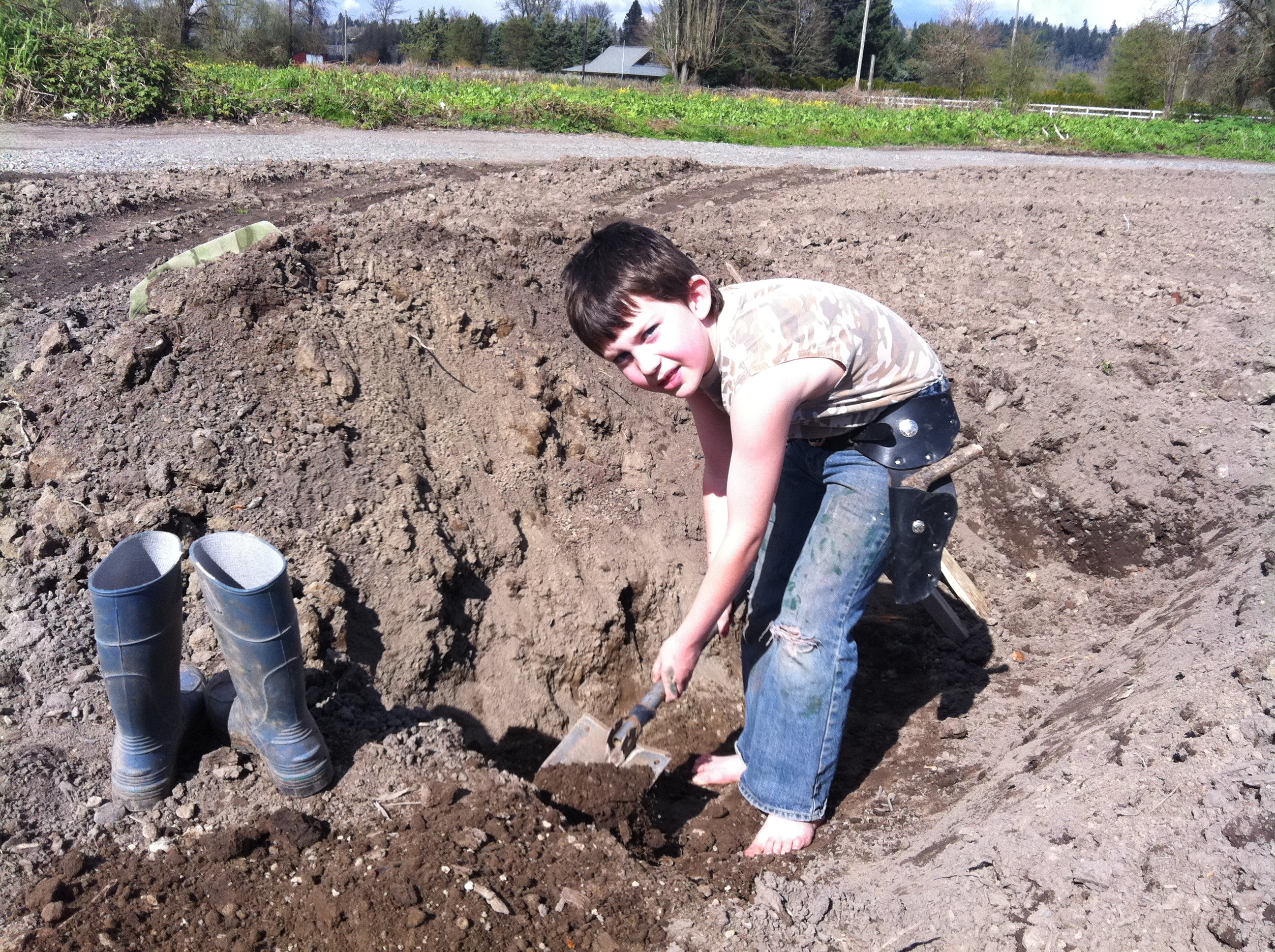
It's important to take your boots off to play in a dirt hole.

We’re nearly ready to get the cows moved into the new barn and get the chickens moved into the big greenhouse for some hay-scratching and cowpie-busting. I’ve got a load of broccoli and lettuce plants to get into the well-fertilized ex-chicken greenhouse. Mike picked up covers for the caterpillar tunnels today, so that will be tomorrow’s project. After the bees.

We’ll ignore that weather forecaster mention about the coldest spring in 80 years. But it does make me wonder if the last ice age crept up over several decades or centuries, or did it just appear suddenly?

Spring Week 3: Between Rain Showers

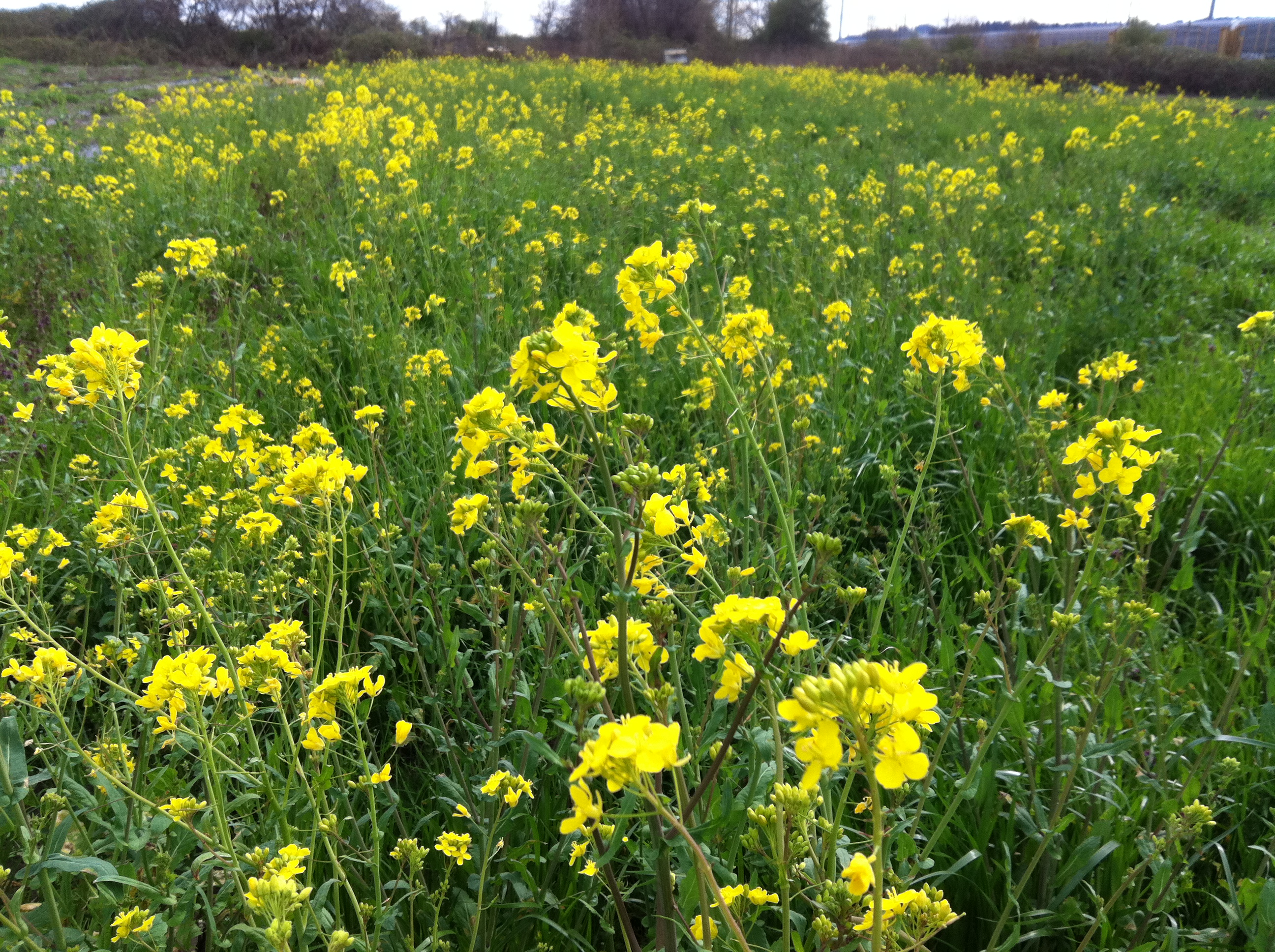
Wild Mustard blooming in April.

What a difference a day of sun makes! The rain stopped for one day, and the plum trees started blooming. I saw the first honeybee, mason bee, and bumble bee of the year. The ospreys returned—I don’t know where they went for the winter, but they’re back to nest, in all their screeching glory.

THIS WEEK’S SUBSCRIBER MENU:

• Rapini
• Siberian Kale
• Sprouty Collard Greens x 2
• Loose Cabbages
• Spring Onions or Eggs

COMING SOON:
Swiss Chard
Pea Shoots
Japanese Turnips

Finally, finally we got some planting done outside. Mike plowed on Friday, then waited for the ground to dry a little. Saturday he got it disced, but it was still sticky. Once it is opened up after all the pounding rain, though, it dries pretty quickly. Monday he hustled out with the tractor and tiller and got a patch ready for the low tunnels. Monday night he had it planted in spinach, radishes, and a bunch of salad greens. Tonight they are all ready for a little water and a plastic cover to convince them that it really is spring. Hopefully we’ll be picking the beginning of May.

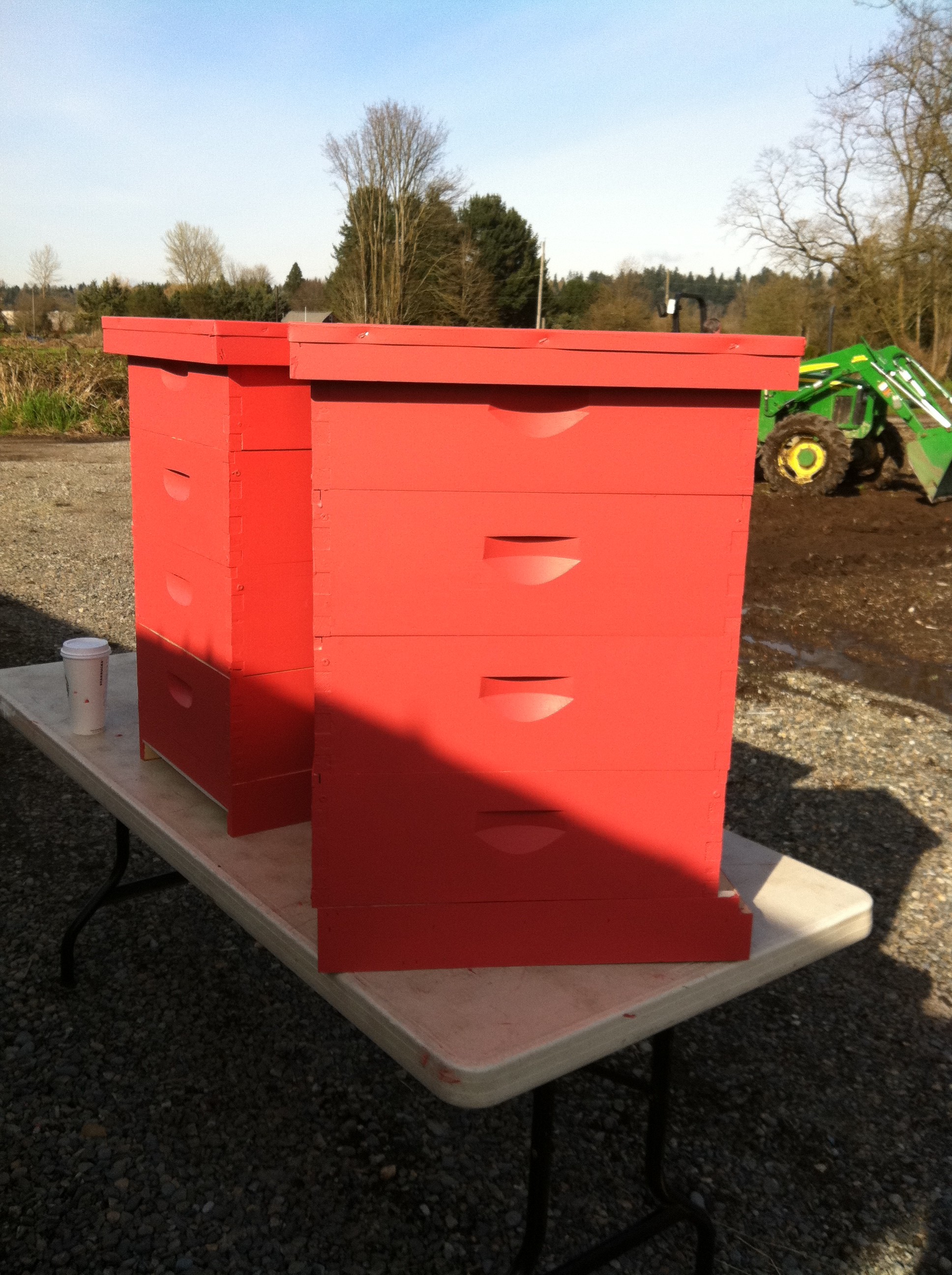
The sun came out and I got the bee boxes painted. All ready to set up for the honeybees!

I got the beehives painted and the suit arrived Monday. My 3# package of workers and one queen will arrive around the 20th. Then the beekeeping adventure begins!

Tuesday we’re hoping to get a bigger space tilled and planted, this time with fava beans, peas, and even more greens. These should end up for late May/June harvest. Fingers crossed for one more day of sun!

Spring Week 2: Where are you, Spring?

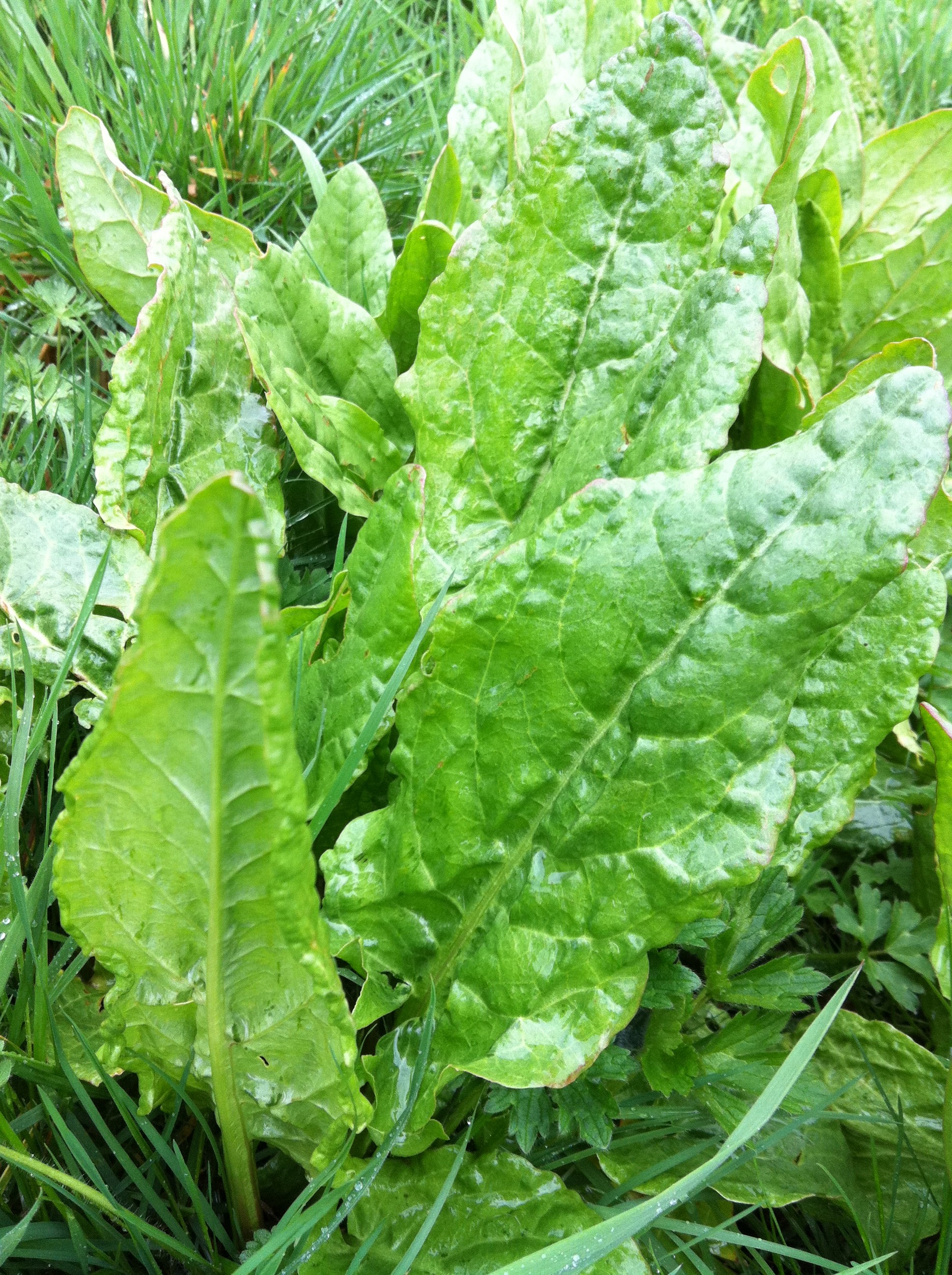
Sorrel, Rumex acetosa

When the weather is gray and soggy like it’s been, it gets difficult to stay optimistic. This blog is helpful to me as a journal. I can look back at the last few springs and remember that it is nearly always like this. We’re chomping at the bit to get going, but all we can do is bide our time until the starting gate of sunshine opens up. Maybe that will be Thursday!

THIS WEEK’S SUBSCRIBER MENU:

• Rapini
• Siberian Kale
Sorrel
• Baby Leeks
• Collard Greens
• Eggs

COMING SOON:
Swiss Chard
Loose Cabbages
Japanese Turnips

The greens sure are lovely this time of year! We hope you’re enjoying their fresh flavors. Greenhouse 1 is starting to fill up with flats of transplants. Luis has turned 150 pieces of electrical conduit into mini-greenhouse hoops. Now, if it would just dry up for a day or two so we can plant outside. These little tunnels should end up about 4 feet tall and 6 feet wide and 100 feet long. Room for 4-5 rows of crop. We’re planning on putting radishes, spinach, arugula, green onions, and Yokatta-na inside them. We can’t wait!

Steel tunnel hoops waiting for their lot in life.

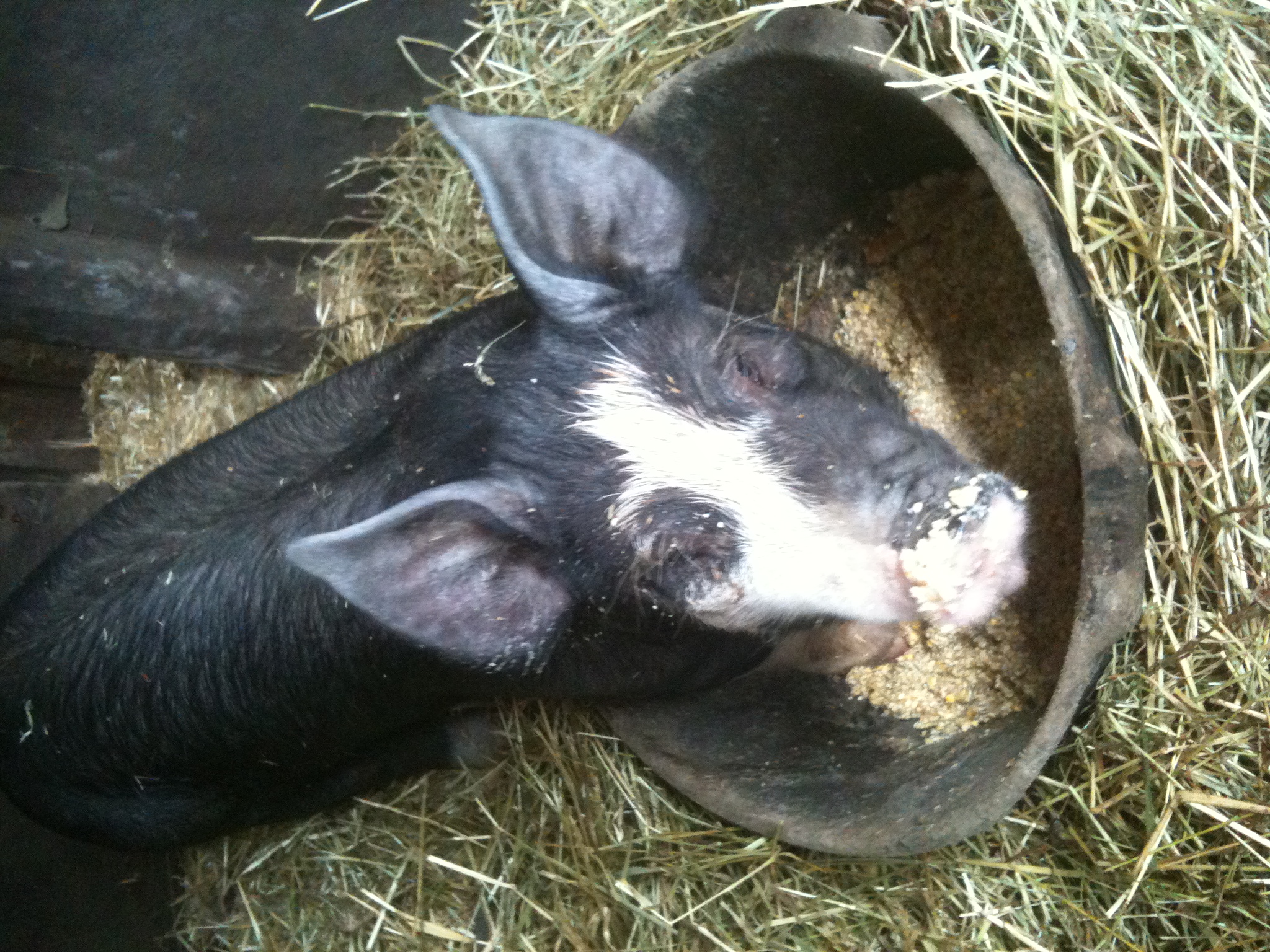
The excitement of the week was picking up our newest little addition to the farm. Last year we sold all of our sows but one, Sweet Bess, to Stokesberry Farms in Olympia. The provision was that we would get one of Lucy’s daughters back when old enough to wean. Here she is, Lillibet. She will be ready to breed in the fall, and have her first litter (hopefully) this time next year.

Lillibet

First Week of Spring: Let the Harvest Begin!

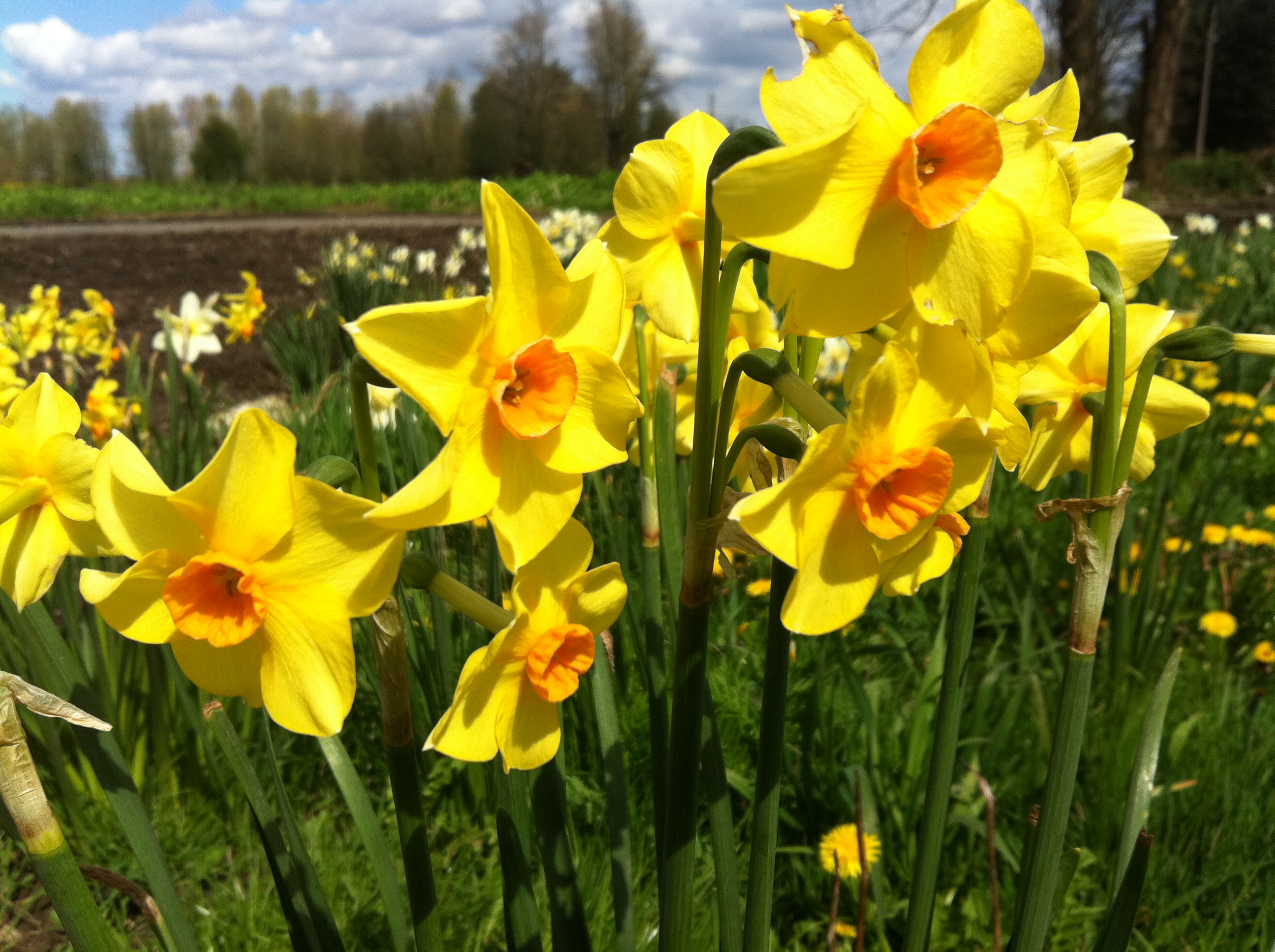
Purple Top Turnip Rapini

Tomorrow we begin our spring season. It’s been a long, cold winter. But now the days are longer, and even though it’s been soggy, it is bright. The goldfinches and robins have returned, and soon the hummingbirds and swallows will bring us a solid spring.

THIS WEEK’S SUBSCRIBER MENU:

Rapini
• Yokatta-Na
• “Orchidea Rossa” Radicchio
• Siberian Kale
• Parsnips
• Eggs

COMING SOON:
Kale Rapini
Collard Greens
Baby Leeks

There isn’t a lot to harvest yet, but some things are ready. We found some parsnips lingering in the weedy patch they grew up in. The weeds are long gone, but we are freeing the sweet roots from their disguise so you lucky folks can enjoy them. We have also found some new growth on the kale and collard plants, although the neighboring Swiss chard is largely dead from the December freeze. Over the years, we have found one chicory that fits perfectly with our spring harvest timing. It is called “Orchidea Rossa”, or “Red Orchid”, and it is a “Grumulo”-type radicchio. It doesn’t make any kind of big, solid head. It makes an abundance of reddish-green leaves in the summer that are fine for salad, but if we leave it alone through the winter, the increasing daylength draws it into lush, open rosettes.

We tried to overwinter the famed “Yokatta-Na” that was so popular last spring, It died over the winter, but has regrown and is sprouting. Slightly bitter, and tastes good, but not quite as good as the Rapini, queen of the spring.

We plant four varieties of turnips, in various colors for fall harvest. Not only do they assemble into a rooty rainbow, but they all flower at different times in the spring, giving us a longer harvest of Rapini.

And, the egg harvest has been very large lately thanks to the increasing daylength, so everyone is getting a dozen eggs. Enjoy!

>Easing Into Spring

>The seeds are nearly ordered, and we are in the process of all the winter projects that wait all year to get completed. Mostly those projects are clean-up. Clean up the mess in the greenhouse and get it ready to start fresh. Pick up the plastic mulch and drip tape from last year. This winter, however, we were able to convert a shed into a cow barn, complete with concrete floor. As soon as the cows are done fertilizing the greenhouses next month, they’ll be mooving in, and delivering calves. Juniper is due April 30, and Beauty is due June 5. The laying hens are now living in Greenhouse 3, where the cows spent November and December. Not only is it dry and sheltered, but the manure won’t go to waste. We expect some awesome crops from those greenhouses this season, starting with an early planting of broccoli in March.

We have taken the plunge, and ordered 500 Asparagus plants, as well as 50 Horseradish and Rhubarb plants, to occupy the space that the cows used to live in. It is weed-free and very well manured, so it should make them happy. With any luck, we’ll be harvesting a bit next year.
We are also getting started building some short tunnels—like mini greenhouses—to put in the field. We will get some summer crops going extra early this way. Salad greens, but also some early squashes and cucumbers, perhaps, some early basil! As soon as it looks like we’ll be above freezing again, the planting will begin!

>Winter Week 8: Winter Solstice

>THIS WEEK’S SUBSCRIBER MENU:
• “Festival” Winter Squash

• Pie Pumpkin
• “Norkotah Russet” Potatoes
• Carrots
• Garlic
• Radicchio
• Lettuces
• Turnips

REMEMBER, THERE IS NO PICKUP OVER CHRISTMAS WEEKEND. WE WILL NOT BE AT FARMERS MARKETS ON THE 25TH or 26TH EITHER.


We wish all of you a wonderful holiday season!

The New Year is upon us at last. I’m not talking about January 1, the modern new year. I mean the original new year—the new year of ancient times and farmers. The Winter Solstice. This day of the solar year with the longest night, and the shortest daylength has historically been very significant with all cultures in the northern hemisphere, especially farming cultures. All living things (aside from modern man with artificial light) base their life processes on the amount of natural light in each given day. For example: Chickens have a 21-hour egg-laying cycle. They create a new egg every 21 hours, and as long as the egg is completed during daylight hours, the hen will expel the egg. If the egg is formed in hours of darkness, she keeps it safe inside her until daylight returns. (During the summer when our days are about 19 hours long, a hen will lay an egg nearly every day, but in the winter when our days are only 8 hours long, that same hen will lay an egg only every three or four days. Commercial hens are kept with lights on 24 hours a day, to maximize production.Daylength also triggers the heat cycles of mammals, especially grazers like goats & cows. Their biological clocks time things just right, so that babies are born when mom’s food is abundant.


As far as plants are concerned, temperature is less of an issue than daylength. Plants are only able to perform photosynthesis with light. Since photosynthesis is what gives plants energy for growth, most plants stop growing when the daylength gets down to about 10 or so hours. Active plant growth doesn’t start up again until the lengthening days of spring arrive. Then, the plants wake from their winter dormancy and sprout new leaves to soak up all that sunlight and the chickens start pumping out eggs like crazy. In farming terms, the solstice is a much more meaningful day than January 1, Julius Caesar’s new year. But he wasn’t a farmer, he was a politician.


The day after the solstice, we can look forward to more eggs, more greens, and it means that soon we won’t have to do our chores in the dark. It’s time to order seeds for next year, and in a few weeks it will be time to start transplants. Spring is just around the corner!


If you haven’t seen them yet, be sure and drive by the Carpinito fields on West Valley Highway. There are Trumpeter Swans. Quite a few big, white goose-looking birds and a few greyish juveniles. There have also been some in his field at 277th St. and Central Ave. It pains me to think of all the chemicals they’re ingesting when they clean up the old corn and pumpkin patches, but hopefully it’s not doing them too much harm as they won’t be here very long before they move on.

>Winter Week 7 & 8: Lots of Water

>

TUESDAY/WEDNESDAY MENU FOR THE 14th and 15th:

• “Anna Swartz Hubbard” Squash
• “Festival” Squash
• “Norkotah Russet” Potatoes
• Yellow or Red Onions
• Sweet Carrots
• Celeriac (Celery Root)
• Baby Bok Choi
• Cutting Celery
• Fresh Thyme

TUESDAY/WEDNESDAY MENU FOR THE 21st and 22nd:

• Sugar Pumpkin
• “Honey Bear”
• “Norkotah Russet” Potatoes
• Sweet Carrots
• Garlic
• Turnips
• Lettuces
• Radicchio

SATURDAY/SUNDAY PEOPLE WILL PICK UP BOTH LISTS THIS WEEKEND. NO WEEKEND PICKUP DEC. 25-26th.


>Winter Week 6: Where are the Greens?

>

Young napa cabbage unharmed by the snow and freezing.


THIS WEEK’S SUBSCRIBER MENU:

• “Red Norland” Potatoes
• Garlic
• Sweet Carrots
• Turnips
• Tatsoi
• Fresh Thyme

NEXT WEEK WILL BE ANOTHER DOUBLE-WEEK PICKUP FOR WEEKEND PEOPLE. TUESDAY AND WEDNESDAY PICKUP WILL BE AS USUAL FOR BOTH DEC. 14-15 AND DEC. 21-22. SATURDAY AND SUNDAY PEOPLE WILL PICK UP THEIR “DOUBLE” SHARE ON DEC. 18-19.
THERE WILL BE NO PICKUP ON DEC. 25-26.

It’s been two weeks now since the snow and big freeze. Luckily we had snow to insulate the plants. But even at that, any plant parts above the ground were frozen and killed off. The cabbages (because we planted an earlier variety than we normally do because of our shortened summer) are fried. The core is still alive, but the leaves are all burned from frostbite. Here is the Lacinato Kale patch and the Swiss Chard: you can see that the large leaves are all brown and dead, but luckily the core and growing point of the plants are alive and they will regrow. We don’t know how long that will take.

Amazingly, the leafy plants that survived are the smallest—the ones we thought would be most tender, including the tatsoi, bok choi, and radicchio and lettuces. The arugula and mustard greens will be back soon, but the “hardy” greens (kale and chard) will take some time to come back.

So what do we have left? We have plenty of different squashes, and we believe that we have enough carrots to last through the winter. There are also lots of turnips and celery root, and beets, although the beets are small. We have onions and garlic. We have thyme, parsley, and cutting celery.

We’re giving you two types of squash, because there are no greens, and because they are tasty! This week, we’re using the kabocha/buttercup type, which is good in soup, cut into chunks and roasted, or puréed. It’s also delicious in baked goods—even better than pumpkin. We’re also using the acorn squashes, because they are good as a simple dinner dish. Cut it in half, and bake it either with butter, sugar, and cinnamon, or use a savory filling.

We’re doing a variety of turnips now. The Japanese turnips are amazing and tender, but we tried to use them up before the freeze because they are much more delicate. The hardy turnips include the standard “Purple Top”, but also the heirloom “Scarlet Round”, “Gold Ball”, and “White Egg”. They are all tasty, and good roasted, or mashed with potatoes, or used in a gratin with or without the potatoes. Try them in soup or sautéed in butter too.

If you get a chance, try and watch this Dr. Oz video on GMO foods. It’s in 3 parts, and they’re about 5 minutes each. Pass it on to your friends and family. Everyone should know about the GMO problem, and Dr. Oz makes it palatable and non-offensive.

>Winter Week 3: Almost Thanksgiving

>

TUESDAY/WEDNESDAY MENU FOR THE 16th and 17th:

• “Heart of Gold” Squash
• “Yukon Gold” Potatoes
• Garlic
• Lettuces
• Sweet Carrots
• Celeriac (Celery Root)
• Baby Bok Choi
Collard Greens
• Fresh Thyme

TUESDAY/WEDNESDAY MENU FOR THE 23rd and 24th:

• Sugar Pumpkin
• “Yukon Gold” Potatoes
• Sweet Potatoes
• Celery
• Sweet Carrots
• “Tokyo Market” Turnips
• Spinach
• Radicchio or Arugula
• Italian Parsley

SATURDAY/SUNDAY PEOPLE WILL PICK UP BOTH LISTS THIS WEEKEND. NO WEEKEND PICKUP NOV. 27-28th.

COMING SOON:
Beets
Shallots